Direct Answer
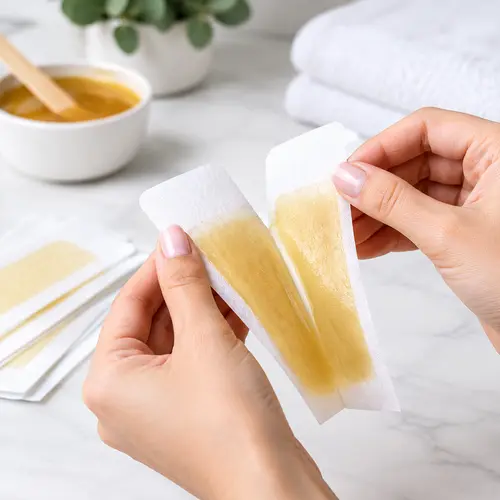
The best private label wax strips are not selected by fabric or wax formula alone. Performance comes from four variables working together: substrate stiffness, wax load, grip geometry, and removal behavior. A strip must warm quickly between the hands, separate cleanly, capture short hair, remain controllable during placement, and release without excessive residue or substrate stretch.
For buyers, the practical goal is a measurable product brief rather than a request for a stronger strip. Define the body area, target hair type, strip dimensions, wax weight per pair, acceptable residue, fragrance position, and expected storage conditions. Then compare samples through controlled side-by-side removal tests. A qualified wax strips OEM should document the substrate, coating tolerance, packaging barrier, aging review, and scale-up method before production. Fast sampling matters, but sample-to-batch consistency matters more.
Key Takeaways for Private Label Buyers
- Specify the use area first. Face, underarm, bikini, and body strips require different dimensions, flexibility, wax load, and removal force.
- Review wax and fabric as one system. A high wax load cannot compensate for a substrate that stretches, curls, sheds fibers, or transfers pressure unevenly.
- Test the complete retail pack. Sachet barrier, sealing, folded-strip orientation, wipes, cartons, and shipment heat can change the removal experience.
- Approve measurable boundaries. Record strip size, wax weight, coating uniformity, separation behavior, residue, odor, and packaging seal performance.
- Keep pilot and scale specifications aligned. Confirm that the approved substrate, waxes, coating equipment, and pack format remain unchanged during larger production.
- Build launch timing around verification. A 7-day sample target can support content planning, while a pilot run from 1,000 units can limit initial inventory exposure.
Buyer Context
Wax strips create a highly visible moment of truth. Consumers can immediately see whether the strip opens neatly, conforms to the skin, removes hair in one controlled pull, and leaves manageable residue. That makes the product well suited to short-form demonstrations, but it also makes weak performance difficult to hide.
Creator-led brands often begin with an aesthetic idea: translucent pink wax, a compact facial format, a natural-resin story, or a travel kit with aftercare. The manufacturing brief must translate that idea into repeatable physical behavior. Start with the application area and consumer routine, then use hair removal product solutions to compare strip formats with sugar wax, roll-on wax cartridges, depilatory cream, and post-removal care.
The commercial decision extends beyond the strip. Buyers need a clear BOM, sample scope, tooling position, labeling files, shipment conditions, and an agreed process for approving changes. The broader hair removal OEM ODM services workflow should show where formula, packaging, artwork, testing, and production approvals occur. For a rapid launch, those tracks should move in parallel without allowing an unapproved material substitution.
Technical and Packaging Factors
Fabric: Pressure Transfer Before Pull Strength
The substrate must transfer hand pressure across the wax layer while remaining flexible enough to follow body contours. Common options include nonwoven cellulosic materials and synthetic or blended fabrics. Evaluate thickness, directional stretch, edge softness, linting, tear resistance, and how easily a consumer can hold the clean tab.
A stiffer body strip may support a decisive pull across legs or arms. A smaller facial strip usually needs more precise placement and softer edges. Excessive stretch absorbs removal energy and can reduce hair capture. Excessive stiffness can lift at curved areas. Ask the supplier to identify the exact substrate code on the approved sample and purchase specification.
Wax Load: Coverage Without Unnecessary Residue
Wax load should be controlled by weight and distribution, not visual fullness. Too little coating creates dry zones and incomplete contact. Too much can cause edge squeeze-out, difficult strip separation, residue, or movement inside the sachet during warm storage.
The wax matrix may use natural resin derivatives, synthetic resin systems, oils, and structure-building materials. The choice influences tack, odor, color, warming behavior, and residue. Buyers targeting the European market can use the European Commission CosIng ingredient database to review ingredient naming and listed cosmetic functions. A supplier listing such as this private-label waxing strip market example can help frame available formats, but every technical statement still requires project-specific verification.
Grip and Removal Experience
Grip has three meanings: the clean tab must stay dry enough to hold, the wax must maintain controlled skin contact, and the coating must capture hair when pulled against growth. These should be assessed separately. A strip can feel very sticky yet perform poorly if it stretches, skips across the skin, or leaves most of the wax behind.
Review warm-up time between the hands, ease of separating the paired strips, placement accuracy, number of effective passes, short-hair capture, residue, redness observations, and wipe removal. Sensitive-positioned products require a documented irritation-risk review and conservative label directions. Related positioning can be developed through sensitive skin hair removal products and paired with after wax care products.
Packaging, Storage, and Shipment
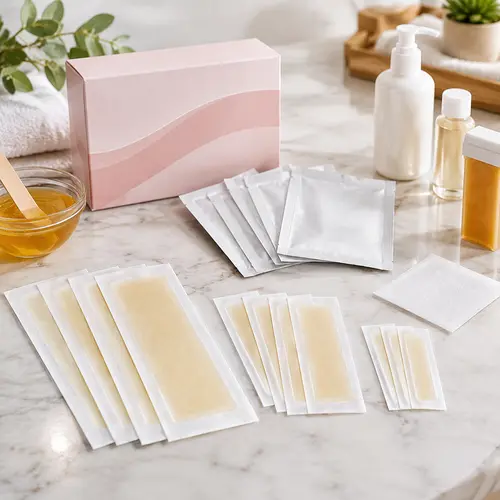
The primary sachet must limit fragrance loss, oil migration, contamination, and heat-driven movement. Seal width, laminate compatibility, folded-strip orientation, and internal headspace should be checked with the actual formula. Cartons should also protect strip flatness during case packing and transport.
Request room-temperature, elevated-heat, cold-storage, and thermal-cycle reviews on final packed samples. Inspect sachet seals, wax displacement, strip blocking, odor change, discoloration, and carton staining after conditioning. Confirm whether summer shipments require insulated handling, pallet restrictions, or an adjusted route. The documented hair removal manufacturing process should connect incoming substrate checks, wax preparation, coating, cutting, sachet sealing, and final inspection.
Label control also matters. Ingredient declarations, net contents, directions, warnings, batch coding, responsible-party details, and market files should be reviewed before print release. Public FDA warning-letter records illustrate why placing a private label on a product does not remove the brand owner’s responsibility for accurate labeling and supported claims.

Decision Framework
| Factor | What to Check | Why It Matters | ODM Buyer Note |
|---|---|---|---|
| Use area | Face, underarm, bikini, arms, or legs | Determines strip geometry, flexibility, and expected grip | Approve each size as a separate finished-product specification |
| Substrate | Thickness, stretch, edge feel, linting, and tear resistance | Controls pressure transfer and pull stability | Lock the supplier and substrate code after sample approval |
| Wax load | Weight per strip, coating coverage, edge margin, and pair separation | Affects hair capture, residue, and warm-storage behavior | Request a stated tolerance and batch inspection method |
| Removal experience | Warm-up, placement, tab grip, passes, residue, and wipe cleanup | Defines the consumer-visible performance moment | Use one written test method for every sample round |
| Pack compatibility | Sachet laminate, seals, migration, odor retention, and carton staining | Protects stability through storage and shipment | Test the final decorated pack, not a temporary sample pouch |
| Launch readiness | BOM, artwork, label files, pilot quantity, lead time, and surge plan | Prevents content schedules from outrunning production | Use a formal hair removal product RFQ with target market and delivery date |
For the first approval round, send the supplier a reference product, target use area, market destination, visual direction, fragrance limits, pack concept, and expected retail price. Ask for two or three controlled variants rather than unrelated samples. This keeps feedback clear and makes it easier to select a formula ready for pilot production.
ODM Manufacturing Considerations
For private label wax strips, sample approval should establish a measurable production reference rather than rely on appearance alone. The confirmation set should record strip dimensions, substrate feel, wax mass tolerance, fragrance, color, peel behavior, application temperature, removal feel, residue level, and finished-pack appearance. Keep approved samples from more than one batch when possible, with one retained by the buyer and one sealed at the factory. Any later substitution of fabric, waxes, fragrance, release liner, pouch film, or carton board should require written approval.
Formula customization should begin with the intended body area, target hair type, climate, and user routine. Facial strips may need a different balance of hold and skin comfort than larger body strips. Natural-resin positioning, fragrance-free options, color adjustments, and aftercare formats can be explored, but every change may affect flow, tack, odor, residue, and storage behavior. Buyers should ask for a written development brief showing which characteristics are fixed and which can still be adjusted. Related options can be compared through the wax strip product category and the broader OEM/ODM service scope.
Packaging compatibility must be assessed using the actual formula and intended commercial materials. Wax can migrate into unsuitable films, soften printed surfaces, or create visible oil marks. Depilatory cream may stress a tube seal, while roll-on wax cartridges can leak around the head or cap if component tolerances change. Review filled packs after upright, inverted, and side storage, including heat and cold exposure. Cartons should also be checked for warping, odor transfer, scuffing, and readable batch coding.
Stability review should reflect the route to market. Agree on storage temperatures, review intervals, test duration, and acceptance limits for color, fragrance, texture, viscosity where relevant, wax brittleness, cream separation, leakage, and packaging deformation. Testing reduces uncertainty but does not prove that every consumer or shipment will have the same experience.
MOQ discussions should separate the minimums for bulk product, printed pouches, cartons, liners, and accessories. A low filling quantity may still require purchasing a larger volume of custom printed material. Request a transparent BOM showing unit cost, setup charges, testing, artwork changes, freight assumptions, and unused-material ownership. This makes later reorders easier to forecast and reduces hidden-cost disputes.
Before production, confirm the ingredient list, product specifications, batch coding format, country-of-origin wording, warnings, directions, net contents, and available safety or quality documents. Ingredient names for cosmetics entering Europe can be cross-checked against the European Commission CosIng database, while final label responsibility still depends on the destination market and product classification.
Shipment instructions should state carton quantity, pallet pattern if used, temperature concerns, container loading method, and whether mixed products can travel together. Ask how the supplier manages peak-season heat, long port dwell times, and cold-weather brittleness. Freight estimates should identify the trade term, chargeable weight or volume, destination, and excluded local fees.

Common Problems or Failure Cases
Wax becomes brittle: A strip may crack during separation or fail to conform to the body after cold storage. Possible causes include an unsuitable wax blend, excessive aging, or shipment below the expected temperature range. Evaluate conditioned samples before accepting a corrective change.
Adhesion drops: Hair removal can become patchy when wax distribution varies, the strip absorbs components over time, or storage heat changes tack. Compare fresh and aged packs on the intended hair length and body area rather than judging stickiness by hand.
Depilatory cream separates: Visible liquid release, graininess, or inconsistent dispensing may appear after temperature cycling. The supplier should investigate the bulk formula, filling conditions, and package interaction before proposing simple remixing instructions.
Cartridges leak: Roll-on wax can escape through the roller head, neck, or cap during warm storage and vibration. Check component fit, fill level, closure force, and shipping orientation using production-equivalent parts.
Fragrance causes complaints: A scent acceptable on a blotter may feel too strong during facial or body use. Offer an unscented comparison and review fragrance concentration, declared allergens where applicable, and odor changes during storage.
Packs deform: Pouches may wrinkle, seals may creep, and cartons may bow under heat or compression. These failures can damage the on-camera appearance of a custom launch even when the strips remain usable.

Supplier Checklist
- Define the intended body area, hair type, strip size, user instructions, climate, and target removal experience.
- Request production-equivalent samples and written tolerances for dimensions, wax mass, appearance, odor, tack, and residue.
- Confirm how custom formula, fabric, fragrance, color, and packaging changes are documented and approved.
- Review temperature exposure, package compatibility, leakage, deformation, and aging results against agreed acceptance limits.
- Ask for an itemized BOM, separate material minimums, tooling or artwork charges, and freight assumptions.
- Check ingredient lists, specifications, batch records, test reports, labeling files, and traceability from finished packs to raw-material lots.
- Examine the supplier’s manufacturing process, deviation handling, retained-sample policy, and complaint investigation method.
- Verify normal capacity, surge capacity, lead-time assumptions, backup equipment, and the rules used to allocate production slots.
- Use a written confidentiality agreement and clarify ownership of artwork, custom specifications, samples, and any buyer-funded tooling.
FAQ
How can I reduce the risk of a factory copying my concept?
Use staged disclosure, a signed confidentiality agreement, and clear ownership clauses covering artwork, custom specifications, molds, and market-specific designs. Ask whether similar products can be offered to other buyers and document any exclusivity by territory, channel, or defined feature. Legal documents cannot remove all risk, so also control editable files and disclose only what each development stage requires.
Can a supplier match the dramatic look needed for social media?
Provide visual references under defined lighting, camera distance, and background conditions. Approve both the physical sample and recorded footage, because wax color, gloss, stretch, and residue may appear different on camera. Appearance targets should never override removal performance, package cleanliness, or irritation-risk review.
Can quality control guarantee that no follower will experience a reaction?
No system can guarantee zero reactions. Risk can be reduced through ingredient review, controlled production, traceability, appropriate warnings, user directions, and pre-use patch-test instructions where suitable. Brands should also establish complaint intake, adverse-event escalation, and batch identification before launch.
What if I do not understand technical ingredient language?
A capable project contact should translate marketing goals into testable requirements. For example, ‘strong but comfortable removal’ should become agreed targets for hair capture, residue, strip integrity, and user instructions. Meeting notes, specification revisions, and comparison samples help prevent decisions based on vague language.
What happens if a launch video creates sudden demand?
Ask for documented monthly output, reserved capacity rules, material lead times, and realistic recovery options before launch. Confirm whether surge orders require forecast deposits or pre-purchased packaging. Capacity claims should be supported by production records and a written schedule, not verbal assurances.
Should I approve the lowest MOQ available?
Not automatically. A smaller run can limit inventory exposure, but unit cost, print quality, material availability, and reorder consistency may suffer. Compare the total landed cost and unused-packaging liability at several quantity levels.
References
- European Commission CosIng ingredient database — a reference for cosmetic ingredient names and listed functions in the European market.
- Example of a private-label waxing strip OEM offering — useful for viewing typical customization claims, which buyers should verify through samples, specifications, and factory documentation.