Direct Answer
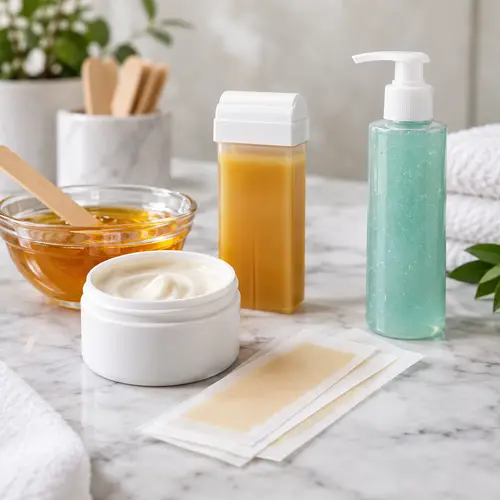
The best salon retail hair removal products are designed as a connected service system, not a shelf of unrelated SKUs. Start with one core removal format—depilatory cream, wax strips, sugar wax, hot wax, or roll-on wax—then pair it with aftercare that supports comfort, easy home use, and repeat purchase. Before launch, confirm the formula texture, application time, removal behavior, irritation-risk review, packaging compatibility, storage performance, labeling documents, and shipment conditions.
For creator-led brands, the workflow must also work on camera. Samples should be reviewed under salon lighting and content-production lighting, with close attention to spread, stringing, residue, color, and pack cleanliness. PZIK can plan pilot runs from 1,000 units under ISO 22716 conditions and compress qualified projects to under 30 days. A seven-day sample target can be scoped when the project uses an existing validated base, available components, and clearly defined visual references.
Key Takeaways for Private Label Buyers
- Source a system. Select the removal product, preparation step, aftercare, and retail refill logic together.
- Approve measurable behavior. Define spread, viscosity, wax pickup, strip pull, residue, fragrance, and rinse-off expectations before signing the production sample.
- Test the complete pack. A stable formula can still fail through cartridge leakage, cap stress, cream discoloration, or label lifting.
- Separate salon and home instructions. Professional service timing should not be copied directly into consumer-facing directions.
- Plan reorders before launch. Lock component lead times, batch size, carton configuration, and reserve capacity before campaign content goes live.
- Keep claims disciplined. Cosmetic positioning should match the available evidence and target-market labeling requirements.
Buyer Context
Hair-removal launches have an unusual dependency: performance is judged during application, immediately after removal, and again over the following hours. A wax may look excellent in a jar but become too fluid in a warm salon. A strip may remove hair effectively while leaving excessive residue. A depilatory cream may spread beautifully yet dispense unevenly from the selected tube. These are product-system failures, not isolated formula problems.
The first decision is format. A custom depilatory cream formulation offers a simple consumer ritual but requires precise directions, odor management, pack compatibility, and an irritation-risk review. Custom wax strips and hot wax create stronger visual content, although adhesion, melting behavior, residue, strip dimensions, and storage conditions require closer control. Sugar wax and roll-on cartridges add their own service variables, including pickup consistency, heating behavior, roller movement, and closure integrity.
Aftercare should be selected at the same stage as the removal format. A lightweight soothing gel may fit warm climates and fast salon turnover. A richer lotion may support a premium body-care position. An after hair removal serum can create a repeat-use ritual, but slow-regrowth language must be reviewed carefully for the intended market. Buyers can compare these options through a focused post-depilation care OEM brief rather than adding an arbitrary moisturizer late in development.
For a creator brand, this connected workflow also shapes content. The core SKU produces the transformation moment; the aftercare product completes the routine and creates the reorder opportunity. A supplier should therefore understand the filming brief, salon procedure, retail instructions, target price, and fulfillment constraints—not only the ingredient list. The broader custom hair removal product development scope should identify which elements are custom, which use an existing base, and which require new compatibility work.

Technical and Packaging Factors
Formula behavior in the real service workflow
Approve texture with the intended applicator. Depilatory cream should dispense cleanly, remain where applied, cover hair evenly, and remove without excessive residue. Hot wax should have a usable service window, controlled stringing, predictable hardening, and suitable pull strength. Sugar wax must remain workable across expected salon conditions. Roll-on wax should coat consistently without roller seizure or uncontrolled flow.
Do not approve samples from appearance alone. Request a documented review covering application, removal, skin feel, fragrance, rinse behavior, and visible residue. For sensitive positioning, define exclusions and review the mild hair removal formula pathway without assuming that terms such as gentle guarantee universal tolerance.
Pack compatibility and storage
Each sample round should use the intended packaging whenever possible. Tubes and pumps need evacuation and seal checks. Wax jars require closure, liner, heat exposure, and transit review. Roll-on cartridges require upright, inverted, and side-storage leakage checks, followed by roller-function review. Wax-strip sachets need seal-integrity and adhesion-aging assessment because oil migration or material interaction can change strip performance.
Heat and cold storage should evaluate separation, hardening, softening, odor shift, color change, label lifting, paneling, leakage, and recovery after return to room temperature. Shipment testing should reflect the actual route, carton count, and season. The expected checkpoints can be mapped through the hair removal manufacturing process.
Safety, labels, and market fit
The technical file should connect the approved formula, pack, instructions, warnings, batch records, and market-specific label copy. For European ingredient screening, buyers can consult the European Commission CosIng ingredient database. For the United States, the FDA explanation of cosmetic oversight helps clarify why cosmetics should not be presented as FDA approved. Brands targeting relevant Muslim markets should discuss ingredients and manufacturing documentation against JAKIM Halal requirements rather than treating a logo as a universal shortcut.
A clean brief should also show the BOM, optional component upgrades, tooling exposure, sample scope, production quantity, shipping assumptions, and reorder lead time. This gives founders a usable launch model before they approve content dates. Buyers can organize format and channel choices through private label hair removal solutions, then discuss a hair removal formula with the visual references and target market attached.
Decision Framework
| Factor | What to Check | Why It Matters | ODM Buyer Note |
|---|---|---|---|
| Service format | Application method, timing, removal step, cleanup, and staff skill | Determines salon throughput and consumer instructions | Approve the complete workflow, not a jar-only sample |
| Texture | Spread, pickup, stringing, coating, residue, and room-temperature recovery | Controls performance and camera presentation | Review under salon and filming conditions |
| Packaging | Dispensing, seals, closure fit, cartridge movement, label adhesion, and evacuation | Prevents leakage, waste, and poor reviews | Test production-equivalent components |
| Storage and transit | Heat, cold, orientation, carton protection, and post-storage function | Identifies failures before international shipment | Match testing to the destination and shipping season |
| Aftercare | Skin feel, absorption, fragrance, residue, routine fit, and claim wording | Supports service completion and repeat purchase | Bundle it into sample evaluation from the start |
| Reorder readiness | Component lead time, batch minimum, reserved capacity, and artwork control | Reduces stockout risk after a successful campaign | Use a rolling forecast and pre-approved substitution rules |

ODM Manufacturing Considerations
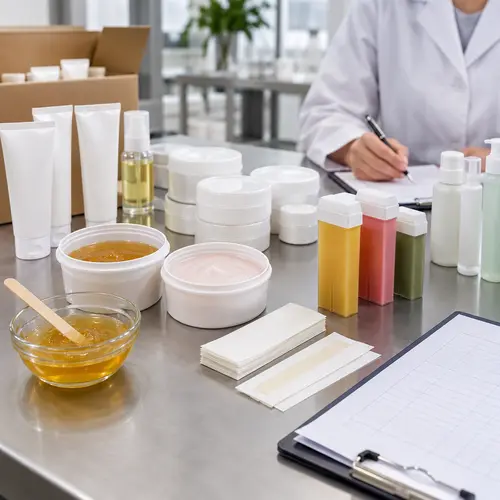
For salon retail hair removal products, ODM approval should convert a creative concept into measurable production requirements. Before approving a sample, document its color, fragrance, spread, residue, removal performance, and intended use area. Wax products should also have an agreed working-temperature window and melting-point range where relevant. Creams, gels, and serums need target viscosity ranges rather than descriptions such as ‘thick’ or ‘silky.’
Keep one signed master sample and a written specification for production comparison. Sample confirmation should state whether approval covers the formula alone or the complete filled pack. It should also identify permissible variation in shade, odor, fill weight, and texture. A reference video can help communicate the desired visual effect, but it should not replace numerical limits and physical samples.
Formula customization can involve fragrance level, color, working time, wax flexibility, cream spread, or aftercare sensory feel. Each change may affect cost, performance, and ingredient declarations. Ask the supplier to separate essential changes from optional marketing features and provide a transparent bill of materials. This makes it easier to identify tooling, decoration, component, testing, and freight assumptions without hidden charges.
Packaging compatibility must be confirmed with the intended bulk formula and production components. Check cap fit, seal integrity, label lifting, print resistance, product contact surfaces, and pack shape after storage. Roll-on components require particular attention to fit between the bottle, roller head, and cap. If components come from several vendors, responsibility for resolving incompatibility should be stated in the contract.
A stability review should cover normal storage plus realistic hot and cold conditions for the destination market. Buyers should define review intervals, acceptable appearance changes, odor limits, viscosity tolerance, and pack deformation criteria. The scope, sample quantity, and pass conditions should be agreed before testing begins.
MOQ discussions should distinguish formula batch minimums from component, decoration, and finished-unit minimums. Request pricing by volume tier and ask what happens to unused printed packaging. Label documents normally include the ingredient list, batch coding format, usage directions, warnings, shelf-life basis, and responsible-party information required for the market. For the United States, avoid language implying routine cosmetic preapproval; the FDA explains its authority over cosmetics and the limited premarket approval requirements. For EU ingredient screening, the European Commission CosIng database is a useful reference, although it does not replace a product-specific legal assessment.
Shipment planning should state carton quantity, pallet pattern where applicable, temperature concerns, container loading method, and responsibility for damaged or leaking goods. Compare estimated freight using the final packed dimensions and weight, not an early component estimate. Related background can be reviewed through the OEM and ODM service scope and manufacturing process overview.
Common Problems or Failure Cases
Wax becomes brittle: Hard wax that cracks during removal may have an unsuitable working range, excessive cooling, or batch variation. Confirm application thickness, room conditions, and the approved temperature window before changing the formula.
Wax strip adhesion declines: Strips can lose grip because of adhesive migration, unsuitable release material, prolonged heat exposure, or poor pouch sealing. Compare retained production samples with recently opened stock and record storage history.
Depilatory cream separates: Visible liquid, graininess, or uneven consistency can result from storage stress, formula imbalance, or interaction with the pack. Quarantine the affected lot and compare batch records, retained samples, and shipment conditions.
Roll-on cartridges leak: Leakage may come from component tolerances, incorrect assembly, formula flow at elevated temperature, or cap distortion. Inspect leakage orientation, lot numbers, fill level, and component batches rather than assuming the formula is solely responsible.
Fragrance causes complaints: A strong fragrance can increase perceived discomfort even when it masks base odor effectively. Buyers should assess fragrance level on the intended body area, review allergen declarations, and consider a lower-fragrance or fragrance-free option.
Packaging deforms: Jars, cartridges, or tubes may panel, warp, or lose closure fit during warm storage or transport. Recheck component material, wall thickness, headspace, carton support, and expected shipping environment.
Supplier Checklist
- Define the removal format, use area, user instructions, and aftercare pairing.
- Request sample scope, revision limits, fees, and ownership terms in writing.
- Approve measurable ranges for viscosity, melting point, working temperature, fill weight, color, and odor where applicable.
- Confirm ingredient, fragrance-allergen, warning, batch-code, and market-label documents.
- Review irritation-risk controls, raw-material records, in-process checks, retained samples, and complaint handling.
- Verify that production uses the approved formula, components, decoration, and master sample.
- Separate formula MOQ, packaging MOQ, printed-component MOQ, and finished-goods MOQ.
- Obtain an itemized quotation covering bulk, filling, packaging, testing, freight assumptions, and optional work.
- Define storage limits, carton specifications, shipment conditions, and defect-resolution responsibility.
- Review the supplier’s relevant hair removal product categories, not unrelated cosmetics experience alone.

FAQ
How can I stop an OEM supplier from copying my idea or formula?
Use a mutual confidentiality agreement, restricted-access project files, and a contract defining ownership of custom work, samples, artwork, and market exclusivity. Clarify whether the base formula is supplier-owned or developed exclusively for your brand. No document removes all risk, so also assess record controls and the supplier’s history with overseas brands.
Can a supplier understand social-media marketing requirements if I do not know technical terminology?
A capable contact should translate visual references into measurable specifications. Provide short videos, competitor references, desired application behavior, and unacceptable outcomes. The supplier should respond with a written brief covering feasible texture, use conditions, pack format, cost impact, and claim limitations.
Can quality control guarantee that no customer will experience irritation?
No responsible supplier can guarantee zero reactions. Risk can be reduced through ingredient review, controlled manufacturing, appropriate product assessment, clear warnings, patch-test directions where suitable, traceable batches, and complaint procedures. Avoid exaggerated safety promises, especially for face-use depilatory products.
What should count as final sample approval?
Approval should cover the filled product, intended packaging, label copy, appearance, fragrance, application behavior, and agreed specifications. Sign and date the approved sample record, and retain matching samples with both buyer and manufacturer.
Why can the finished-goods MOQ differ from the formula MOQ?
The bulk batch may support one quantity while printed pouches, labels, cartons, cartridges, or caps require another. Ask for each minimum separately and confirm how surplus components will be stored, charged, or disposed of.
Which records should accompany a shipment?
Typical records include the commercial invoice, packing list, batch identification, ingredient declaration, product specification, and agreed quality release documents. Exact records depend on the destination, transport method, and product claims. Halal-positioned products may also require verification against the applicable authority, such as the JAKIM Halal certification requirements.