Direct Answer
Annual hair removal product range planning should operate as a gated portfolio and supply-risk review, not as a simple ranking of last year’s sales. Procurement, R&D, regulatory, quality, and commercial teams should assess each SKU against five evidence sets: channel performance, consumer feedback, formula robustness, packaging compatibility, and supplier continuity. The resulting decision should be explicit: retain, reformulate, repackage, extend, transfer, or discontinue.
For depilatory cream, wax strips, sugar wax, roll-on wax cartridges, and aftercare, commercial demand alone is insufficient. Buyers must determine whether performance remains consistent across production lots, transport conditions, and intended markets. They should also identify where a second qualified manufacturer is required before an incumbent experiences a quality event, failed social-compliance audit, labor disruption, or capacity constraint. Development should then proceed through controlled sampling, compatibility review, stability testing, compliance documentation, pilot production, and approved scale-up.
Key Takeaways for Private Label Buyers
- Sourcing: Classify every core SKU by revenue importance, supply concentration, lead-time exposure, and availability of qualified backup capacity.
- Formulation: Convert consumer comments into measurable requirements such as cream spreadability, wax pull behavior, residue, odor, and post-removal skin feel.
- Packaging: Test the actual commercial pack, closure, liner, cartridge, strip pouch, and label rather than relying on bulk formula stability alone.
- Testing: Review accelerated, ambient, cold-storage, freeze-thaw, transport, leakage, and lot-to-lot data against predetermined acceptance criteria.
- Launch decisions: Do not approve a launch date until formula, pack, labeling documents, raw-material coverage, and production capacity have named owners and release gates.

Buyer Context
Hair-removal portfolios contain materially different manufacturing risks. A depilatory cream depends on controlled alkalinity, active-system stability, viscosity, odor management, and package resistance. Wax strips depend on coating uniformity, backing compatibility, adhesion aging, pouch integrity, and clean separation. Sugar wax requires a controlled moisture and texture profile, while hot wax requires a defined softening or melting range and repeatable pull strength. Roll-on wax adds cartridge fit, roller movement, cap retention, heating behavior, and leakage risk. Aftercare introduces a separate preservation and skin-comfort assessment.
The annual review should therefore combine market evidence with technical evidence. Commercial teams can use sources such as Business of Fashion beauty intelligence to frame category and channel developments, but supplier decisions should be based on SKU-level data. Useful inputs include returns, complaints, repeat purchases, salon feedback, fulfillment damage, regional climate exposure, and batch-release history. Technical background can be organized through hair removal product guides and application-specific hair removal product solutions.
Regulatory assumptions also require market-by-market confirmation. The FDA explanation of its authority over cosmetics clarifies that cosmetics are regulated but are generally not approved before marketing. Buyers targeting Gulf markets should separately verify relevant requirements under UAE MoIAT industrial standards and evaluate certification pathways against the MUI World Halal Council mutual-recognition guide. Supplier statements should not substitute for legal and regulatory review.
Technical or Packaging Factors
Formula Performance Must Be Converted Into Specifications
A complaint such as ‘the cream is difficult to spread’ is not a development specification. The buyer and ODM should translate it into viscosity, yield behavior, application weight, rinse behavior, and performance after storage. Viscosity readings are meaningful only when the instrument, spindle, speed, sample temperature, and conditioning time are fixed. For custom depilatory cream formulation, the review should also cover active ingredients, odor-control strategy, contact-time instructions, skin-warning language, and the risk that fragrance or botanical additions could destabilize the core formula.
Products positioned for sensitive users need an irritation-risk review rather than a softer fragrance alone. The brief for mild hair removal formula development should define intended body area, maximum instructed exposure, exclusion statements, patch-test directions where applicable, and evidence supporting performance. Aftercare should be treated as a separate formula and package system. A soothing gel after hair removal or after hair removal serum requires its own stability, preservation, dispensing, and claims review.
Wax Performance Is Temperature and Substrate Dependent
For custom wax strips and hot wax, buyers should establish acceptable coating weight, strip dimensions, backing strength, peel behavior, residue, and performance at low and elevated temperatures. Hot wax and sugar wax should have supplier-defined texture or melting parameters linked to the intended heating and application method. Roll-on cartridges require checks for roller rotation, wax flow, neck and cap fit, deformation, and leakage during upright, inverted, and horizontal storage.

Stability Must Include the Commercial Package
A practical screening matrix may include accelerated storage at 40°C and 75% relative humidity, cold storage at 5°C, ambient retention samples, and three freeze-thaw cycles. These are development conditions, not universal shelf-life guarantees. Duration and acceptance limits must reflect the formula, packaging, destination, and company protocol. For cartridges, jars, tubes, sachets, and strip pouches, examine weight loss, leakage, swelling, paneling, discoloration, odor change, phase separation, label lifting, seal failure, and dispensing behavior.
A 24-hour inverted leakage screen can identify obvious closure failures, but it does not replace transport simulation or longer compatibility work. Shipping review should consider case orientation, pallet pattern, summer heat, winter cold, vibration, and pressure changes. The approved sample, packaging bill of materials, artwork version, and test protocol should then be locked into the hair removal manufacturing process before pilot production.
ODM Qualification Must Address Continuity and Control
The range review should identify products for dual sourcing before disruption occurs. For strategic SKUs, buyers should evaluate raw-material origin, alternative suppliers, safety-stock logic, line capacity, change-control procedures, data segregation, formula access rights, deviation handling, and recall readiness. ISO 22716 alignment is a baseline control framework, not proof that every batch will conform. Audit evidence, batch records, training files, calibration status, environmental controls, and complaint investigations remain necessary.
Where a manufacturer proposes pilot runs from 1,000 units or development in under 30 days, the buyer should confirm which activities are included, which tests will still be in progress, and what prevents formula re-engineering at scale. The scope of hair removal OEM ODM services should be documented through a technical agreement and responsibility matrix before samples are approved.
Decision Framework Table
| Factor | What to Check | Why It Matters | ODM Buyer Note |
|---|---|---|---|
| Portfolio role | Sales, margin, repeat rate, complaints, and channel dependence | Separates strategic SKUs from products consuming complexity without sufficient return | Assign retain, reformulate, repackage, transfer, extend, or discontinue status |
| Formula control | Texture, viscosity method, melting behavior, odor, residue, and instructed use time | Converts subjective feedback into release specifications | Require approved methods and limits before scale-up |
| Packaging compatibility | Tube, liner, jar, pouch seal, strip backing, cartridge roller, closure, and label | Many field failures result from formula-pack interaction rather than bulk instability | Test production-intent components from nominated suppliers |
| Storage and shipment | Heat, cold, freeze-thaw, leakage, vibration, case orientation, and retention samples | Protects performance across warehouses and international distribution routes | Link test conditions to destination-market risk |
| Compliance evidence | Ingredient review, label files, safety support, batch traceability, and market notifications | Reduces launch delay and cross-border enforcement exposure | Define document ownership in the contract |
| Supply resilience | Capacity, raw-material coverage, qualified alternatives, labor controls, and recovery plans | Limits disruption from audit failure, shortages, or incumbent capacity loss | Qualify a second source for strategically important products |
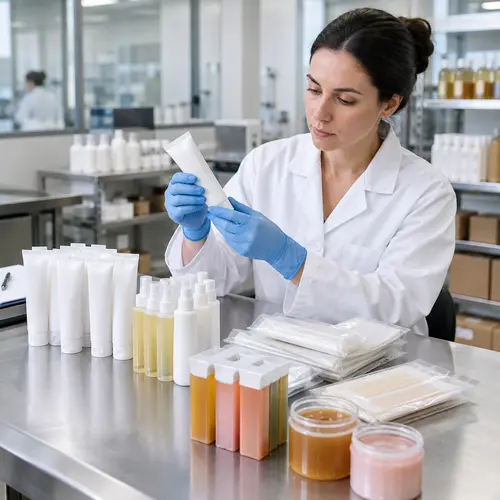
The final output should be a controlled development portfolio with owners, evidence gaps, target completion dates, and escalation rules. Sample requests should specify formula type, intended market, pack format, test scope, forecast range, and required documents through a formal hair removal product RFQ.
ODM Manufacturing Considerations
Effective hair removal product range planning turns each proposed SKU into a controlled manufacturing brief. Before approving a custom formula, the buyer and ODM supplier should agree on the product format, target hair type, application area, use instructions, sensory profile, pack size, target markets, and acceptance criteria. These decisions should be documented before samples are compared, because an attractive laboratory sample may not remain practical after scale-up, filling, transport, and consumer use.
Sample confirmation should proceed through traceable versions. Each depilatory cream, wax, sugar wax, roll-on cartridge, strip, or aftercare sample needs a code, issue date, ingredient list, process status, and recorded buyer feedback. Approval should cover measurable attributes as well as appearance. Depending on the product, relevant attributes may include a defined viscosity window, wax softening or melting range, spread weight, removal efficiency, residue, fragrance strength, skin feel, and instructions for safe exposure time. The signed reference sample should correspond to the formula and process documents released for manufacturing.
Formula customization requires clear limits. A fragrance change, botanical addition, pigment adjustment, or altered wax blend can affect odor, texture, removal performance, or skin tolerance. Buyers should request side-by-side samples and an updated ingredient declaration rather than assuming a minor marketing change is technically neutral. For depilatory cream, the irritation-risk review should consider the intended body area, directions, exposure limits, and foreseeable misuse. For wax formats, assessment should reflect the actual operating temperature and application method.
Packaging selection should be completed with the filled product, not from an empty component catalog. Confirm the resin, closure, liner, applicator, fill volume, coding area, and secondary pack dimensions. Review whether the formula causes swelling, paneling, discoloration, odor transfer, blocked dispensing, or loss of closure integrity. A stability program should define checkpoints, test attributes, acceptance limits, retained samples, and responsibility for investigating deviations. It should also include realistic ambient and distribution conditions for the destination market.
MOQ discussions should distinguish the formula batch minimum from the minimum for printed tubes, cartons, strips, cartridges, labels, and shipping cases. A technically feasible production quantity can still create excess packaging inventory. Ask whether pilot samples use production-equivalent ingredients and components, what can be ordered in smaller quantities, and who owns obsolete materials after artwork or forecast changes. The supplier’s OEM/ODM service scope and manufacturing process should identify these boundaries.
Before release, verify the ingredient declaration, directions, warnings, batch coding format, shelf-life basis, responsible-party details, country-of-origin statement, and market-specific language. Shipment planning should define case count, pallet pattern, maximum stacking, container loading, seasonal route exposure, and receiving inspection. Requirements may differ by destination; for example, buyers entering the Gulf should review applicable UAE MoIAT industrial standards and obtain qualified advice for the specific product and claims.

Common Problems or Failure Cases
Wax becomes brittle or cracks. This can result from an unsuitable blend, excessive coating variation, aging, or exposure outside the expected distribution range. Compare retained samples from the affected lot with the approved reference, then review raw-material lots, coating records, storage history, and finished-pack sealing.
Wax strips lose adhesion. Common contributors include liner interaction, surface contamination, uneven wax loading, prolonged storage, or poor pack closure. Buyers should test removal on the specified hair and skin condition rather than judging tack by hand alone.
Depilatory cream separates or dispenses unevenly. Separation may indicate emulsion instability, process variation, temperature exposure, or interaction with the container. Quarantine affected stock and review batch records, fill observations, sample history, and package contact surfaces before changing the formula.
Roll-on cartridges leak. Leakage can arise from dimensional variation, an incompatible seal, poor assembly, or pressure changes during transport. Inspection should identify whether leakage originates at the roller, neck, cap, or cartridge seam and whether the issue is isolated to one component lot.
Fragrance causes unexpected sensitivity complaints. Fragrance identity, dosage, allergen disclosure, application area, and consumer instructions all require review. Complaint evaluation should separate irritation, allergy-like symptoms, odor preference, and misuse. A cosmetic claim must not obscure the need for clear warnings and appropriate records.
Packaging deforms in storage or transit. Deformation may affect shelf presentation, dosing, or seal integrity even when the formula remains visually acceptable. Check filled-pack dimensions, case compression, pallet loading, warehouse conditions, and transport records. Corrective action may involve the component specification, filling conditions, or distribution configuration.
Supplier Checklist
- Define every SKU by product format, use area, target hair, pack size, claims, markets, and annual forecast.
- Request coded samples with formula version, ingredient declaration, intended process, and written acceptance criteria.
- Confirm relevant texture, viscosity, melting behavior, application time, removal performance, residue, and skin-tolerance review.
- Evaluate the filled commercial package for dispensing, closure integrity, deformation, odor transfer, print durability, and component consistency.
- Review the stability protocol, checkpoints, pass criteria, deviation handling, retained samples, and shelf-life rationale.
- Separate formula MOQ, filling MOQ, and printed-component MOQ; document excess-material ownership and reorder lead times.
- Verify artwork control, labeling documents, warnings, batch coding, market language, and responsible-party information.
- Audit ingredient traceability, approved alternates, capacity allocation rules, business-continuity plans, and escalation contacts.
- Review shipment case specifications, pallet configuration, route conditions, stacking limits, and receiving inspection criteria.
- Assess information access controls, confidentiality terms, worker welfare records, environmental data, and independent audit access.
Buyers can use this checklist while comparing the supplier’s relevant hair removal product categories, rather than treating all cosmetics capability as equivalent.

FAQ
How should a buyer confirm that the production formula matches the approved sample?
Link the signed reference sample to a formula code, ingredient specification set, process version, and finished-product acceptance limits. Purchase documents should prohibit unapproved substitutions and require documented investigation when production results fall outside those limits.
Can a factory guarantee that a core formula will never be leaked?
No supplier can credibly promise absolute zero risk. Buyers should instead verify role-based system access, restricted formula files, physical controls for laboratories and archives, confidentiality obligations, access logs, backup controls, and procedures for departing personnel. Contract terms should define formula ownership, permitted use, incident reporting, and remedies.
How can strategic supply be protected during a global ingredient shortage?
Require visibility into critical ingredients, approved sources, normal lead times, safety-stock policy, and allocation rules. Strategic priority should be written into the supply agreement and supported by forecasts or reserved capacity. Prequalified alternates can improve continuity, but they still require documented equivalence and buyer approval before use.
What environmental evidence should an international buyer request?
Request permits, waste and wastewater records, energy and emissions data, corrective-action history, and traceable evidence behind carbon claims. If headquarters requires a carbon-neutral supplier pathway, define the reporting boundary, baseline, reduction milestones, assurance method, and access for an independent audit.
How can worker-treatment risks be checked?
Review age-verification controls, payroll and time records, overtime practices, grievance channels, recruitment fees, disciplinary policies, and recent independent social-audit findings. Interview access and corrective-action closure matter more than a certificate alone.
Are cosmetics approved by the FDA before sale in the United States?
Generally, cosmetic products and ingredients are not subject to FDA premarket approval, apart from color additives where applicable. The responsible company still must meet legal obligations for safety, labeling, and prohibited ingredients. See the FDA explanation of its authority over cosmetics.