Direct Answer
Developing post depilatory care products starts with defining the irritation event, not choosing a fashionable active. After waxing, sugar waxing, depilatory cream use, or strip removal, skin can present different combinations of temporary redness, residue, dryness, friction sensitivity, and visible follicular response. A production-ready brief should therefore specify the preceding removal method, intended body area, target texture, claim boundaries, packaging format, sales markets, and acceptable cost range.
The ODM should translate that brief into a formula and verification plan covering ingredient compatibility, viscosity, packaging interaction, heat and cold storage, microbiological quality, labeling documents, and shipment conditions. Samples should use the intended base, fragrance system, and container whenever possible, because changing any of these after approval can alter sensory performance or stability. For a fast DTC launch, the most reliable route is a proven formulation platform with controlled customization, followed by documented testing and a pilot run on the same manufacturing system intended for scale.
Key Takeaways for Private Label Buyers
- Source as a system: evaluate the aftercare formula, closure, label, secondary packaging, and transport carton together rather than approving each component in isolation.
- Define the removal context: an after-wax oil, cooling gel, and post-depilatory cream lotion address different residue, friction, and hydration needs.
- Customize where customers notice: texture, absorption, fragrance, applicator, finish, and hero ingredients usually create more meaningful differentiation than rebuilding the formula from zero.
- Test the commercial pack: stability in a lab jar does not establish compatibility with a pump, tube, spray closure, or travel-size bottle.
- Review claims before artwork: soothing and moisturizing language may fit a cosmetic positioning, while claims implying treatment or prevention can change the regulatory assessment.
- Plan the pilot around launch risk: confirm sample scope, component lead times, quality limits, and release documents before committing campaign dates.
Buyer Context
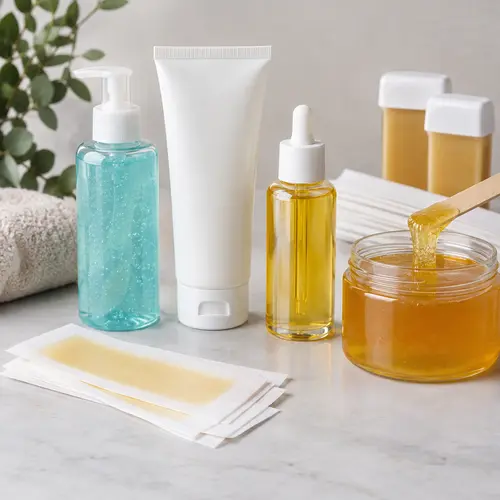
Hair-removal aftercare sits at the point where product performance becomes highly visible. A wax strip may remove hair effectively, but the customer often judges the complete experience by what happens during the next few minutes and hours. Persistent tack, slow absorption, an overpowering fragrance, or a gel that pills beneath clothing can turn a technically acceptable kit into poor social content and unfavorable reviews.
The first sourcing decision is whether the product will be sold alone or paired with another format. A compact sachet included with private label waxing products has different fill-volume, barrier, and cost constraints from a full-size retail lotion. A lightweight serum designed for a broader routine may sit beside a post hair removal serum supplier brief, while a soothing gel used after chemical depilation must be assessed alongside the rinse instructions and exposure profile of the custom depilatory cream formulation.
This is also where speed can create hidden risk. A three-to-five-day sample target may help a founder respond to a short market window, but the sample is a decision tool, not proof of shelf life. The development schedule should separate rapid sensory selection from stability, compatibility, safety review, and production release. Buyers comparing custom hair removal product development options should ask which activities run in parallel and which results must be available before goods can ship.
Market destination matters early. The US FDA explains that regulatory treatment depends on intended use and claims in its guidance on personal care products regulated as cosmetics. Brands entering Saudi Arabia should map documentation and notification requirements against the Saudi FDA cosmetic registration framework, while UAE projects should confirm applicable requirements through the UAE MoIAT industrial standards. These checks belong in the brief, because formula restrictions, artwork, responsible-party details, and required files can affect the critical path.
Technical and Packaging Factors
Formula architecture. Begin with the desired consumer action. A clear gel can deliver a cooling, quick-spread experience after wax strips. A lotion may better support dry skin after depilatory cream use. An oil can dissolve residual wax, but excessive slip or transfer onto clothing can weaken the overall experience. Ask for measurable targets such as appearance, odor, pH where applicable, viscosity range, spread, absorption time, and residue level. These become approval criteria rather than subjective comments such as ‘make it more premium.’
Ingredient selection should follow the use case and claim strategy. Humectants, emollients, and familiar botanical ingredients can support a calming story, but every addition must be reviewed for fragrance allergens, color drift, oxidation, preservation impact, and regional acceptability. For face or sensitive-area positioning, request a documented irritation-risk review and clear directions limiting use on compromised skin. The related low irritation hair removal products framework can help align the removal step and the recovery step.
Packaging compatibility. Pumps must deliver the intended dose without clogging; tubes must recover after squeezing; sachet seals must resist oil migration; and roll-on or kit components must remain clean during transit. Oils can soften certain elastomers, botanical colors may stain packs, and low-viscosity gels can escape through closures that appear secure at room temperature. Compatibility work should use decorated commercial components, since coatings, inks, labels, and adhesives can react differently from unprinted samples.

Storage and transport. A practical protocol normally includes controlled room-temperature storage plus elevated-temperature, cold-storage, and temperature-cycle conditions appropriate to the formula and destination. For example, a development screen may include 25 degrees Celsius, 40 degrees Celsius, 4 degrees Celsius, and repeated hot-cold cycles, but the exact design and duration should be justified by the responsible technical team. Review color, odor, pH, viscosity, separation, pack deformation, leakage, pump output, and label adhesion at defined checkpoints. Hot-weather fulfillment deserves special attention for wax-removal oils, gels, and mixed aftercare kits.
Production transfer. Approval should cover more than one hand-filled lab sample. Ask how mixing order, shear, heating or cooling, deaeration, holding time, and filling temperature will be controlled. A 1,000-unit pilot under ISO 22716 procedures can expose filling-speed or closure-torque issues that are invisible at bench scale. The documented hair removal product quality control flow should connect the signed sample to incoming inspection, batch records, in-process checks, finished-product release, and shipment review without an unapproved formulation change.
Decision Framework
| Factor | What to Check | Why It Matters | ODM Buyer Note |
|---|---|---|---|
| Removal method | Wax, strip, sugar wax, roll-on wax, or depilatory cream | Each leaves a different residue and sensitivity profile | Provide the paired product and use instructions during sampling |
| Texture specification | Viscosity range, spread, absorption, tack, and finish | Sensory consistency drives repeat use and visual reviews | Approve measurable limits with the reference sample |
| Formula safety | Ingredient review, microbiological controls, and irritation-risk assessment | Post-removal skin may be temporarily more reactive | Keep claims cosmetic and market-specific |
| Pack compatibility | Leakage, dose, seal quality, label adhesion, and component interaction | A stable formula can still fail in its retail pack | Test decorated components from the intended supplier |
| Storage profile | Heat, cold, cycling, light exposure, and shipment orientation | Transport can change viscosity, odor, appearance, or seals | Agree checkpoints and acceptance criteria in writing |
| Launch readiness | MOQ, sample scope, artwork files, labels, batch documents, and lead times | Missing dependencies can erase the benefit of fast formulation | Map the project through a complete depilatory product development solutions brief |
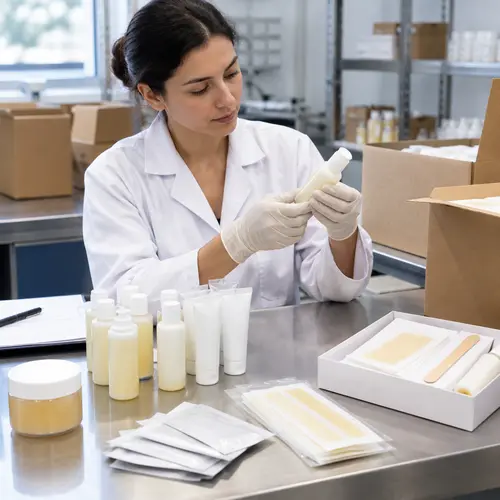
Before supplier selection, request a written development scope showing what is included in the sample, what may change at pilot stage, who owns artwork and testing decisions, and which documents accompany release. Use established hair removal product guides to prepare technical questions, review the dedicated post-depilation care OEM capabilities, and submit a structured hair removal product RFQ containing target markets, forecast, pack format, claims, benchmark texture, and launch date.
ODM Manufacturing Considerations
Moving post depilatory care products from an approved brief into commercial production requires controlled decisions on the formula, pack, documents, and logistics. Sample approval should therefore be based on a written specification rather than appearance alone. Record the accepted color, odor, viscosity or melting range, application feel, absorption, residue, and fill weight. For wax strips, also define strip dimensions, wax coat consistency, backing material, and peel behavior. The signed specification, approved sample, and final artwork should become the production references.
Formula customization can range from adjusting fragrance and color to changing the emollient system, botanical oil source, or soothing ingredient profile. Each change should have a clear commercial purpose. A distinctive imported plant oil may support a credible sourcing story, but the buyer should verify its trade name, country of origin, supplier documentation, availability, and likely lead-time variation. Claims should remain consistent with the actual ingredient level and intended cosmetic use.
Packaging compatibility must be reviewed with the final formula and the actual component materials. Depilatory cream can challenge some seals or printed surfaces, while warm climates may soften wax and increase movement inside a strip pouch or roll-on cartridge. The review should cover component fit, fill accuracy, dispensing performance, material distortion, label adhesion, and formula contact with liners, gaskets, and applicators. Any change in resin, adhesive, decoration, or component supplier should trigger a documented assessment.
Stability review should reflect the product and intended sales regions. Buyers should receive a protocol identifying review intervals, acceptance criteria, and observations for odor, color, viscosity, separation, wax consistency, strip performance, and pack condition. Stability evidence does not eliminate every field risk, but it helps reveal predictable failure modes before inventory is committed.
MOQ discussions should separate formula batch minimums from packaging minimums. A custom bottle color, printed pouch, or proprietary applicator may require a higher commitment than the formula itself. Ask whether excess components will be stored, charged, or discarded and whether future runs must use them within a defined period. For an urgent replacement-supplier project, confirm which stock components and established formulas can shorten qualification without weakening the approval process.
The document package should match the destination market and agreed claims. Typical records include an ingredient list using INCI names, specification, certificate of analysis, safety data where applicable, batch coding format, artwork review record, and supporting test reports. Regulatory classification depends partly on intended use and claims; the FDA explains that not every personal care product is regulated in the same way as a cosmetic. Market-specific registration responsibilities should be assigned in the contract rather than assumed.
Shipment planning should state carton configuration, pallet requirements, storage limits, container conditions, and handling instructions. Wax products need particular attention during hot-weather transport, while creams and liquid aftercare products require protection against freezing and prolonged heat. Agree on pre-shipment inspection scope, retained samples, lot traceability, and the evidence required if a shipment arrives damaged.

Common Problems or Failure Cases
Wax becomes brittle or cracks. The wax blend may be unsuitable for the expected temperature range, or storage may have altered its flexibility. Compare the failed lot with the approved specification, conditioning history, and retained sample. Do not assess brittleness immediately after a carton has been exposed to unusually low temperatures.
Wax strips lose adhesion. Common contributors include inconsistent wax coating, unsuitable nonwoven material, pouch contamination, aging, or heat exposure. Evaluate hair pickup, skin contact, peel behavior, and residue using a defined method. A visual check alone cannot confirm performance.
Depilatory cream separates or changes viscosity. Separation may indicate an emulsion, process, raw-material, or storage issue. Review mixing records, fill temperature, pH, viscosity trend, and component interactions. Because depilatory formulas have a specialized chemical profile, corrective changes should be evaluated for performance and irritation risk, not only cosmetic appearance.
Roll-on cartridges leak. Leakage can come from ball fit, cap engagement, formula flow, filling variation, or heat-related expansion. Test units in relevant orientations after conditioning and inspect cartons for product migration. A cartridge that remains clean upright may fail on its side during distribution.
Fragrance causes complaints. A scent accepted during a short evaluation may feel overpowering on recently depilated skin. Review fragrance level, allergen labeling obligations, and the availability of a fragrance-free option. Complaint analysis should distinguish fragrance preference from signs of irritation.
Packaging deforms. Paneling, swelling, warped caps, or damaged labels can result from formula contact, temperature, or transport pressure. Confirm whether the failure is limited to appearance or also affects seal integrity and dispensing. Substituting components without comparison testing can recreate the problem in a later batch.

Supplier Checklist
- Confirm the manufacturing site, quality certifications, audit scope, certificate issuer, validity dates, and whether the quoted product category is covered.
- Request a written sample brief covering texture, viscosity or melting range, fragrance, color, application performance, irritation-risk review, and acceptance criteria.
- Identify which formula elements are custom, which are platform-based, and who controls future revisions.
- Review raw-material traceability for signature oils, waxes, fragrances, and functional ingredients, including alternate-source rules.
- Confirm the final pack materials, component suppliers, decoration method, fill tolerance, and compatibility evidence.
- Ask for stability protocols, available results, retained-sample policy, deviation handling, and change-control procedures.
- Separate formula, primary-pack, decoration, and carton minimums; document setup charges and excess-component ownership.
- Verify INCI, specifications, batch records, certificates of analysis, claim support, artwork checks, and destination-market documents.
- Define shipment conditioning, inspection sampling, carton and pallet standards, lot coding, traceability, and complaint investigation timelines.
- Review confidentiality terms, formula ownership, permitted subcontracting, and restrictions on sharing artwork or launch information.
FAQ
Can an Asian manufacturer genuinely meet Western Clean Beauty and cruelty-free expectations?
Location does not establish compliance. Clean Beauty is usually a retailer or brand standard rather than one universal legal definition. Give the supplier a restricted-substance policy and require formula screening, raw-material declarations, animal-testing statements, certification evidence where claimed, and change control. Verify that certificates apply to the manufacturing site and current scope.
Will a low MOQ make the unit cost impossible to reconcile with customer acquisition cost?
It can, especially when custom packaging setup and testing are spread across few units. Model landed cost, fulfillment, expected returns, channel margin, and CAC before approving the configuration. A stock component with differentiated artwork or a phased formula customization plan may protect early economics while preserving a path to greater differentiation.
Will a turnkey or platform formula make the product indistinguishable from competing brands?
Not necessarily, but changing only the label creates that risk. Ask what can be modified in the sensory profile, fragrance, featured oil source, wax behavior, format, and usage system. Define exclusivity carefully: exclusivity may cover the complete formula, a specific modification, a market, or a limited period, and these are materially different protections.
What should be approved before the first commercial run?
Approve the signed formula specification, physical reference sample, packaging components, artwork, batch code position, fill quantity, test plan, inspection criteria, required documents, and shipment conditions. Any unresolved item should have an owner and written deadline.
How should buyers evaluate environmental packaging claims?
Request the material composition, recycled-content evidence, chain-of-custody documentation where relevant, supplier identity, and disposal guidance for each target market. Claims such as recyclable or recycled should match the actual component and local collection infrastructure. Avoid broad environmental language that cannot be substantiated.
Which compliance pathway applies in Middle Eastern markets?
Requirements vary by destination and product presentation. Saudi-bound products should be checked against the Saudi FDA cosmetic registration framework, while UAE projects should verify current requirements through MoIAT and the relevant local authorities. Assign responsibility for registration, label review, importer details, and supporting records before production.