Direct Answer
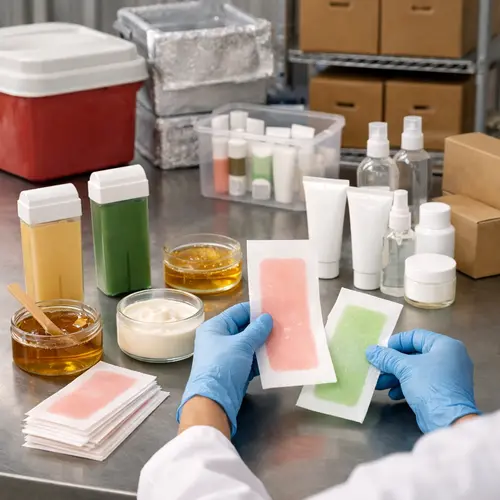
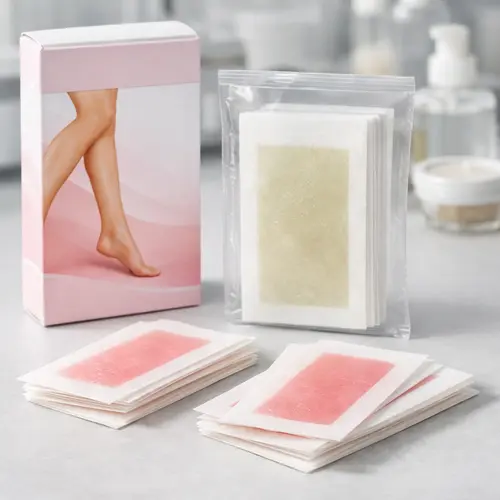
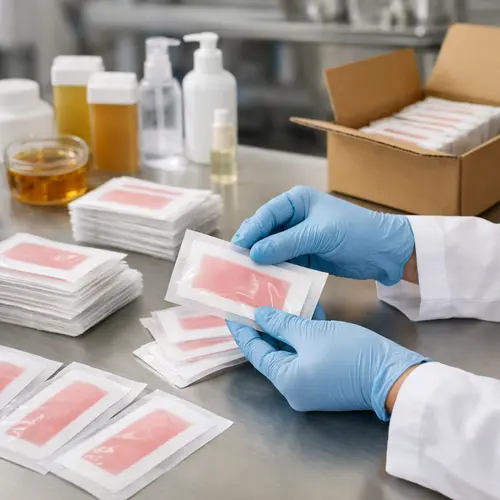
For most new private label wax strips launches, the strongest starting structure is 20 to 24 ready-to-use strips per retail kit, divided into smaller body-area pairs rather than packed as one large sheet count. A practical first SKU may include 10 to 12 double-sided strip pairs, one concise instruction leaflet, and an optional small aftercare sachet or wipe. This gives customers enough product to test both performance and value without creating excessive package volume, freight cost, or unused inventory.
The right count depends on the application. Facial kits need fewer, narrower pieces; leg and body kits need more coverage; salon-oriented packs need a higher count and simpler replenishment format. For a creator-led brand, the best structure is usually a visually clear starter kit supported by a refill pack. Ask the ODM to compare strip adhesion, residue, skin feel, packaging compatibility, and heat exposure before locking the count. This approach supports a faster launch while preserving room for a later premium or professional version.
Key Takeaways for Private Label Buyers
- Start with a use case: Choose facial, bikini, underarm, leg, or full-body coverage before selecting the strip count.
- Design around pairs: Double-sided pairs make application easier and help customers understand how many uses the kit provides.
- Match count to packaging: More strips can increase perceived value, but can also raise carton size, sealing risk, and shipment cost.
- Review the wax system: Check adhesion, removal feel, residue, hair capture, and performance after normal temperature changes.
- Build a sampling gate: Request a visual prototype, a production-equivalent sample, and packaging compatibility checks before approving mass production.
- Plan the launch ladder: A starter kit, refill pack, and aftercare add-on can create a clear product line without changing the core formula.
Buyer Context
Strip count is a commercial decision disguised as a packaging decision. It affects the first impression on a product page, the number of applications customers expect, the weight of each shipment, and the likelihood of repeat purchase. A small kit may feel accessible for a first trial, while a large kit may communicate better value for experienced users. Neither option works universally.
For a DTC brand or creator-led launch, the kit has to make sense in a short video. Customers should immediately see what the product is, where it is used, and how much is included. A transparent pouch, organized inner sleeve, or compact carton can make the count easy to understand. The structure should also support a clean unboxing sequence, since the product itself may become part of the launch content.
Application matters more than a generic comparison. Facial wax strips typically require smaller shapes and controlled placement. Body strips need enough length and width to cover larger areas, but excessive size can make handling awkward. Sugar wax and hot wax require different accessories and usage instructions. Roll-on wax cartridges may be sold as individual units or paired with reusable accessories. Aftercare can be added as a separate SKU or included as a limited starter-kit component.
Private-label buyers should also define their customer confidence level. A first-time user may prefer fewer strips, clear pairs, and a calming aftercare step. A salon or experienced home user may value a higher count and lower cost per application. These are different purchase jobs, so forcing them into one universal kit can weaken both positioning and operations.
Technical and Packaging Factors
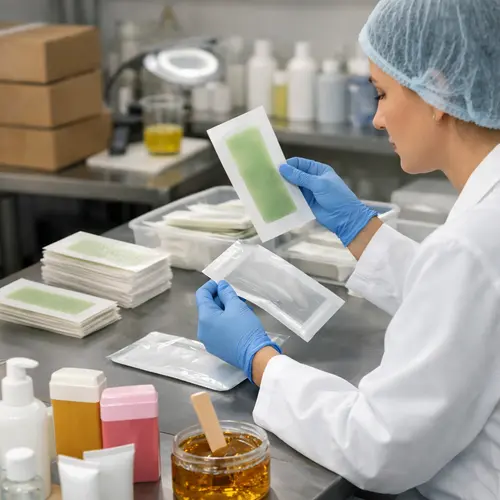
Strip construction. Review the backing material, wax coating uniformity, edge finish, and separation behavior. Each pair should open cleanly without tearing, excessive stretching, or wax transfer to the outer pouch. Ask for samples from the same production route intended for the final order. A hand-prepared sample can look excellent while failing to represent actual coating consistency.
Adhesion and removal. The wax should grip the target hair without requiring aggressive repeated passes. During review, record whether the strip leaves visible residue, pulls unevenly, or causes avoidable discomfort. Test on the intended body area using the final instructions and a defined hair length range. The ODM should document the review method so the approved sample becomes a practical reference for later batches.
Texture and storage. Wax strips may feel different after exposure to warm warehouses, cold transport, or prolonged shelf storage. Check whether the wax becomes too soft, too brittle, or difficult to separate. For cream, sugar wax, or roll-on formats included in a broader hair-removal line, review viscosity, dispensing behavior, melting response where relevant, and container compatibility separately. A formula that performs well in a controlled room may behave differently inside a delivery vehicle.
Packaging compatibility. The inner pouch, release liner, carton, adhesive label, and printed instructions must work as one system. Check for oil or wax migration, seal integrity, odor transfer, ink rub, carton deformation, and leakage risk. For roll-on cartridges, run an upside-down and side-storage review. For aftercare sachets or lotions, confirm that the closure and film remain intact during shipment. Packaging should protect the strips without adding unnecessary components that make sorting or recycling difficult.
Safety communication. The label should clearly state the intended area, patch-test guidance, contraindications, removal instructions, storage conditions, and responsible-party information for the target market. Claims should match the available product evidence and local requirements. The FDA provides small-business cosmetic guidance, while the Modernization of Cosmetics Regulation Act of 2022 sets important U.S. obligations for cosmetic businesses. Canadian launches should also be checked against Health Canada’s cosmetic ingredient hotlist. Advertising language should be reviewed against the FTC’s advertising substantiation guidelines.
Decision Framework
| Factor | What to Check | Why It Matters | ODM Buyer Note |
|---|---|---|---|
| Retail count | Number of pairs, target body area, expected uses | Controls perceived value and repeat-purchase timing | Compare a starter count with a refill count before finalizing the carton |
| Wax performance | Adhesion, residue, removal feel, coating uniformity | Directly affects reviews, returns, and creator credibility | Approve samples made with production-equivalent materials |
| Format fit | Facial, body, salon, sugar wax, or roll-on application | Determines strip dimensions, accessories, and instructions | Use separate SKUs when application behavior is materially different |
| Pack protection | Seal strength, liner separation, heat and cold exposure | Reduces leakage, sticking, breakage, and shipment complaints | Request compatibility and transport-condition records |
| Launch scope | Sample quantity, pilot order, label files, target market | Prevents late changes to cost, timing, or documentation | PZIK can support pilot runs from 1,000 units and parallel documentation planning |
ODM Manufacturing Considerations
The most efficient development path is to decide the customer promise first, then build the count and pack around it. A supplier should be able to show a clear route from concept sample to production sample, including the wax formula, strip substrate, liner, pouch, carton, label copy, and shipment conditions. PZIK’s hair-removal operation is designed for founders who need a focused product route rather than a long series of disconnected supplier handoffs.
Ask for a side-by-side sample review covering at least two strip counts and two packaging structures. The comparison should include unit economics, finished dimensions, application instructions, expected shipping weight, and storage risks. A seven-day sample target may help align the development calendar, but speed is only useful when the sample reflects the approved materials and documented requirements.
Relevant resources include wax strips OEM, hair removal OEM ODM services, and the hair removal manufacturing process. Buyers comparing a wider range of formats can also review hair removal product solutions and sensitive skin hair removal products.
Next-Step Buyer Checklist
- Define the primary use area and customer experience before choosing the count.
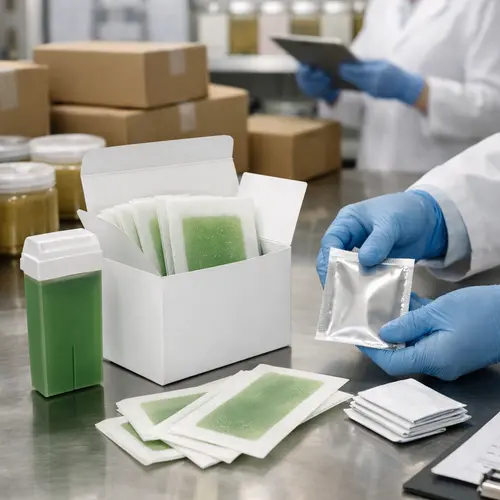
- Request paired samples with final wax, liner, pouch, and carton materials.
- Record adhesion, residue, separation, comfort, and appearance after temperature exposure.
- Confirm label documents, ingredient review, target-market requirements, and responsible-party details.
- Compare starter, refill, and salon formats using landed cost rather than unit price alone.
- Ask for a written sample-to-production plan with approval points, MOQ, shipment conditions, and change-control terms.
For a launch-ready comparison, buyers can request a hair removal product quote or review private label waxing products with an ODM team.
ODM Manufacturing Considerations
For private label wax strips, the most useful ODM process is a documented sequence of sample approval, formula confirmation, packaging review, production release, and shipment inspection. A supplier should turn your marketing requirements into measurable product specifications. For example, a request for a clean pull, low residue, soft skin feel, or a bold color should be translated into target texture, coat weight, fragrance level, strip dimensions, and acceptable variation.
Sample confirmation and formula customization
Approve samples against a written comparison sheet rather than memory or photographs. Record the wax texture at room temperature, the time required to soften or warm the product, pull behavior, residue, fragrance intensity, and user comfort on the intended hair area. For depilatory cream, review viscosity, spreadability, contact-time instructions, rinse behavior, and separation after storage. A custom formula should also identify the formula version, ingredient list, fragrance code, color standard, and any ingredients that are excluded for your target market.
When a visual result matters for social content, request samples in the final container and under realistic lighting. Color can look different in a pouch, jar, tube, or roll-on cartridge than it does in a laboratory beaker. The supplier should explain which visual characteristics are stable and which may change with temperature, filling conditions, or photography.
Packaging compatibility and stability review
Packaging approval should cover the complete product system. Check whether the wax sticks to the pouch film, whether the release liner remains easy to remove, and whether a depilatory cream tube changes shape or leaks after handling. For roll-on wax cartridges, inspect the roller ball, cap, seal, and cartridge body after storage in warm and cold conditions. A packaging compatibility review should also include label adhesion, ink transfer, carton compression, and the effect of fragrance or oil migration on plastic components.
Ask for a stability plan that reflects the markets and shipment routes you actually use. The review should assess appearance, odor, texture, viscosity where relevant, separation, leakage, brittleness, and package deformation at defined checkpoints. It should also state the storage conditions, sample quantity, acceptance criteria, and what happens when a result falls outside specification. Stability evidence does not remove the need for market-specific review, but it gives the buyer a practical basis for setting shelf-life and shipment instructions.
MOQ, documents, and shipment conditions
MOQ should be evaluated as a complete launch cost, including formula setup, artwork preparation, packaging tooling, test samples, cartons, and freight. Ask whether the quoted minimum applies to one scent, one color, one size, or the entire order. A supplier may offer a lower finished-goods minimum while requiring a larger commitment for custom film, printed cartons, or a new cartridge component.
Before production, request the ingredient declaration in the format required for each destination, batch or lot coding information, product specifications, safety information where applicable, allergen or fragrance details, and packaging material information. Buyers selling in the United States should understand their responsibilities under the Modernization of Cosmetics Regulation Act of 2022. Canadian buyers should compare ingredients with Health Canada's cosmetic ingredient hotlist. The supplier can provide documents, but the brand remains responsible for confirming that labels and claims fit the destination market.
Shipment conditions should specify carton dimensions, pallet or loading method, temperature limits, protection from crushing, and whether the product can travel by the selected route. Wax may become brittle in cold conditions or soften in a hot container. Creams and cartridges may be more vulnerable to separation, pressure, or leakage. Agree on inspection photos, carton counts, retain samples, and the process for handling damaged or nonconforming goods before dispatch.
Review the OEM/ODM service workflow alongside the manufacturing process so the commercial brief and technical release criteria remain aligned.
Common Problems or Failure Cases
Wax brittleness: A strip can crack, shed fragments, or fail to flex when stored in a cold warehouse or delivered during winter. Review the wax base, strip substrate, storage range, and cold-condition handling instructions. Test a retained sample after the same exposure used for the shipment route.
Loss of strip adhesion: Poor contact can result from uneven coating, unsuitable release material, surface contamination, or a formula that has softened during storage. Compare adhesion across multiple strips from different pouches and inspect whether the wax remains on the strip after pulling. Packaging film, liner choice, and heat exposure should be assessed together.
Cream separation or viscosity drift: A depilatory cream may show oiling out, thinning, thickening, or visible phase separation after temperature changes. Review the formula version, filling consistency, tube seal, and use instructions. Do not approve a production batch based only on appearance at room temperature.
Cartridge leakage: Leakage can originate at the roller assembly, cap, seal, cartridge seam, or filling interface. Store filled cartridges upright and on their side, then inspect the roller, cap, label, and outer carton. A pass condition should define acceptable residue, not simply whether a carton looks clean.
Fragrance sensitivity or irritation complaints: Fragrance, preservatives, colorants, and the intended contact time can affect user tolerance. Review the ingredient list, fragrance level, warning language, patch-test directions, and customer support response. Claims should remain consistent with the available product evidence; the FTC's advertising substantiation guidelines are a useful reference for U.S. marketing claims.
Packaging deformation: Pouches may wrinkle or seal poorly, tubes may collapse, and cartons may bow under heat or compression. Inspect finished packs after filling, case packing, storage, and simulated shipment. A visually attractive pack that cannot protect the hair-removal product is not ready for launch.
Supplier Checklist
- Can the supplier provide a numbered sample record with formula version, fragrance, color, dimensions, and intended use?
- Will the technical team document texture, viscosity where relevant, melting or softening behavior, adhesion, residue, and user-comfort observations?
- Can the supplier explain which formula ingredients and packaging materials are fixed, customizable, or subject to market restrictions?
- Does the packaging review cover pouches, release liners, tubes, cartridge seals, caps, labels, cartons, and shipment exposure?
- Are stability conditions, review checkpoints, acceptance limits, and retain-sample practices clearly defined?
- Is the MOQ separated by product, scent, color, size, printed component, and custom tooling?
- Are ingredient declarations, product specifications, lot coding, fragrance information, and destination-market labeling documents available before production?
- Does the quotation show BOM components, setup charges, testing charges, packaging costs, freight assumptions, and possible extras?
- Can the supplier describe capacity allocation, production lead times, backup equipment, and how urgent replenishment is prioritized?
- Is there one accountable contact who understands both technical requirements and the brand's content, launch, and customer-service needs?
- Will the supplier provide pre-shipment inspection records, carton photos, batch details, and a defined process for complaints or replacements?
FAQ
How can I protect my private label wax strip concept and formula?
Use a written confidentiality and ownership agreement before sharing unique artwork, formula targets, customer data, or launch plans. Define who owns custom formula work, samples, tooling, molds, test records, and unused packaging. Ask how the supplier restricts access to files and whether your formula version can be supplied to another customer. Legal protection should be reviewed for the countries involved; an informal promise is not enough for a differentiated product.
Can the finished product create a dramatic visual effect on camera?
It can, but visual performance must be tested in the final pack under the lighting and filming conditions you expect. Review color, gloss, peel behavior, foam or texture if relevant to the depilatory product, and the appearance of residue after use. Avoid promising a camera effect that depends on unstable temperature, excessive fragrance, or an unrealistic application amount.
Can a supplier guarantee that customers will never experience irritation?
No supplier can guarantee a zero-complaint result because users have different skin conditions, hair types, routines, and sensitivities. A responsible supplier should provide an ingredient review, clear directions, warning language, patch-test guidance, batch traceability, and a complaint investigation process. Your team should also validate claims, customer instructions, and market-specific labeling before launch.
I do not understand ingredients. Can an ODM team understand social media requirements?
A capable team should convert plain-language goals such as fast peel, visible color, low residue, or a short demonstration into measurable sample criteria. Ask for a single brief that combines content needs with technical limits. Require written confirmation of what was understood, what can be changed, and what tradeoff each change creates for comfort, stability, cost, or packaging.
What happens if a social campaign causes a sudden order increase?
Discuss capacity before launch and document a replenishment path. Ask about reserved production windows, raw material availability, packaging lead times, overtime limits, and whether larger accounts can displace your order. A realistic forecast with staged purchase orders is more useful than an unqualified promise of unlimited capacity.
What should I compare when evaluating suppliers in China, Korea, or another market?
Compare documented sample control, formula ownership terms, technical communication, packaging compatibility work, labeling support, quality records, MOQ, shipment conditions, and response time. Country location is only one factor. The strongest comparison is based on the same written brief, the same sample criteria, and the same landed-cost assumptions.
References
For U.S. cosmetic business responsibilities, see the FDA information on MoCRA. For Canadian ingredient screening, consult Health Canada's cosmetics guidance and ingredient hotlist. For advertising claim support, review the FTC advertising FAQ and substantiation guidance.