Direct Answer: Hair Inhibitor Serum vs Post-Depilatory Care
For a private-label hair-removal line, hair inhibitor serum vs post depilatory care is not an either-or decision. Post-depilatory care is the immediate recovery step: it should remove residue when relevant, ease the feel of heat or tightness, and leave skin comfortable after wax, sugar wax, strips, or cream. A hair inhibitor serum is a later maintenance step, positioned around the appearance of slower regrowth and a smoother interval between removal sessions. It cannot compensate for an overly aggressive removal formula, poor application instructions, or unsupported claims.
The strongest launch architecture is usually a clear sequence: validate the removal product, pair it with a compatible soothing aftercare product, then assess whether a serum belongs in the routine. Use a serum only after the product safety assessment defines suitable zones, frequency, and claim language. In the United States and European Union, claims and documentation should align with MoCRA and CPNP expectations. The commercial question is therefore not which product wins, but which product solves which moment, and whether the evidence supports the story on the label.

Key Takeaways for Private-Label Buyers
- Treat the routine as a system. A removal SKU, immediate aftercare SKU, and optional serum should share a defined use sequence and compatible claims.
- Ask for formula evidence. Review spread, residue, rinse-off, scent, sting potential, target viscosity, and the irritation assessment for the intended body zone.
- Match the pack to the formula. Check tube and cap seal for cream, liner release and adhesion aging for strips, closure integrity for wax, and dose consistency for a serum pump.
- Test the real shipment. Include hot and cold storage, orientation changes, transport handling, leakage, appearance, viscosity, and seal performance in the stability plan.
- Protect launch economics. Ask whether a pilot from 1,000 units under ISO 22716 can use the same validated formulation and filling process planned for later scale, with MoCRA and CPNP documentation developed in parallel.
Buyer Context
Consumers judge a removal product in minutes, but reorder decisions are shaped by the hours and days afterward. A depilatory cream may meet its removal brief yet draw poor reviews if rinse-off leaves a chalky film. Wax strips can lift hair cleanly while leaving tackiness or tightness. Sugar wax and roll-on wax add expectations around softening, spread, pickup, cleanup, and cartridge or jar integrity. An aftercare SKU makes the recovery moment visible; a maintenance serum can extend the routine and create a coherent kit.
For buyers, this is a category architecture question, not simply an ingredient question. A review of hair removal product solutions should map the intended use zone, removal method, and retail format. Compare a post-depilation care OEM brief with a hair inhibitor serum OEM brief: the first is judged mainly on immediate comfort and residue, while the second is judged on texture, repeat-use tolerance, dosage, and claims discipline. If the core product targets reactive users, a sensitive skin hair removal products development brief should document fragrance, alkalinity, contact time, and irritation-review decisions.
Clean beauty positioning does not replace an ingredient review, safety assessment, stability summary, or clear directions and warnings. Whether you evaluate a hair removal OEM manufacturer or compare hair removal OEM ODM services, ask for the same core file set and a visible change-control path. The hair removal manufacturing process should make sampling, filling, packaging, quality control, and shipment checkpoints easy to inspect. Mintel global beauty market reports can inform market positioning, but the final promise must be supported by the actual formulation and package. Ask for INCI, allergen review, safety assessment, stability summary, batch specifications, and label copy before launch.

Technical and Packaging Factors
Formula, Claims, and Use Sequence
Formula and use sequence should be explicit. Aftercare may be a gel, lotion, or oil designed for a clean, low-drag spread after removal; a serum should be easy to dose and comfortable across repeat use. Do not use a cooling sensation as a proxy for low irritation. Review immediate feel, next-day comfort, residue, fragrance, and sting potential under a defined safety protocol. For post-removal darkening claims, align language with the AAD treatment standards for hyperpigmentation.
If a maintenance formula includes an exfoliating active, review the CIR final report on salicylic acid in cosmetics and document why that ingredient, level, and use interval fit the intended zone. Keep cosmetic appearance claims separate from promises about changing biological growth. The serum brief should state what evidence supports slower-regrowth positioning and what the label will not imply.
Texture must match the removal method. A depilatory cream OEM brief needs stable spread and easy rinse; wax needs controlled softening or melting behavior and clean pickup; a strip needs uniform adhesive and predictable liner release; roll-on wax needs steady flow without stringing. Record target viscosity where relevant, along with appearance, odor, phase behavior, and net fill. Approve samples in the intended package rather than in a laboratory beaker alone.
Packaging, Stability, and Shipment
Packaging compatibility is part of the formulation decision. For cream, check the tube shoulder, cap seal, and stress cracking. For a serum, check pump materials, priming, dose consistency, leakage, and label adhesion. For wax and roll-on cartridges, examine seal integrity, heat exposure, softening, flow, and residue after orientation changes. For strips, a wax strips OEM brief should verify pouch seal, liner release, adhesion aging, and edge protection.
The stability plan should cover intended ambient storage plus challenging hot and cold conditions, freeze-thaw only when the formula structure warrants it, and transport simulation with vibration and orientation changes. Record color, odor, viscosity, separation, microbial results, closure performance, and shipment leakage. The hair removal product guides hub can help teams compare methods, but supplier evidence should be specific to the final formula, fill, closure, and secondary carton.
ODM Manufacturing Considerations
A vertically specialized partner should also show how sample approval moves into production without unplanned reformulation. PZIK’s model is relevant when a DTC team needs a custom formulation path, a 1,000-unit pilot under ISO 22716, parallel compliance work, and a clear record of what changes between sample and launch batch. Ask for approval gates, batch specifications, and documentation ownership; speed matters only when the approved texture and package remain stable.
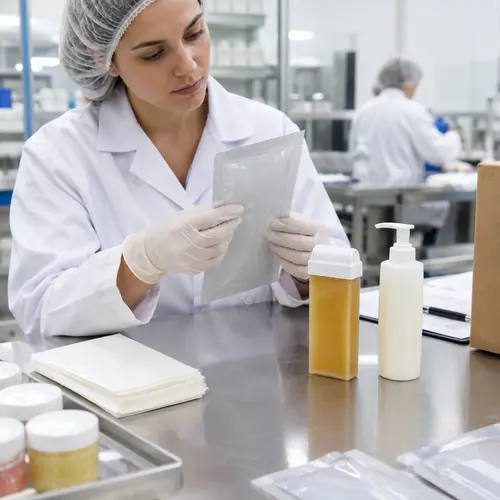
Decision Framework for Private-Label Buyers
| Factor | What to Check | Why It Matters | ODM Buyer Note |
|---|---|---|---|
| Routine role | Removal, aftercare, or maintenance; intended face and body zones; use interval. | Prevents overlap and misuse. | Write the sequence into directions before package copy. |
| Formula performance | Spread, rinse-off, residue, scent, irritation review, viscosity, and wax softening. | Texture failures drive returns and reviews. | Set acceptance criteria after baseline sample approval. |
| Packaging fit | Final tube, pump, pouch, jar, or cartridge; seals, dose, liner release, and adhesion aging. | Pack contact can change flow, leakage, or stability. | Test the actual launch components. |
| Storage and shipment | Ambient, hot and cold, relevant freeze-thaw, vibration, orientation, and carton compression. | Shipment stress exposes separation, softening, and leaks. | Record release limits and shipment conditions. |
| Pilot and compliance | Sample scope, pilot size, ISO 22716 controls, INCI, safety, stability, MoCRA, CPNP, and claims. | Supports an auditable launch and production handoff. | Confirm what is fixed, custom, and document-owned. |
ODM Manufacturing Considerations
ODM planning works best as a documented sequence. Start with a brief covering format, removal area, pack size, fragrance position, retail market, and claims. It may cover depilatory cream, sugar wax, wax strips, a roll-on cartridge, or post-depilatory serum. Use the supplier’s hair-removal product range, custom development workflow, and manufacturing process overview to align development and release criteria.
Sample Confirmation and Customization
Sample confirmation should be more detailed than appearance approval. Record color, odor, texture, spread, residue, removal comfort, and aftercare finish. Set pH and viscosity ranges for cream where relevant, a wax consistency range, and fill or dispensing criteria for cartridges and serum packs. Keep sealed reference samples and an approval record. For face use, define an irritation-risk review and clear use limits rather than relying on a broad sensitive-skin claim.
Formula customization should separate required performance from optional marketing language. A fragrance-free version, reduced tack, faster-rinsing cream, or lighter aftercare finish can be written as measurable changes. Ask which ingredients are fixed in the base, which may be replaced, and whether the resulting formulation is exclusive to the brand or only a customized variation. A growth-reduction claim needs a substantiation plan and approved wording before it reaches the label.
Packaging, Stability, and Shipment
Packaging compatibility must be checked with the filled product. Review the tube, jar, cartridge, strip sachet, or serum bottle for swelling, softening, odor pickup, staining, seal weakness, closure fit, and label lift. Ask for evidence using the actual material and adhesive combination, because an empty-pack inspection cannot predict product contact or shipment behavior.
Stability review should define the storage range, checkpoints, and pass criteria. Request observations for appearance, color, odor, phase integrity, pH where applicable, viscosity or wax consistency, and package condition under temperatures expected in warehouses and transit. The supplier should explain retained-sample handling and corrective action if a result drifts.
Confirm MOQ separately for formula, filling, printed components, and cartons. Ask what the initial sample scope includes, how many revision rounds are included, and which packaging changes trigger a new minimum. Standard components may make a lower quantity workable; custom closures, colors, or printed films can change the economics. Use the supplier’s project intake page to record these assumptions.
Labeling Documents and Shipment Conditions
Before label approval, request the INCI list, fragrance allergen information, net contents, directions, warnings, batch coding, shelf-life basis, and country or responsible-party fields required by the target market. For aftercare formulas containing salicylic acid, review the CIR final report on salicylic acid in cosmetics alongside concentration and directions. For wording about post-removal dark marks, compare cosmetic language with the AAD treatment standards for hyperpigmentation. A supplier that maps MoCRA and CPNP support by document owner and timing gives procurement a clearer launch path; importer and legal review remain necessary.
Shipment instructions should cover storage range, carton protection, lot traceability, and maximum expected transit exposure. Wax may become brittle, cream may lose phase integrity, and adhesives may lose performance when conditions are uncontrolled. Release the shipment against the approved sample, artwork, labels, and pack condition.

Common Problems and Failure Cases
Most failures come from a mismatch between formulation, packaging, and handling conditions. Record each issue against the approved sample before changing the formula.
- Wax brittleness: Cracking, flaking, or uneven application can follow an over-hard formula, cold storage, or an out-of-spec batch. Compare retained material with the approved sample and define acceptable flexibility and application range.
- Strip adhesion loss: If strips lose grip, check the match between substrate, coating, liner, sealed pouch, and humidity exposure. A material or seal change can be mistaken for a formula failure.
- Cream separation: Oil bleed, watery layers, or odor drift indicate phase instability or container interaction. Hold affected lots and review filling conditions, emulsifier, pH, preservative, and pack choices before relabeling.
- Cartridge leakage: Residue at the shoulder, cap, or seam may come from fill level, closure fit, seal damage, or expansion during storage. Define an upright storage requirement only when it is supported by the final pack specification.
- Fragrance sensitivity: Fragrance and essential oils can create complaints even when removal performance is acceptable. Offer a fragrance-free route where appropriate, declare allergens correctly, and avoid hypoallergenic language without support.
- Packaging deformation: A softened tube shoulder, warped cap, distorted sachet, or lifted label points to material compatibility or storage exposure. Inspect product and pack together, not as separate purchasing items.
Corrective action should identify whether the cause is formula, pack, storage, or handling. Changing the formulation without that evidence can move the problem rather than solve it.

Supplier Checklist
Use this checklist before approving a hair-removal supplier:
- Written brief with format, removal area, claims, texture, viscosity or wax consistency targets, and fragrance position.
- Signed sample approval, retained references, revision history, and change-control process.
- Formula and labeling file with INCI, allergens, directions, warnings, shelf-life basis, batch coding, and market-specific documents.
- Compatibility and stability evidence for each filled pack, plus storage and shipment limits.
- Separate MOQ and cost impact for formula, filling, printed parts, and cartons, with a clear sample scope.
- Documented irritation-risk and claims review for face or body use, including growth-related wording.
- Written NDA, ownership, permitted use, and disclosure controls before sharing launch plans.
- Traceable material declarations for any recycled or recyclable packaging claim.
FAQ
Can an Asian supplier meet our Clean Beauty and cruelty-free requirements?
An Asian supplier can meet them, but location alone proves nothing and Clean Beauty has no single universal definition. Provide a written ingredient exclusion list, fragrance policy, animal-testing standard, and claim rules. Request current raw-material declarations, finished-product policy, allergen data, and change notifications. Check target-market requirements before using cruelty-free wording.
Will a low MOQ make the unit cost too high for our CAC?
It can. Separate formula, filling, printed-pack, and carton costs, then model landed cost, expected retail margin, fulfillment, and repeat purchase rate. Compare standard and custom packaging, and identify one-time versus per-unit costs. A lower quantity is useful only when the economics fit the launch market and a realistic reorder plan.
Will a turnkey or base formula make our product look identical to competitors?
Not necessarily, but an unchanged base, common fragrance, and standard pack will limit differentiation. Ask for a written customization map covering texture, firmness, fragrance, aftercare finish, pack format, and permitted claims. Put formula ownership, territory or category exclusivity, and change approval in the agreement.
Can we sign a strict NDA before sharing our launch plan?
That should be a normal gate before exchanging confidential briefs, target pricing, formula ideas, artwork, or supplier information. Make it mutual and define confidential information, permitted use, access controls, return or deletion, duration, and remedies. Add ownership and non-use language separately; an NDA does not automatically assign formula rights.
How can we verify that eco-packaging claims are not greenwashing?
Request the material specification, recycled-content percentage, certificate or chain-of-custody record, issuing body, certificate scope, and validity date. For recyclability, verify the claim against the destination market and the complete component set, including adhesive, closure, liner, and ink where relevant. Use only wording supported by those documents.
References
- AAD treatment standards for hyperpigmentation – context for reviewing wording about post-removal dark marks.
- CIR final report on salicylic acid in cosmetics – ingredient safety reference when salicylic acid is used in aftercare.