Cosmetic Claim vs Performance Promise in Hair Removal Product Marketing
Direct Answer
Hair removal product claims should separate what the product is intended to do from the measurable experience a buyer expects it to deliver. A cosmetic claim describes the visible or sensory result, such as removing unwanted body hair, leaving skin feeling smooth, or helping calm skin after waxing. A performance promise adds a testable condition: removal time, coverage, grip, residue level, or results under defined use instructions.
For private-label buyers, the practical rule is simple: every prominent claim should connect to a formula specification, packaging check, use test, or documented rationale. Terms such as ‘fast acting,’ ‘sensitive skin,’ and ‘long-lasting smoothness’ should not be approved because they sound effective on camera. They need a defined meaning, a review method, and copy that does not imply permanent hair reduction or treatment of a medical condition. The FDA cosmetics overview and FDA guidance on personal care product classification provide useful starting points for the US market.
Key Takeaways for Private Label Buyers
- Define the promise before sampling. Translate marketing language into observable criteria such as application time, removal completeness, wax grip, rinse behavior, residue, and post-use skin feel.
- Review the finished system. Formula performance can change after filling, storage, transport, or contact with a cartridge, sachet, tube, strip backing, jar liner, or applicator.
- Approve texture on skin and on camera. A cream may spread well but look flat under studio lighting. Wax can appear attractive in a jar yet string, crack, or pull unevenly during a recorded demonstration.
- Match evidence to exact copy. An ingredient safety file does not prove finished-product speed, comfort, or duration. Review relevant ingredient assessments through the Cosmetic Ingredient Review safety assessments, then verify finished-product behavior separately.
- Freeze launch copy before artwork production. Claim review, directions, caution text, net contents, and market-specific labeling should be settled before packaging is printed.
Buyer Context
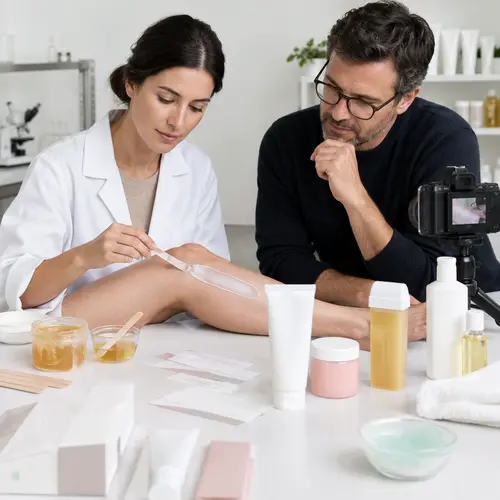
Hair removal sits in a narrow margin between compelling content and consumer disappointment. The result is immediate, highly visual, and easy to compare. A creator can show a wax strip lifting hair in seconds, a sugar wax stretching without snapping, or a depilatory cream wiping clean. The same format also exposes patchy removal, leakage, unpleasant residue, skin redness, or instructions that were simplified too far for a short video.
Product type changes what a defensible promise looks like. For a private label depilatory cream, buyers should define application thickness, contact-time range, wipe-off method, odor profile, rinse behavior, and expected removal on stated body areas. For private label waxing products, the relevant checks include strip grip, warming method, pull behavior, residue, sheet separation, and adhesion after aging. Sugar wax requires control of firmness, tack, temperature response, and technique sensitivity. Roll-on cartridges add flow consistency and leakage risk. An after wax care product needs its own supportable soothing, cooling, moisturization, or skin-feel language rather than inheriting claims from the removal step.
This distinction matters early in custom development. A founder may request a dramatic pull, unusual color, dense foam, or glossy texture for social content. The ODM team should convert that concept into a sample brief containing the claim, target texture, intended body area, use instructions, packaging format, target market, and pass-or-revise criteria. A 7-day first-sample target is useful only when the buyer receives enough information to make a real decision. Buyers comparing custom hair removal product development should ask whether formula, claims, packaging, and test planning are reviewed together.
Technical and Packaging Factors
Formula Performance Must Have Boundaries
A promise such as ‘works in minutes’ is incomplete until the label defines a contact-time window and the development team identifies how it will assess removal. Depilatory performance can vary with hair coarseness, application thickness, body area, and user technique. Stronger or faster is not automatically better when odor, rinse behavior, or irritation risk becomes less acceptable. For sensitive positioning, request a documented irritation-risk review, clear patch-test directions where appropriate, and observations at application, immediately after removal, and 24 hours after use. Buyers can use the mild hair removal formula resource to structure this discussion without assuming that ‘gentle’ means risk-free.
Texture Is Both a Use Specification and a Content Asset
Viscosity, wax melting behavior, tack, spread, stringing, and residue affect application as well as the visual reveal. Ask the supplier to state an approved range rather than approving texture from one attractive sample. Review the sample at normal room conditions and after relevant heat and cold exposure. A hot wax should melt and spread within the intended use instructions, then set with enough flexibility for removal. A cream should remain uniform, dispense cleanly, and stay in place for its stated contact time. The hair removal manufacturing process should show where these attributes are checked during scale-up, filling, and release.
Packaging Can Change the Promise
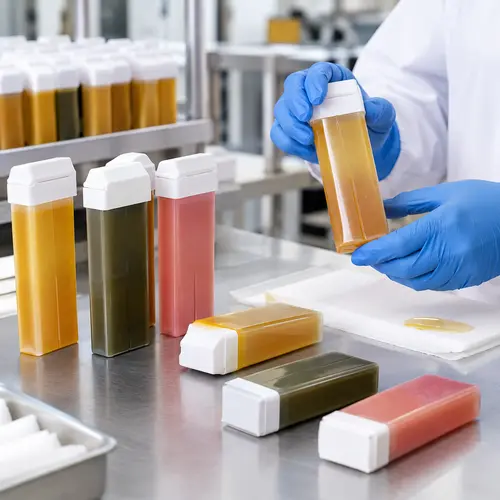
Compatibility work should use the final formula, pack materials, closure, fill weight, and decoration where possible. Check tube paneling, cap seal, jar-liner interaction, sachet seals, strip-pouch integrity, label lift, print scuffing, and roll-on cartridge leakage. Include upright, inverted, and side storage when orientation may affect the pack. An elevated-storage checkpoint such as 40 C and a cold-recovery sequence such as three freeze-thaw cycles can be useful screening conditions, but the final plan must reflect the formula, package, route, and destination market.
Shipment conditions matter because a claim approved on a fresh lab sample can fail after warehouse heat or parcel vibration. Ask for retained samples from the same production lot, agreed acceptance criteria, and documented checks after transport simulation or actual pilot shipment. A transparent BOM should identify formula, primary pack, secondary packaging, decoration, testing, and freight assumptions before artwork is locked. For a 1,000-unit pilot, confirm whether all components are production-intent or temporary sampling parts. The hair removal product RFQ should capture these differences clearly.
Decision Framework
| Factor | What to Check | Why It Matters | ODM Buyer Note |
|---|---|---|---|
| Claim scope | Exact result, body area, timing, conditions, and limitations | Prevents broad copy from outrunning the tested product experience | Approve a claim matrix before label design |
| Formula behavior | Spread, grip, removal, rinse, residue, odor, and skin feel | Connects marketing language to repeatable use criteria | Request target ranges and sample acceptance points |
| Irritation risk | Ingredient review, finished-product assessment, directions, and cautions | Hair removal involves close and time-dependent skin contact | Review the intended user, body area, and contact time together |
| Pack compatibility | Seal, leakage, dispensing, liner, label, print, and orientation | Pack failure can alter dose, instructions, and consumer trust | Test production-intent components before mass filling |
| Storage and shipment | Heat, cold, cycling, vibration, recovery, and appearance | Texture and seals may shift between factory and customer | Set pass criteria for destination-market conditions |
| Scale-up | Pilot sample versus bulk texture, fill control, and release checks | A strong hand sample does not guarantee repeatable production | Map approval points through the OEM hair removal production workflow |
Before selecting a hair removal OEM manufacturer, ask for a sample brief, claim matrix, testing plan, packaging compatibility scope, labeling document list, pilot MOQ, lead-time assumptions, and shipment conditions in one project file. Further hair removal product guides can support category-specific review, but the final decision should remain tied to the exact formula and pack being launched.
ODM Manufacturing Considerations
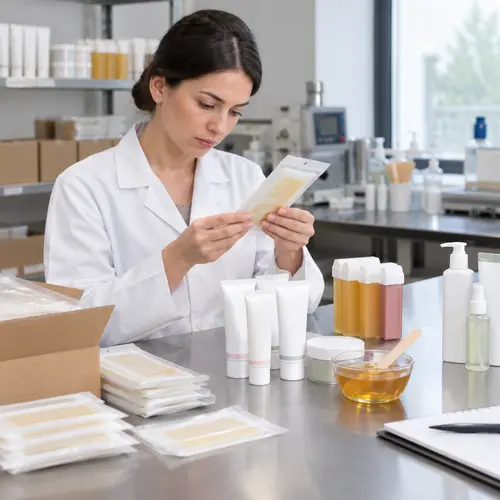
ODM development should convert hair removal product claims into specifications that both buyer and supplier can verify. Sample approval is therefore more than accepting a pleasant texture or fragrance. The confirmation record should identify the approved sample code, formula version, color tolerance, odor profile, viscosity or melting range where relevant, application amount, removal behavior, and expected appearance after storage. Keep a sealed reference sample with both parties and require written approval before production.
Customization decisions should begin with the intended product format and use conditions. A depilatory cream may need a defined spread profile and rinse behavior, while hard wax requires a workable melting range and controlled flexibility after cooling. Sugar wax consistency can vary with ambient temperature, and strip wax must balance hair pickup with acceptable residue. Ask the supplier to separate functional customization from optional changes such as fragrance, color, or botanical additions. Every added variable can affect performance, irritation risk, cost, and lead time.
Packaging should be evaluated with the final bulk formula rather than selected from appearance alone. Confirm fill weight, closure fit, dispensing rate, label adhesion, print durability, and resistance to deformation under expected storage conditions. For roll-on formats, inspect the roller movement and cap area after upright, inverted, and horizontal storage. For creams, check whether the container continues to dispense consistently as the pack empties. Buyers can review additional format options through the hair removal product categories and align the development route with the supplier’s OEM/ODM services.
A stability review should cover normal, heated, chilled, and temperature-changing conditions for a duration appropriate to the launch schedule and shelf-life objective. Record odor, color, viscosity, phase condition, pack distortion, seepage, and functional use at each interval. This review cannot guarantee that no consumer will react, but it can expose predictable formula and package failures before commercial release.
MOQ discussions should distinguish bulk manufacturing minimums from packaging-component minimums. A factory may accept a modest formula run while a custom-printed tube, carton, or cartridge requires a larger order. Request an itemized BOM showing formula, primary pack, secondary pack, decoration, testing, assembly, and freight assumptions. Also confirm which samples, revisions, and tooling charges are included.
Before artwork approval, obtain the ingredient list, product specifications, batch identification method, directions, warnings, net-content information, shelf-life basis, and available test summaries. Label content must match the intended market and claim set. Shipment planning should define carton configuration, pallet requirements, temperature precautions, acceptable transit route, and responsibility for export documents. The supplier’s manufacturing process should make these handoffs visible before the purchase order is finalized.
Common Problems or Failure Cases
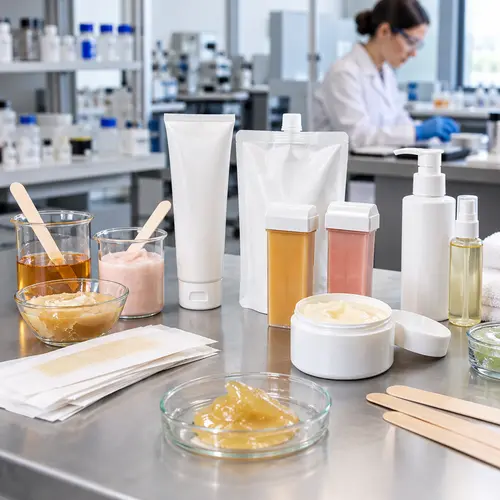
Wax becomes brittle after cooling. A visually impressive pull in a warm sample room may crack when used in a cooler salon or home. Compare flexibility and removal across the expected operating temperature range, and agree on measurable acceptance limits rather than relying on descriptive terms such as flexible or premium.
Wax strips lose adhesion. Paper, nonwoven material, wax loading, storage heat, and pouch sealing can alter grip. Failure may appear as weak hair pickup, wax transfer to the skin, or uneven performance between the first and last strip in a pack. Test strips from complete retail packs after storage, not only freshly coated material.
Depilatory cream separates. Oil release, watery discharge, graininess, or viscosity drift can make dosing inconsistent and undermine product copy. Review retained samples from multiple fill positions within a batch and verify that the container dispenses a uniform product throughout use.
Roll-on cartridges leak. Leakage can originate at the roller housing, cap, or seal and may worsen during warm transport. Check filled units in multiple orientations and inspect shipping cartons for staining or product migration. A clean outer carton does not prove that individual caps remain secure.
Fragrance creates avoidable sensitivity concerns. A strong scent may support a social-media concept but can narrow consumer tolerance. Ask for the fragrance inclusion level, applicable supplier documents, and an unscented comparison sample. Directions and warnings should not imply that fragrance masks or reduces irritation.
Packaging deforms or graphics deteriorate. Heat can soften some containers, while formula contact or abrasion can affect decoration and labels. Evaluate filled, decorated components under anticipated warehouse and shipment conditions. Confirm whether replacement components come from the same approved source before a repeat order.
Supplier Checklist
- Identify the approved formula version and retain matched reference samples.
- Define texture, color, odor, viscosity or melting range, application, and removal acceptance criteria.
- Review irritation-risk information, ingredient documentation, directions, and warnings for the destination market.
- Test the final formula in the exact tube, pouch, jar, strip pack, or cartridge intended for sale.
- Inspect performance after heat, cold, and temperature variation, including leakage and pack deformation.
- Confirm MOQ separately for bulk, stock packaging, custom decoration, cartons, and accessories.
- Request a transparent BOM and written assumptions for freight, duties, tooling, samples, and revisions.
- Verify batch coding, traceability, release records, retained-sample handling, and complaint escalation contacts.
- Confirm ingredient lists, specifications, test summaries, labeling documents, and export paperwork before artwork release.
- Document production capacity, material lead times, reorder windows, and shipment conditions in the contract.
- Assess whether the account team can translate marketing language into testable product requirements.
FAQ
How can I reduce the risk that a supplier will reuse my idea or formula?
Use a signed confidentiality and development agreement that defines ownership of your brief, custom formula, artwork, samples, and testing data. Ask whether the formula is exclusive, semi-custom, or based on a supplier platform. Restrict access to final files, keep dated development records, and make ownership and permitted reuse explicit in the manufacturing contract.
Can quality control guarantee that nobody will have a severe skin reaction?
No responsible supplier can promise zero reactions. Risk reduction depends on ingredient review, controlled manufacturing, suitable warnings, documented use directions, stability evidence, and evaluation on the intended area of use. Establish a complaint process with batch traceability and stop-sale escalation criteria before launch. Ingredient safety context can also be checked through the Cosmetic Ingredient Review safety assessments.
How do I communicate a social-media concept if I do not understand technical ingredients?
Provide reference videos, target texture, application sequence, removal result, climate, audience, pack size, and unacceptable outcomes. A capable account team should translate terms such as dramatic stretch or clean peel into sample variables and acceptance checks. Require written recaps after each revision so creative language does not replace measurable specifications.
What proves that the production batch will match my approved sample?
Require a controlled master specification, approved reference sample, incoming-material checks, in-process records, and finished-product release criteria. The purchase agreement should state tolerances for appearance and functional properties and define what happens if production falls outside them.
Should I approve custom packaging before formula testing is complete?
Usually not. Reserve the visual direction, but delay irreversible decoration commitments until the chosen formula has been assessed in the intended component. This reduces the risk of paying for printed tubes, pouches, or cartridges that leak, distort, dispense poorly, or fail label-adhesion checks.
Which claims need extra caution on a hair removal label?
Avoid wording that implies treatment of disease, permanent biological change, or guaranteed freedom from irritation unless the product and evidence support that classification and destination-market requirements. Intended use and claims influence how a product is regulated in the United States, as explained by the FDA’s guidance on personal care products and cosmetics. Keep copy aligned with demonstrated cosmetic performance.