Direct Answer
Hair removal product bundles increase routine value when each item solves a distinct step in the customer journey: preparation, hair removal, and post-treatment recovery. For a private-label brand, the strongest bundle is rarely the one with the most products. It is the one with compatible formulas, clear usage logic, manageable packaging, and evidence that the set can remain stable through storage and shipment.
A practical starting point is a depilatory cream or wax product paired with a post-depilation soothing gel, plus a compact accessory or travel-size aftercare product. Wax strips can be combined with a calming lotion, while sugar wax or roll-on wax can be positioned with a targeted recovery formula. The commercial advantage comes from a higher perceived routine value and more useful content for social commerce. The operational risk is that every additional SKU adds formula review, filling, labeling, stability work, and inventory exposure. Buyers should therefore validate the bundle as a system before committing to a launch.
For product architecture and sampling support, review the hair removal product solutions and compare them with the custom hair removal product development workflow.
Key Takeaways for Private Label Buyers
- Build around one hero removal product and one or two products that improve preparation or aftercare; avoid adding items that do not change the routine outcome.
- Check formula compatibility across the set, including fragrance level, preservative approach, skin-feel expectations, and positioning for sensitive skin.
- Review packaging as a performance component. Tubes, sachets, jars, wax cartridges, and strip pouches each create different risks for leakage, oxidation, heat exposure, and user dosing.
- Request practical testing evidence: viscosity or melting behavior, adhesion aging for strips, heat and cold storage, leakage review, and irritation-risk assessment.
- Confirm that artwork, ingredient declarations, batch coding, safety documentation, and market-specific product claims can be managed across every SKU.
- Use pilot sampling to test the complete bundle, including the outer pack, insert, shipment conditions, and unboxing experience.
Buyer Context
Hair removal is an unusually suitable category for routine-based bundling because consumers already experience it as a sequence. They prepare the skin, remove hair, clean residue, and manage temporary dryness or sensitivity. A bundle can make that sequence visible and easier to follow without forcing a brand to invent an unrelated product category.
For example, a depilatory cream can be paired with a soothing gel for a simple two-step body routine. Wax strips may be bundled with a post-wax lotion and a small residue-removal wipe. Sugar wax can sit alongside an aftercare product designed for a lightweight, non-greasy finish. A roll-on wax cartridge may support a salon-oriented kit with a clearly specified recovery product. The same architecture can also work for subscription boxes, creator-led launches, and DTC trial sets where perceived completeness matters.
The buyer decision is not only commercial. It also affects regulatory review and supply-chain control. A claim such as gentle, suitable for sensitive skin, or helps reduce the appearance of post-removal redness needs careful wording and supporting documentation. In the United States, cosmetic claims should be assessed against the FDA authority over cosmetics and cosmetic claims. For Australian launches, review Australia’s TGA cosmetic-therapeutic boundary guidance. Brands entering Dubai should also understand the Dubai Municipality Montaji registration system.
Bundles also create a stronger reason to investigate the manufacturing partner’s process. A supplier that can coordinate formulation, sampling, filling, packaging, quality control, and documentation reduces the chance that one weak SKU delays the entire launch. Buyers can review the hair removal manufacturing process and the hair removal product guides before requesting samples.
The central tradeoff is simple: more routine value can improve conversion and average order value, but more components increase complexity. A disciplined bundle usually begins with two or three products, then expands only after repeat purchase, complaint data, and shipment performance justify the additional inventory.
Private label depilatory cream and post-depilation care OEM are useful starting points when the bundle is centered on cream removal and recovery.
Technical and Packaging Factors
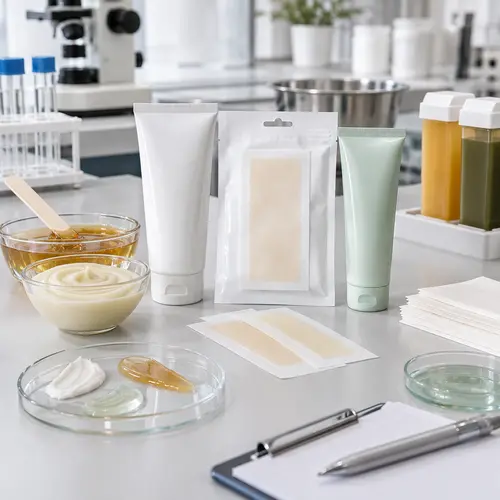
Formula behavior. Every hero product has a performance variable that should be defined before sampling. For depilatory cream, review spreadability, contact time instructions, rinseability, odor profile, and viscosity consistency between samples. For wax, document the application texture, working temperature, melting behavior, set time, and residue after removal. Sugar wax requires attention to moisture sensitivity and texture changes during storage. A roll-on cartridge needs consistent flow through the applicator without stringing, clogging, or excessive pressure.
Skin and claim review. Hair-removal formulas operate close to the skin, so irritation-risk review should be part of product selection rather than a final packaging step. Ask for the ingredient list, usage limitations, warning language, compatibility review, and relevant safety documentation. Do not assume that a mild sensory profile proves low irritation. The full formula, exposure time, application area, and consumer instructions matter.
Packaging compatibility. A tube may be practical for cream, but the closure must prevent leakage during pressure changes and parcel handling. Sachets can support trial bundles, yet seal integrity and fill accuracy need verification. Wax jars require a closure and liner that tolerate the formula and expected heat exposure. Roll-on cartridges should be evaluated for valve or roller-ball leakage in both upright and non-upright shipment positions. Wax strips need packaging that protects adhesion while limiting humidity exposure.
Storage and shipment. Test the bundle as it will actually travel. Review heat and cold storage, carton compression, vibration, leakage, label adhesion, and separation between primary and secondary packaging. A stable formula can still create a customer complaint if a jar leaks into the carton or if a strip loses adhesion after extended humidity exposure. Shipment conditions should be agreed before production so that the test protocol reflects the intended market and channel.
Documentation and scale. A pilot should represent the intended commercial formula and pack format. Ask whether the sample uses the same ingredient sources, filling method, closure, and label stock planned for the first sellable run. The mild hair removal formula review process can help when sensitive-skin positioning is central. For longer-term routine value, compare a private label hair inhibitor serum concept only after the core removal and aftercare experience is stable.
Decision Framework Table
| Factor | What to Check | Why It Matters | ODM Buyer Note |
|---|---|---|---|
| Hero removal formula | Texture, viscosity or melting behavior, application time, residue, and user instructions | Determines performance, complaints, and perceived quality | Approve a retained sample and define acceptable batch variation before launch |
| Aftercare formula | Absorption, finish, fragrance, ingredient review, and claim support | Completes the routine without creating a second irritation concern | Keep claims cosmetic and match them to available documentation |
| Primary packaging | Seal integrity, material compatibility, dosing, leakage, and closure torque | Protects formula quality and reduces shipment damage | Test the final container, not only an equivalent laboratory pack |
| Storage stability | Heat, cold, humidity, freeze-thaw where relevant, and visual changes | Shows whether texture and appearance remain acceptable in transit | Set market-specific storage guidance and review accelerated data |
| Bundle architecture | SKU count, carton fit, inserts, labeling, and replenishment logic | Balances routine value against inventory and compliance complexity | Start with a focused two- or three-product set |
| Pilot and scale | Sample scope, minimum pilot quantity, lead time, and production continuity | Prevents a successful test from becoming a different commercial product | Confirm that the sampled formula and pack can move to the intended run without re-engineering |
For wax-led sets, buyers can compare private label waxing products with cream-led options, then use a request a hair removal product quote brief that lists the target market, bundle components, packaging format, claims, sample scope, and shipment conditions.


ODM Manufacturing Considerations
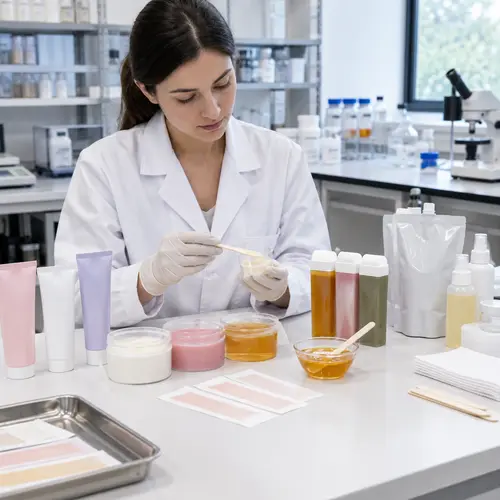
A reliable hair removal product bundle is confirmed as a system, not as a collection of unrelated SKUs. During sampling, the buyer should approve each formula, package, label, and use instruction against a defined product brief. The sample record should identify the wax type or depilatory cream base, target skin area, fragrance level, color, fill weight, package format, and intended market. Retain an approved reference sample so later production can be compared against the same standard.
Formula customization can range from a light adjustment to a fully developed composition. For wax strips, review wax flexibility, strip adhesion, residue, and removal performance after storage. For sugar wax, check moisture response and handling at the expected application temperature. For depilatory cream, confirm viscosity, spreadability, contact-time instructions, odor profile, and irritation-risk review. A customization brief should also identify restricted ingredients, fragrance preferences, allergen disclosure needs, and any Clean Beauty or cruelty-free policy the brand expects to document.
Packaging compatibility must be tested with the actual formula and closure. Cream tubes, jars, sachets, strip pouches, wax pots, and roll-on wax cartridges can respond differently to heat, oils, solvents, and repeated opening. Confirm that the package does not soften, crack, swell, discolor, or transfer odor into the product. For roll-on cartridges, request a filled-package flow test and an upside-down leakage check. For strip pouches, inspect seal strength and adhesion retention after exposure to the planned storage environment.
The stability review should reflect the destination market and distribution route. Ask for a written protocol covering appearance, odor, color, pH where relevant, viscosity, wax texture, separation, package condition, and microbiological controls where applicable. Include heat and cold shipment simulations, because a wax that performs well in a controlled room may become brittle in a cold warehouse or overly soft during summer transport. The buyer should receive test conditions, acceptance criteria, deviations, and the final interpretation rather than only a pass statement.
MOQ should be evaluated by SKU, formula, fragrance, color, package, and printed component. A low initial quantity may carry higher setup and packaging costs, especially when custom artwork, dedicated molds, or several bundle variations are involved. Request a cost model that separates formula development, testing, printed packaging, filling, and logistics. This helps the brand compare a focused launch bundle with a wider assortment without assuming that every product has the same economics.
Labeling documents should be prepared before artwork approval. Depending on the market, the file may need an ingredient list, nominal content, batch coding method, responsible-party details, warnings, directions, shelf-life or period-after-opening information, safety data, product specifications, and claims support. For cross-border sales, ask how the supplier supports market-specific reviews, including custom product development and manufacturing documentation. In Australia, buyers should review Australia’s TGA cosmetic-therapeutic boundary guidance before making claims that could change product classification.
Shipment conditions should be agreed in writing. Define acceptable temperature exposure, pallet or carton configuration, carton markings, seal protection, loading inspection, and action to take after a temperature excursion. The approved bundle should also be checked as a packed set: individual products may pass testing but arrive with crushed cartons, loose inserts, leaking cartridges, or mismatched batch information.
Common Problems or Failure Cases
Wax brittleness: Hard wax or strip wax may crack during application when the formulation, substrate, or storage temperature is poorly matched. Verify flexibility and removal behavior after cold exposure, then repeat the check after warm storage. The buyer should define whether a small edge crack, uneven tear, or excessive residue is acceptable.
Loss of strip adhesion: Wax strips can lose pickup performance when the adhesive surface is exposed to humidity, heat, or an incompatible pouch material. Compare initial adhesion with adhesion after accelerated storage and shipment simulation. Inspect the pouch seal, internal condensation, and strip alignment before changing the formula.
Cream separation: A depilatory cream may show oil separation, thinning, graininess, or odor change after temperature cycling. Review emulsion stability, preservative strategy, fill process, and tube compatibility together. Do not approve a visually smooth sample until the formula has been assessed in its final package.
Cartridge leakage: Roll-on wax cartridges commonly fail at the roller assembly, cap, seam, or neck. Test upright and inverted storage, vibration, carton compression, and repeated opening. Check whether leakage comes from the valve, excess fill, weakened closure, or wax softening under heat. The corrective action should identify the failure mechanism rather than simply adding more outer wrapping.
Fragrance sensitivity: A strong scent can create complaints even when hair removal performance is acceptable. Offer an unscented or lower-fragrance option and review fragrance allergens for the destination label. Conduct a documented irritation-risk review and ensure that marketing language does not imply universal suitability for sensitive skin.
Packaging deformation: Tubes, sachets, pouches, and cartons can deform when stacked or exposed to temperature changes. Measure filled-package dimensions after storage and transit simulation, then verify that the bundle still fits its retail carton without compressing the products or obscuring required information.
Supplier Checklist
- Can the supplier provide an approved sample record with formula, package, fill weight, and performance criteria?
- Does the technical file cover wax texture, melting behavior where relevant, cream viscosity, separation, odor, and irritation-risk review?
- Will the supplier test the formula in the final packaging, including seal integrity, closure compatibility, leakage, and deformation?
- Are MOQ and setup charges stated separately for each formula, fragrance, color, printed component, and bundle configuration?
- Can the supplier provide ingredient, safety, specification, batch, labeling, and claims-support documents for the intended markets?
- Are heat, cold, humidity, vibration, and shipment-condition checks connected to clear acceptance criteria?
- Can the brand protect its formula and launch plan through an NDA, controlled document access, and written ownership terms?
- For environmental packaging claims, are material composition, recycled content, recyclability conditions, and certification records traceable?
- Does the supplier have a defined process for handling deviations, retained samples, complaints, and corrective actions?
FAQ
Can an Asian manufacturing partner meet European or American Clean Beauty and cruelty-free requirements?
Yes, but geography is not evidence of compliance. Request the restricted-substance policy, ingredient review, supplier declarations, animal-testing policy, and claims-support documents. Confirm that the same requirements apply to raw materials, fragrance, wax, cream, and aftercare components, and that the final label matches the documented formula.
Will a low MOQ make the bundle too expensive to support customer acquisition costs?
It can, especially when several custom formulas and printed packages are launched at once. Ask for a per-SKU cost breakdown, setup charges, testing fees, packaging minimums, and freight assumptions. A smaller number of coordinated products may provide better launch economics than many variations with separate materials.
Will a turnkey base formula make the brand look identical to competitors?
Not necessarily, but an unchanged base can reduce differentiation. Ask which variables can be customized, such as wax hardness, cream viscosity, fragrance level, aftercare finish, pack format, usage instructions, and bundle sequencing. Require an approved development brief that records the brand’s distinctive specifications.
Can we sign a strict NDA before discussing the formula and launch plan?
A mutual NDA should be signed before confidential formula targets, artwork, customer research, or launch timing are shared. Review confidentiality duration, permitted disclosures, ownership of custom work, sample handling, and remedies. The commercial agreement should also state whether the customized formula may be supplied to another customer.
How can we verify that environmental packaging claims are genuine?
Ask for material specifications, supplier chain-of-custody records, recycled-content evidence, recyclability conditions, and applicable third-party certifications. Claims should describe the actual package and its collection requirements in the destination market. Avoid broad terms such as environmentally friendly when the evidence only supports a narrower claim.
What should be approved before shipment?
Approve the production sample, artwork proof, ingredient and warning text, batch coding, carton configuration, retained sample, and shipment temperature requirements. A final packed-bundle inspection should confirm that products, inserts, labels, and lot information match the purchase specification.

References
- The Dubai Municipality Montaji registration system provides a market-specific reference for product registration considerations in Dubai.
- Australia’s TGA cosmetic-therapeutic boundary guidance supports careful review of cosmetic claims and product classification.
- The CIR safety profile of iron oxide pigments is a reference for evaluating pigment safety documentation when colored wax or cream packaging requires a matching product tint.