Direct Answer
For an Amazon hair removal product line, the highest review risk usually comes from a mismatch between the formula promise, the package performance, and the customer experience. A depilatory cream may remove unevenly, a wax strip may lose adhesion in storage, or a roll-on cartridge may leak before it reaches the customer. The right private-label decision is therefore not simply choosing a popular product format. It is confirming the formula texture, hair-removal performance, irritation profile, package compatibility, storage range, labeling documents, and shipment conditions before approving mass production.
For founders building around a short social-media trend window, an ODM partner should make these checks visible early. PZIK combines modular hair-removal formulas, visual texture development, pilot production from 1,000 units, and a stated development path that can compress a typical 90-day cycle to under 30 days when the formula and package are selected from validated options. The commercial advantage is speed with fewer surprises between sample approval and the Amazon customer review.
hair removal OEM manufacturer support is most useful when it connects product positioning to measurable production decisions: which body area the product serves, how the texture appears on camera, how the package behaves in transit, and which claims can be supported for the target market.
Key Takeaways for Private Label Buyers
- Choose the use case before the formula: face, legs, underarms, bikini area, salon use, or travel application each creates different texture and irritation expectations.
- Approve a retained sample with defined appearance, odor, spread, removal result, and after-feel criteria rather than approving color alone.
- Test packaging with the actual formula. Wax, cream, oil, and post-removal gel can interact differently with seals, valves, liners, adhesives, and plastics.
- Review heat, cold, vibration, leakage, and aging results before committing to a large Amazon shipment.
- Keep product claims narrow and supportable. Hair removal, skin feel, ease of application, and post-depilation comfort should not be presented as medical outcomes.
- Ask for a clear sample scope, MOQ, BOM assumptions, labeling file, batch documents, and shipment plan before signing off on production.
hair removal product solutions can help a new brand compare depilatory cream, wax strips, sugar wax, roll-on wax, and aftercare as a coordinated range instead of isolated SKUs.
Buyer Context
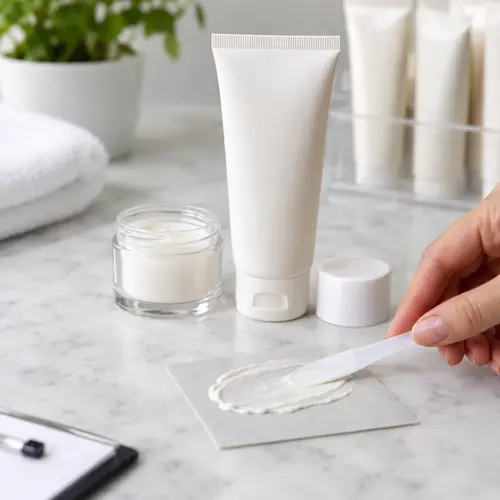
Amazon customers judge hair-removal products quickly and publicly. The first review may focus on whether the cream removed hair evenly. The next may describe a wax strip that pulled apart, a sugar wax that became unusable in a warm bathroom, or a calming gel that arrived with a damaged pump. These comments become part of the product page, so a small technical weakness can affect conversion long after the original batch has shipped.
Private-label buyers also face a positioning decision. A creator-led brand may want a dramatic, camera-friendly texture: a dense cream that spreads in one pass, a translucent sugar wax with a distinctive pull, or a compact aftercare kit that looks complete on video. That visual appeal must still translate into controlled filling, stable storage, predictable application, and a package that survives fulfillment. Social content can create demand, but the formula and pack determine whether demand becomes repeat purchase or a wave of negative reviews.
The practical question is not whether a supplier can make a sample. It is whether the supplier can reproduce that sample at scale without changing its viscosity, fragrance, color, fill weight, or removal behavior. A buyer should also confirm ownership and confidentiality terms for custom formula adjustments, artwork, molds, and market-specific product claims.
For teams comparing suppliers, the hair removal OEM ODM services scope should cover development, sourcing, filling, packaging, inspection, documentation, and shipment coordination. A single accountable workflow reduces the chance that a sample is made by one party while the production pack is sourced by another.
Technical and Packaging Factors
Formula behavior
Depilatory cream should be assessed for spread, contact time, removal completeness, rinseability, odor, and after-feel. A thick formula may look premium but drag during application or require too much product. A thin formula may spread easily but migrate beyond the intended area. The sample review should include the intended hair type and body area, because performance on fine leg hair may not predict performance on coarse underarm or bikini-area hair.
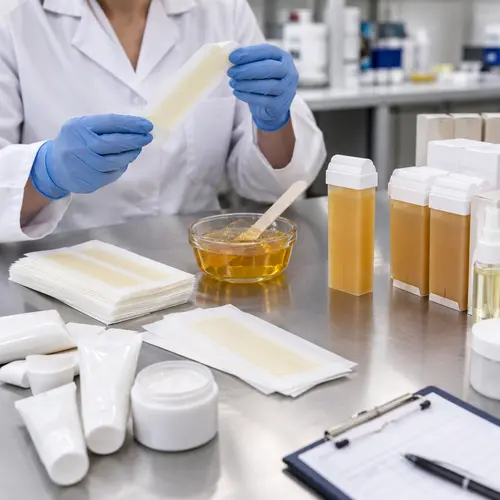
Wax and sugar wax require a different review. Check melting behavior, working temperature, pull strength, stringing, residue, and recovery after repeated warming and cooling. Wax strips should be reviewed for substrate strength, wax coverage, release behavior, adhesive aging, and clean separation during use. Roll-on wax cartridges need attention to roller movement, flow consistency, cap sealing, and leakage after transport.
Aftercare products should be compatible with the removal format. A soothing gel or lotion must spread without excessive tack, leave an acceptable finish, and dispense consistently from the selected pump, tube, or sachet. Avoid making broad claims about irritation or recovery until the product wording, user directions, and supporting documentation have been reviewed for the destination market.
Packaging compatibility
Packaging is part of the formula decision. A cream can soften an unsuitable tube shoulder or affect a gasket. Wax can harden around a valve, stain a label, or become difficult to dispense after temperature changes. Oils in aftercare may weaken adhesive labels or create seepage around a closure. The supplier should test the filled package, not just the empty component, under expected heat and cold storage conditions.
For Amazon fulfillment, inspect closure torque, seal integrity, headspace, fill accuracy, tamper evidence, carton fit, and leak resistance. A jar may offer easy access but expose the product to repeated contact. A tube can improve hygiene and shipment control but may need a stronger shoulder and compatible barrier layer. A bag-on-valve or aerosol-style pack may create a distinctive application experience, but it requires dedicated compatibility and shipment review. The correct option depends on the formula, transport route, country rules, and target price.
depilatory cream OEM development should include the actual tube, cap, label, carton, and shipping configuration in the sample approval process. For waxing concepts, wax strips OEM support should cover both product performance and the retail-ready kit experience.
Decision Framework Table
| Factor | What to Check | Why It Matters | ODM Buyer Note |
|---|---|---|---|
| Formula texture | Spread, viscosity, stringing, odor, residue, and appearance after storage | Controls application ease and review language | Define an approval sample and acceptable visual range |
| Hair-removal result | Intended body area, hair type, contact time, and removal completeness | Prevents a broad promise from failing in actual use | Match instructions and claims to the tested use case |
| Package compatibility | Seal, liner, valve, pump, tube, jar, label adhesive, and closure performance | Reduces leakage, drying, staining, and dispensing complaints | Test the filled pack with the final formula |
| Storage and shipment | Heat, cold, vibration, carton fit, and leakage inspection | Amazon inventory may experience variable warehouse and delivery conditions | Request results for the intended shipping configuration |
| Production repeatability | Batch appearance, fill weight, viscosity, fragrance, and color controls | Protects consistency between launch content and customer orders | Confirm the sample and mass-production line are connected |
| Launch documentation | INCI list, artwork review, batch records, test reports, and shipment files | Supports listing accuracy and market entry decisions | Set document ownership and approval dates in the project brief |
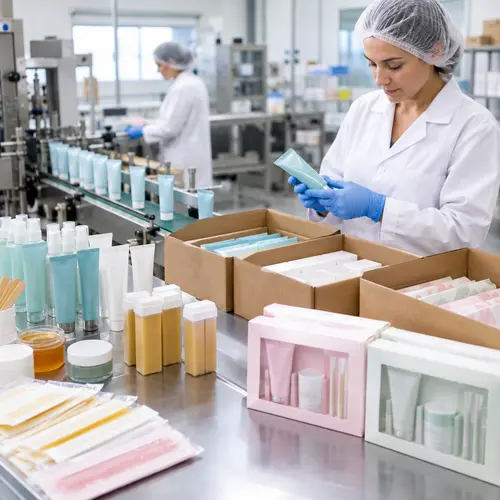
hair removal manufacturing process should show how sampling, filling, packaging, quality checks, and shipment review connect. Buyers should request the same level of detail for every SKU in a planned range.
ODM Manufacturing Considerations
A practical launch brief should state the target market, intended user, product format, pack size, desired visual effect, acceptable fragrance level, estimated first order, and Amazon fulfillment route. The ODM team can then recommend an existing baseline formula or define a custom adjustment without rebuilding every element from the beginning.
Ask for three commercial scenarios: a fast sample using existing components, a custom package with a longer component lead time, and a scalable option for a successful launch. Each scenario should identify sample timing, MOQ, unit assumptions, tooling, artwork support, testing scope, production timing, and shipment conditions. This makes the real cost of speed visible.
For sensitive positioning, review sensitive skin hair removal products with particular care. For a broader basket, connect the core removal SKU with post-depilation care OEM or a hair inhibitor serum OEM option only when the claims and user instructions remain appropriate for the market.
Supplier Checklist
- Request formula specifications, ingredient naming, intended use area, directions, and known limitations.
- Review filled-package compatibility, leakage checks, storage observations, and transport samples.
- Confirm sample quantity, sample revision policy, MOQ, production capacity, and batch release criteria.
- Ask who approves claims, artwork, labeling documents, and market-specific files.
- Confirm confidentiality, ownership of custom work, and the process for handling a sudden reorder.
- Use request a hair removal product quote to submit one structured brief covering formula, packaging, testing, quantity, and delivery requirements.
The strongest Amazon launch is usually the one where the visual idea, formula, package, and documentation are reviewed as one product. That discipline gives creators room to move quickly while protecting the customer experience that ultimately determines the listing.
ODM Manufacturing Considerations
Sample approval should be treated as a controlled product decision, not simply a color or fragrance preference. For a private-label hair removal product line, the approved sample should record the formula version, fragrance level, color, texture, application amount, removal time, residue level, and intended use area. Keep a signed or digitally confirmed reference sample, because later production questions are difficult to resolve when the target is described only as smooth, creamy, strong, or gentle.
Formula customization can involve viscosity, spreadability, melting behavior, set time, grip, fragrance, color, and post-removal feel. Depilatory cream buyers should review how the cream spreads in a thin layer, whether it remains uniform during the stated application period, and whether it rinses away without excessive residue. Wax buyers should assess flexibility at room temperature, brittleness after cooling, pull behavior, and whether the wax leaves an unusually heavy film. Sugar wax may require a separate review of tack, stringing, and heat sensitivity. Any claim about sensitive skin, fast removal, or a specific body area should be checked against the actual use instructions and supporting product documentation.
Packaging compatibility is a separate approval step. A cream in a tube, jar, or pump can react differently depending on the material, closure, liner, and headspace. Confirm that the package does not swell, crack, discolor, lose its seal, or change the product odor during storage. For roll-on wax cartridges, inspect the roller movement, cap fit, seam strength, and resistance to leakage after the filled unit has been stored horizontally and vertically. Wax strips need an adhesive review after exposure to normal warehouse heat and humidity, since a strip that performs well immediately after packing may lose grip during distribution.
Stability review should represent the conditions the product may actually face. Ask the supplier to compare room-temperature storage with controlled heat and cold exposure, then document changes in viscosity, separation, color, fragrance, seal integrity, and dispensing performance. A depilatory cream that separates after temperature cycling, or a wax that becomes too brittle after cooling, should not be approved solely because its first-day appearance is attractive. Request retained samples from each production lot so that later customer complaints can be compared with the approved reference.
MOQ should be evaluated together with sample scope and packaging commitments. Ask whether the minimum applies to one formula, one fragrance, one package size, one color, or the entire purchase order. Confirm whether unused printed boxes, tubes, labels, caps, and cartridges become the buyer’s responsibility if the project changes. A transparent BOM should identify formula contents at the level permitted for commercial disclosure, package components, decoration, testing, assembly, and freight assumptions. This is one of the practical buying triggers for a new brand: the supplier should make cost variables visible before production is authorized.
Labeling documents should be prepared before artwork is finalized. Request the ingredient declaration, net contents, directions, warnings, batch or lot coding method, shelf-life or period-after-opening guidance where applicable, country-of-origin information, and product specification. The FDA’s cosmetics information at https://www.fda.gov/cosmetics is a useful reference for buyers selling into the United States. If a cruelty-free position matters to the brand, compare supplier documentation with the Leaping Bunny cruelty-free certification standard rather than relying on an informal marketing statement.
Shipment conditions should be agreed in writing. Define acceptable temperature exposure, carton orientation, pallet or master-carton limits, protection from direct sunlight, and what happens when units arrive with leakage, crushed boxes, detached labels, or melted wax. For heat-sensitive formulas, the supplier should explain how production release and freight timing will be coordinated around seasonal conditions. A launch plan should also include a capacity conversation: ask how much additional output can be reserved if a creator campaign causes demand to rise suddenly, and whether the brand receives written allocation priority during busy periods.
For visual-led products, request a camera test using the real formula and final package. A wax with a distinct pull pattern, a cream with a visible but stable texture, or an aftercare gel with clean dispensing can support content creation, but visual drama should never depend on unstable separation, excessive fragrance, or unsafe use instructions. A supplier that understands both manufacturing detail and social-media presentation can translate a creative brief into measurable sample criteria.
Review the OEM/ODM service scope alongside the manufacturing process overview before approving a development schedule.
Common Problems or Failure Cases
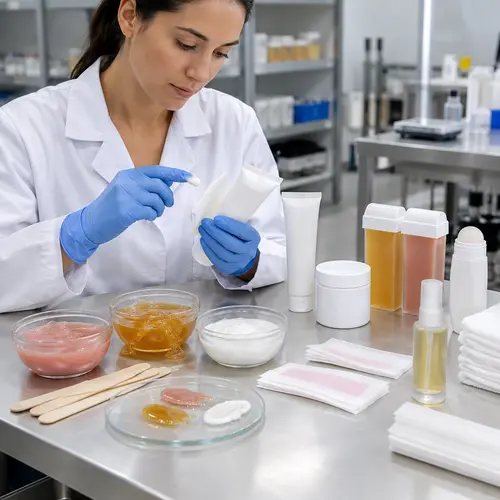
Wax brittleness: A hard wax or sugar wax may crack instead of flexing when the room is cool. Compare samples at the intended use temperature, record the application thickness, and test removal from several skin-safe test surfaces. The supplier should identify whether the issue comes from the formula, cooling conditions, or the instructions.
Strip adhesion loss: Wax strips can lose grip after extended heat, humidity, or poor liner contact. Check the first and last strips from a sealed package, then repeat the review after storage. Adhesion should be judged together with removal comfort and residue, not only by whether hair is removed.
Cream separation: A cream may show oiling, water release, graininess, or a changed odor after temperature exposure. Ask for a defined acceptance limit and compare every review against the retained sample. Do not correct separation only by changing the package; the formula and filling conditions also need review.
Cartridge leakage: Roll-on wax cartridges may leak through the roller assembly, cap, weld, or body seam. Inspect units after storage on their side, after carton movement, and after normal handling. A clean outer carton does not prove that the cartridge is reliable, so check the inside of the cap and the roller channel.
Fragrance sensitivity: A strong scent can create negative reviews even when the removal performance is acceptable. Offer an unscented or lower-fragrance option where the market supports it, and make fragrance and warning information clear on the label. Review use-area instructions carefully for face, body, and other restricted applications.
Packaging deformation: Tubes, caps, jars, and cartons can warp under heat or compression. Test filled units in their shipping configuration, including the actual carton count and orientation. Packaging that looks acceptable in a sample room may fail when stacked in a warehouse or delivered during hot weather.
Supplier Checklist
- Confirm the formula version, target texture, color, fragrance, use area, application amount, removal time, and acceptance criteria in the sample record.
- Request formula customization boundaries and ask which changes affect cost, MOQ, lead time, labeling, or repeatability.
- Review viscosity or melting behavior when relevant, along with wax grip, cream spread, residue, separation, and fragrance performance.
- Test the actual filled package for swelling, cracking, leakage, seal loss, roller failure, label lifting, and deformation.
- Ask for heat and cold storage results, temperature limits, retained-sample policy, and lot-level release records.
- Verify MOQ by formula, fragrance, size, package, and printed component; request a line-item BOM and freight estimate.
- Collect ingredient, warning, direction, net-content, origin, coding, shelf-life, and claims-support documents before artwork approval.
- Define shipment conditions, carton inspection requirements, damage evidence, replacement terms, and complaint-response timing.
- Ask for a capacity plan covering normal orders, campaign spikes, reserved production space, and allocation during peak periods.
- Evaluate whether the account manager can convert a marketing brief into measurable product and packaging requirements.
Use the RFQ and contact page to send a structured brief with formula, packaging, sampling, documentation, and shipment requirements.

FAQ
Can a Chinese OEM/ODM factory copy my hair removal concept or formula?
Ownership depends on the written agreement, existing supplier know-how, and the exact level of customization. Use a confidentiality and intellectual-property agreement before disclosing proprietary concepts, identify which materials are buyer-owned, and state that the approved formula, artwork, product name, and campaign-specific package cannot be used for another customer. Limit access to sensitive files and keep dated records of sample approvals and revisions.
Can the sample achieve a dramatic visual effect on camera?
It can, but the effect should come from stable texture, color, dispensing, or removal behavior rather than an unstable formula. Request a camera test with the final package, normal lighting, and the intended application amount. Confirm that the appearance remains consistent after storage and that the visual claim does not encourage unsafe overapplication or excessive contact time.
How can I reduce the risk of customers reporting skin damage?
No quality system can guarantee zero reactions, but risk can be reduced through clear use-area limits, patch-test guidance where appropriate, accurate warnings, controlled raw-material records, batch release checks, and retained samples. Review fragrance, removal time, residue, and packaging contamination risks. Avoid broad claims that the formula is suitable for every skin type unless the evidence and instructions support that wording.
What if I do not understand cosmetic ingredients or manufacturing terms?
Ask the supplier to convert the marketing brief into a product specification with plain-language explanations. A capable contact should clarify texture, spread, set time, grip, fragrance, removal comfort, package behavior, and claim limits without dismissing the brand objective. Require written summaries after meetings so creative decisions and technical decisions do not drift apart.
What happens if a social-media campaign creates a sudden order spike?
Discuss capacity before launch and request a written response plan. It should state normal monthly output, surge quantities, material reservation, production allocation, and realistic shipment windows. A supplier may not guarantee unlimited volume, but it should explain how existing large accounts affect scheduling and what forecast information improves your position.
Should I approve the formula before choosing the final package?
No. Formula and package should be reviewed together because viscosity, wax temperature, dispensing force, seal design, and material exposure can change performance. Approve a filled-package sample, then repeat the key checks after storage and handling before committing to a larger production order.
References
FDA cosmetics information supports U.S. buyer review of cosmetic product responsibilities, labeling considerations, and claims language.
Leaping Bunny provides information about its cruelty-free certification standard for brands evaluating related supplier statements.