Direct Answer
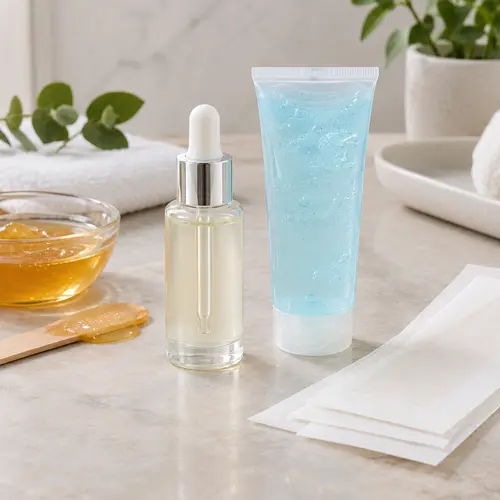
In most product systems, no: a hair inhibitor serum should not fully replace post-depilation care. The practical answer to hair inhibitor serum vs post depilatory care depends on what the formula is designed and substantiated to do. A serum may support softer-feeling regrowth, improve skin feel, and provide daily conditioning after removal. Immediate aftercare has a different job: reducing discomfort, supporting the skin barrier, and restoring hydration after waxing, depilatory cream, sugar wax, or repeated strip passes.
A multifunctional serum can sometimes cover both roles, but only when soothing performance, tolerability, packaging compatibility, and use instructions have been validated together. Buyers should not assume that adding aloe, panthenol, or a botanical extract turns a regrowth-positioned serum into complete aftercare. For a private-label launch, the safest commercial decision is usually either a two-step kit or one carefully tested hybrid formula with restrained cosmetic claims.
Key Takeaways for Private Label Buyers
- Define the primary job first. Decide whether the SKU is mainly for immediate comfort, ongoing cosmetic conditioning, or a combined routine. That decision controls ingredient selection, claims, testing, and directions.
- Review the removal method. Wax strips and sugar wax create different after-use conditions from alkaline depilatory cream. One serum may not be appropriate immediately after every method.
- Test the complete pack. Low-viscosity serums can leak through poorly matched droppers or pumps, while botanical systems may discolor or develop odor under heat and light.
- Keep inhibition claims disciplined. Cosmetic language such as helping hair appear finer or making regrowth feel less noticeable is materially different from promising permanent reduction or altered follicle function.
- Sample the routine, not just the formula. Evaluate the removal product, cleansing step, serum, aftercare product, and consumer directions as one system before approving a launch.
- Build compliance into development. Ingredient review, label copy, safety substantiation, MoCRA records, and CPNP documentation should progress alongside formula and packaging work.
Buyer Context
For DTC operators, the question is larger than whether two bottles can become one. It affects product architecture, average order value, fulfillment weight, content strategy, repeat purchase timing, and irritation-related reviews. A brand selling private label waxing products may benefit from a compact recovery gel used immediately after removal and a separate serum used between sessions. A depilatory cream brand may need clearer separation because residual alkalinity and recently exposed skin can make an active-heavy serum feel uncomfortable.
The category also creates a labeling challenge. Consumers often interpret the phrase hair inhibitor more strongly than cosmetic evidence supports. In the United States, intended use and promotional claims can affect whether a product remains within the cosmetic category under FDA cosmetics law. EU launches require the same claim discipline within the EU Cosmetics Regulation framework. A supplier should therefore connect formula development with claim review rather than treating compliant wording as a final artwork task.
Removal format matters as well. Hot wax, roll-on wax cartridges, wax strips, and sugar wax rely on adhesion and mechanical pull. Their aftercare priority is usually comfort, residue management, and barrier-friendly moisturization. Depilatory cream chemically breaks down hair and demands strict exposure directions, removal instructions, and irritation-risk review. Buyers evaluating a custom depilatory cream formulation should review the formula and its follow-on serum together, with reference to resources such as the CIR safety assessment on thioglycolate-based depilatories.
This is particularly important for creator-led launches. A visually elegant serum may perform well in short-form content, but early reviews will focus on sting, tack, pilling, pump failure, fragrance, and whether directions are easy to follow. Fast sampling is useful only when it leads to a repeatable commercial formula. A capable custom hair removal product development program should preserve the approved texture and component combination when moving from a pilot run of 1,000 units to higher-volume production.

Technical and Packaging Factors
Formula Role and Timing
An immediate post-depilation product should spread with minimal rubbing, avoid an aggressive fragrance load, and leave the skin comfortable rather than coated. Humectants and barrier-supporting emollients can help, but every ingredient must be assessed in the finished formula. A regrowth-positioned serum is more often designed for repeated daily application. It may use botanical extracts, exfoliating components, or conditioning agents that are acceptable on intact skin but less suitable directly after removal.
For one hybrid SKU, ask the laboratory to define two use conditions: immediately after removal and on subsequent days. Testing should reflect both. Brands targeting reactive users should also compare the concept with established low irritation hair removal products and document why each potentially sensitizing or exfoliating ingredient is present.
Texture, Stability, and Compatibility
Texture is a performance feature, not a mood-board detail. A watery serum may absorb quickly but migrate through a loose pump closure. A gel serum may stay where applied but pill when layered over wax-residue remover or a calming lotion. Ask for viscosity data with the measurement method, spindle, speed, and temperature; a number without test conditions is not useful for batch comparison.
Run packaging compatibility in the intended component rather than a generic laboratory jar. A practical program can include upright and inverted storage, pump priming, repeated dispensing, closure-torque review, label adhesion, and leakage inspection. Accelerated screening at 40 degrees Celsius for 12 weeks can provide early directional evidence, while real-time stability should continue through the intended shelf life. Cold storage around 4 degrees Celsius and at least three freeze-thaw cycles can expose separation, haze, cracked pumps, or changes in dispensing behavior. These conditions are development screens, not universal proof of shelf life.
For clear bottles, review light-driven color and odor change. For airless packaging, confirm that the piston rises consistently and that the formula does not trap enough air to interrupt dispensing. The documented hair removal product quality control plan should connect bulk viscosity, fill weight, closure checks, coding, and finished-pack inspection.
Safety and Claim Boundaries
A hybrid product requires a finished-formula safety assessment, not a checklist of familiar natural ingredients. Review fragrance allergens, preservative efficacy, botanical variability, exfoliant level, and compatibility with freshly depilated skin. Patch or supervised use testing should match the proposed directions and target user. Marketing should not turn instrumental hydration data into evidence of reduced hair growth.
Claims also shape the required development path. A private label hair inhibitor serum can be positioned around smoother-feeling skin, a more conditioned appearance, and routine use between removal sessions. Immediate calming or moisturization claims need corresponding substantiation. Permanent removal, follicle destruction, or guaranteed biological growth suppression creates avoidable regulatory risk for a cosmetic launch.
Decision Framework
| Factor | What to Check | Why It Matters | ODM Buyer Note |
|---|---|---|---|
| Removal method | Wax, strip, sugar wax, roll-on cartridge, or depilatory cream | Each method leaves a different residue and irritation profile | Request samples tested after the exact removal product |
| Primary formula role | Immediate comfort, daily serum use, or hybrid positioning | One formula cannot be optimized without a clear use moment | Approve claims and directions before final ingredient selection |
| Texture | Spread, tack, absorption, pilling, and measured viscosity | Texture affects compliance, reviews, and pump performance | Record the viscosity method in the approved specification |
| Pack compatibility | Leakage, priming, closure torque, label adhesion, and light exposure | Serums can fail in transit even when bulk stability looks acceptable | Test the saleable bottle, pump, label, and carton together |
| Stability | Heat, cold, freeze-thaw, color, odor, separation, and dispensing | Early screens reveal risks before packaging inventory is committed | Review accelerated and ongoing real-time protocols |
| Safety and claims | Finished-formula assessment, use test, allergens, and substantiation | Post-removal skin may be less tolerant than intact skin | Align MoCRA and CPNP files with final artwork and intended use |
| Launch model | Single hybrid SKU or serum-plus-aftercare kit | The choice changes BOM, education, and repeat purchase behavior | Compare a pilot kit through a post-depilation care OEM workflow before consolidating |

ODM Manufacturing Considerations
ODM development should begin with a written product brief that separates essential performance requirements from optional customization. For a hair inhibitor serum, specify intended use after wax, sugar wax, wax strips, or depilatory cream; target skin feel; fragrance limits; application frequency; pack size; dispensing format; and sales markets. For wax or depilatory products supplied in the same range, define expected viscosity, removal behavior, working temperature where relevant, and the complete aftercare sequence.
Sample confirmation should use an approved reference sample rather than approval by email description alone. Record its batch number, appearance, odor, viscosity or flow behavior, fill weight, dispensing dose, and application feel. The buyer should test samples across the intended routine, including whether serum spreads comfortably after hair removal and whether any residue affects clothing or subsequent daily use. When urgent replacement capacity is needed after a supplier disruption, compare the proposed sample against retained units from the previous production run and document acceptable differences before transferring artwork or ordering components.
Customization can include the ingredient system, scent, color, absorption profile, and supporting botanical story. However, every change can affect preservation, viscosity, color, odor, or pack interaction. Buyers using a turnkey base should ask which elements are shared, which can be made exclusive, and whether a distinctive imported botanical oil or extract has traceable origin documents. Meaningful differentiation can also come from the regimen, sensory target, pack format, and substantiated positioning rather than an unsupported claim that a formula permanently stops hair growth.
Packaging selection should be confirmed with the finished formula and intended fill volume. Check dose consistency, dip-tube reach, component swelling, discoloration, evaporation, paneling, and deformation after storage. Wax strips require barrier performance and seal integrity because moisture or fragrance loss can alter adhesion. Depilatory cream packs require materials suited to the formula chemistry. Roll-on wax cartridges need consistent roller movement, controlled product flow, and secure seals under the expected distribution environment.
Stability planning should cover the actual commercial formula in the final primary pack. Agree on test intervals, acceptance limits, retained samples, and responsibilities if appearance, odor, viscosity, pH, or dispensing changes. Review secondary packaging at the same time, particularly when cartons, labels, or inserts may experience warm warehouses, cold transit, or compression during shipment.
MOQ discussions should identify separate minimums for formula preparation, component decoration, cartons, and final filling. A low finished-goods MOQ may still require the buyer to purchase excess printed packaging. Compare unit cost together with setup charges, testing, freight, unused component exposure, and reorder terms. The relevant question is whether the landed margin supports customer acquisition cost and expected sell-through, not simply whether the opening quantity is small.
Before production approval, request the ingredient list, product specification, batch documentation format, safety support, market-specific label review scope, and available evidence for cosmetic claims. Buyers entering the United States or European Union should also clarify how the supplier supports responsible-person workflows, product notifications, safety files, and records without implying that the supplier replaces the brand’s legal obligations. Relevant background is available through FDA guidance on cosmetics and U.S. law and the EU Cosmetics Regulation framework.
Shipment terms should define carton configuration, palletization where used, temperature precautions, lot identification, release documents, and handling of damaged or leaking goods. These details should be reviewed before the purchase order, especially for wax products that may soften in heat or become brittle in cold conditions. Buyers can compare development stages through the manufacturing process and OEM/ODM development pages.

Common Problems or Failure Cases
Wax becomes brittle or loses working consistency. A wax that performs well in the lab may crack, crumble, or pull unevenly after temperature exposure. Confirm raw-material tolerances, working-temperature expectations, cooling behavior, and shipment conditions using the intended container and heating instructions.
Wax strips lose adhesion. Seal weakness, moisture exposure, backing variation, or formula migration can reduce grip. Evaluate aged samples from the final pouch, inspect seals, and compare removal performance across early, middle, and late shelf-life checkpoints.
Depilatory cream separates or changes odor. Separation, thinning, gas formation, or odor shift can indicate formula instability or pack interaction. Do not accept appearance alone as release evidence. Specifications should include pH, viscosity, odor, color, and package condition. Because depilatories may use thioglycolate chemistry, buyers should review the intended formula against the CIR safety assessment on thioglycolate-based depilatories.
Roll-on cartridges leak or stop rolling. Leakage can result from seal dimensions, fill temperature, headspace, transport orientation, or component variation. A roller may also bind when viscosity rises in cooler conditions. Require representative filled samples from the selected component lot and define acceptable flow and leakage criteria.
Fragrance creates avoidable sensitivity concerns. Recently depilated skin can be more reactive, so a strongly fragranced serum may undermine an otherwise suitable aftercare experience. Compare fragrance-free and low-fragrance samples, examine allergen-label implications for target markets, and avoid using scent to mask instability-related odor.
Packaging deforms during distribution. Bottles, tubes, cartridges, or pouches can panel, swell, crease, or lose seals under warehouse and freight conditions. Confirm shipper strength, case count, orientation, and temperature limits before launch rather than treating transit performance as a freight-provider issue alone.
Supplier Checklist
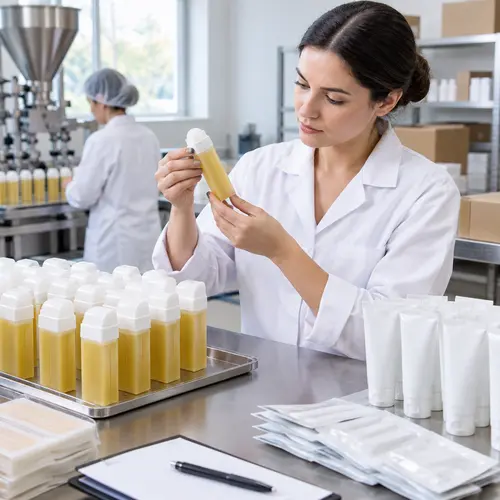
- Confirm the manufacturing site, quality certifications, audit scope, certificate issuer, validity dates, and whether the quoted product is covered by that site.
- Request a signed product brief and approved reference sample with measurable appearance, odor, pH, viscosity, fill, and dispensing criteria.
- Test the complete hair-removal routine, including wax, strips, cream, cartridge, and aftercare products that may be used together.
- Define customization ownership, shared-base elements, ingredient substitutions, fragrance limits, and change-control requirements.
- Review component specifications, formula-contact materials, decoration method, seal performance, and distribution risks.
- Agree on stability protocol, acceptance limits, test reports, retained samples, and action thresholds for failed results.
- Break down MOQ by formula, filling, printed components, and cartons, including ownership and storage of surplus materials.
- Verify ingredient lists, specifications, safety support, claims evidence, label-review responsibilities, and destination-market documents.
- Confirm batch traceability, inspection records, defect limits, shipment release documents, and complaint or recall procedures.
- Document lead times for sampling, testing, packaging procurement, production scheduling, and replacement capacity.
FAQ
Can an Asian manufacturing site comply with European and U.S. clean beauty and cruelty-free expectations?
Location alone does not establish compliance. Audit the actual site, verify current ISO 22716 or equivalent quality records, review ingredient sourcing and animal-testing policies, and map each clean beauty requirement to the retailer or brand standard being claimed. Obtain documentary evidence and contract language rather than relying on a general certification statement.
Will a low MOQ make the unit economics unworkable?
It can, particularly when decoration, testing, and setup costs are spread across fewer units. Model landed cost, fulfillment, promotional allowances, customer acquisition cost, expected returns, and unused packaging. A slightly higher MOQ may be healthier if sell-through is credible, while a smaller run can limit inventory risk during market validation.
Does using a turnkey formula make the product indistinguishable from competing serums?
Not necessarily, but changing only the label provides limited differentiation. Ask what can be customized in texture, fragrance, ingredient sourcing, application format, and aftercare positioning. Confirm whether exclusivity is available and ensure every distinctive claim has supporting evidence.
Can we sign a strict NDA before sharing the brand plan?
Yes, an NDA can be executed before detailed formula, launch, and channel information is exchanged. It should define confidential information, permitted recipients, exclusions, duration, data handling, and remedies. Formula ownership, development ownership, and access to third-party component vendors should also be addressed in the development agreement.
How can we verify environmental packaging claims?
Request material specifications, recycled-content evidence, chain-of-custody records where applicable, supplier declarations, and the scope of any certification. Check whether the claim applies to the bottle, closure, label, carton, or complete pack. Avoid broad recyclable or sustainable statements when local collection and processing conditions do not support them.
What should be approved before placing the first production order?
Approve the formula sample, final components, artwork, specifications, test plan, claim wording, label documents, defect limits, delivery terms, and shipment configuration. Record approval versions and require written authorization for later substitutions.