Direct Answer
A hair removal formula brief is the decision document that translates a founder’s visual concept into a sample-ready production specification. It should define seven inputs before development starts: product format, target user, application area, texture behavior, claim language, packaging system, and launch market. It should also separate fixed requirements from variables the ODM may optimize.
For example, do not brief a supplier with only ‘a gentle pink hair removal cream.’ Specify how the cream should dispense, spread, remain visible on camera, rinse away, smell, and perform within the intended use time. Add the target package, sales region, content schedule, and required testing. This gives a custom hair removal product development team enough information to build the right first sample rather than interpret an aesthetic mood board. A strong brief reduces revision loops while keeping claims, safety review, and packaging decisions connected from day one.
Key Takeaways for Private Label Buyers
- Choose the format first. Cream, sugar wax, hard wax, strips, roll-on wax, and aftercare require different performance specifications.
- Describe observable texture. State how the product should dispense, spread, grip, pull, rinse, absorb, and appear under studio lighting.
- Write claims before testing. Exact wording determines what evidence, directions, warnings, and market review may be required.
- Nominate the package early. Formula approval without compatibility work can lead to leakage, paneling, discoloration, or poor dispensing.
- Define the sampling scope. Record sample quantity, color options, fragrance options, package prototypes, revision rounds, and whether a 7-day baseline sample is realistic.
- Request one commercial view. Ask for the formula, package, decoration, testing, freight assumptions, MOQ, and ownership terms in a transparent BOM.

Buyer Context
Hair-removal concepts often begin as content ideas: a glossy wax pull, an unusually clean strip reveal, a colored cream with strong camera contrast, or a compact aftercare pairing. The factory, however, must convert that visual reference into measurable production decisions.
Format changes the entire development path. A custom depilatory cream formulation depends on controlled dispensing, uniform coverage, odor management, defined contact time, rinse behavior, and a tightly controlled supplier-set pH specification. By contrast, custom wax strips and hot wax require decisions about softening or melting behavior, grip, residue, strip release, pull characteristics, and performance after storage.
Roll-on wax adds cartridge flow and leakage risk. Sugar wax must remain usable across expected room temperatures without becoming too stiff or fluid. An aftercare gel or lotion must complement the removal step without creating unsupported soothing or regrowth claims. Buyers planning a paired routine can review post-depilation care OEM options alongside the primary SKU.
This is why the brief should arrive before the quotation is treated as final. A supplier cannot provide a meaningful cost model until it knows the fill size, package, decoration, claim direction, target market, testing scope, and expected first order. Buyers comparing broader hair removal product solutions should assess equivalent briefs, not visually similar samples with different specifications.
Technical or Packaging Factors
1. Product format and use conditions
Name the application area, intended user, hair type, removal method, use frequency, and expected environment. A body cream, facial wax strip, salon hard wax, and travel roll-on cartridge should not share one generic performance target. If the concept is positioned for sensitive users, define fragrance restrictions, ingredient exclusions, directions, and the irritation-risk review rather than relying on the word ‘gentle.’ The mild hair removal formula resource provides useful positioning context.
2. Texture translated into observable criteria
Include reference videos, but pair them with plain-language acceptance points. For cream, specify whether it should hold a clean ribbon from the nozzle, spread without dripping, remain opaque during use, and rinse without a greasy film. For hard wax, define the desired heating range, working time, flexibility, pull strength, and residue level. For strips, record adhesive coverage, backing flexibility, separation force, grip, and post-pull residue. For roll-on wax, specify roller movement, coat uniformity, cap cleanliness, and cartridge flow at the intended working temperature.
A camera-ready texture may require stronger color contrast or a more controlled flow than a standard retail model. Color choices must still fit the intended market. Buyers selling in the United States should review FDA color additive permitted-use information. Natural or organic positioning should be checked against the current COSMOS organic and natural cosmetics standard before the ingredient brief is locked.

3. Claims, directions, and market
Write the proposed front-label and product-page claims verbatim. ‘Removes visible hair,’ ‘works in 5 minutes,’ ‘less residue,’ and ‘suitable for sensitive skin’ are different evidence questions. Avoid approving claims from ingredient reputation alone. Performance must be reviewed on the finished formula in its final use pattern.
For the US, remember that cosmetics are regulated even though they are generally not approved before sale, as explained in the FDA overview of cosmetics authority. The brief should identify every sales market so the supplier can prepare the appropriate ingredient list, directions, warnings, batch information, and supporting documents.
4. Packaging compatibility and shipment exposure
Record the primary package material, closure, seal, applicator, decoration, fill quantity, and secondary carton. Depilatory cream should be checked for formula contact with the tube, shoulder, cap, seal, and printed surfaces. Roll-on cartridges need upright, inverted, and side-storage leakage review. Wax strip sachets need seal-integrity and adhesive-aging checks. Hot or sugar wax jars require closure, heat exposure, and deformation review.
A practical early stability screen may include storage at 4°C, 25°C, and 40°C plus three freeze-thaw cycles. The final plan should reflect formula type, package, route, and expected shelf life. Review appearance, odor, viscosity or melting behavior, pH where relevant, package interaction, leakage, and dispensing after storage. Shipment planning should also address hot-container exposure, cold routes, carton strength, and orientation. The complete hair removal manufacturing process should show where these checks occur before filling and release.
5. Sampling and scale-up controls
The sample request should state whether the buyer is selecting from baseline formulas or requesting deeper customization. Confirm how many variants are included, which package is used, what feedback format is expected, and whether pilot production can start at 1,000 units. A 7-day first sample and an under-30-day development target may be feasible for an existing base, but custom fragrance, color, tooling, testing, or market documents can extend timing.
Most importantly, ask whether the approved sample is the same formula intended for mass production. Record exclusivity, formula ownership, change-control terms, and approved raw-material alternatives. Additional buyer education is available through the hair removal product guides, while supplier scope can be compared through the hair removal OEM manufacturer overview.

Decision Framework Table
| Factor | What to Check | Why It Matters | ODM Buyer Note |
|---|---|---|---|
| Format | Cream, wax, strip, sugar wax, roll-on, or aftercare | Determines development, filling, and test path | Select one hero format before adding variants |
| Texture | Dispensing, spread, grip, pull, rinse, residue, and camera appearance | Converts a visual idea into sample criteria | Provide a reference video and written acceptance points |
| Claims | Exact label wording, use time, application area, and target user | Shapes evidence and label requirements | Mark each claim as required, preferred, or exploratory |
| Packaging | Material, closure, seal, applicator, fill, and decoration | Prevents leakage, incompatibility, and poor dispensing | Test the production-intent package, not only a lab jar |
| Storage | Heat, cold, cycling, orientation, and shipment route | Reveals texture drift and package failures | Agree on acceptance limits before testing starts |
| Commercial scope | MOQ, sample rounds, BOM, lead time, freight, and ownership | Protects budget and launch timing | Use a written hair removal product RFQ with all inputs attached |
ODM Manufacturing Considerations
ODM work should begin by converting the hair removal formula brief into an approval record. The buyer and supplier should identify the exact sample code, formula version, color, fragrance, texture, fill weight, package components, and intended market. Approval should not rely on a message saying the sample is acceptable. Keep sealed reference units and a signed specification sheet so production can be compared with the version actually reviewed.
Customization must be defined by degree. A color or fragrance adjustment to an existing model is different from changing the wax melting point, depilatory cream viscosity, spreadability, or ingredient positioning. Ask which changes may affect cost, testing scope, lead time, and MOQ. If exclusivity matters, the commercial agreement should state whether it covers the full formula, a fragrance-color combination, a package presentation, or only a named market.
Package selection should follow the formula rather than run as a separate design task. Confirm component material, fill volume, closure fit, dispensing rate, label adhesion, and empty space above the fill. For roll-on cartridges, assess whether the roller continues to rotate cleanly after storage and transport. For tubs and bottles, examine panel distortion, cap movement, staining, odor transfer, and residue around the seal. Buyers can review relevant formats through the hair removal product categories and compare development responsibilities through the OEM and ODM services overview.
Stability review should reflect expected warehouse, delivery, and consumer conditions. Record appearance, odor, color, viscosity or melting behavior, net weight, dispensing, and container condition at scheduled intervals. A result should identify the sample batch and package combination rather than state only that it passed. Irritation-risk review should also cover directions, exposure time, removal method, fragrance level, and foreseeable misuse.
MOQ discussions should separate formula batch minimum, printed component minimum, carton minimum, and finished-goods order quantity. These figures are often different. Request a transparent BOM showing formula, filling, package components, decoration, testing, outer cartons, and expected freight assumptions. This makes it easier to compare a custom proposal with a stock-formula model without hidden additions appearing after artwork approval.
Before production, request the ingredient declaration, product specification, batch document format, test summary, directions, warnings, and available market-supporting files. Label content must be reviewed for the destination country. Shipment planning should state carton count, case weight, pallet arrangement where applicable, storage limitations, container orientation, and whether seasonal heat exposure requires a different route or departure window. The manufacturing process page can help buyers map these approvals to production stages.
Common Problems or Failure Cases
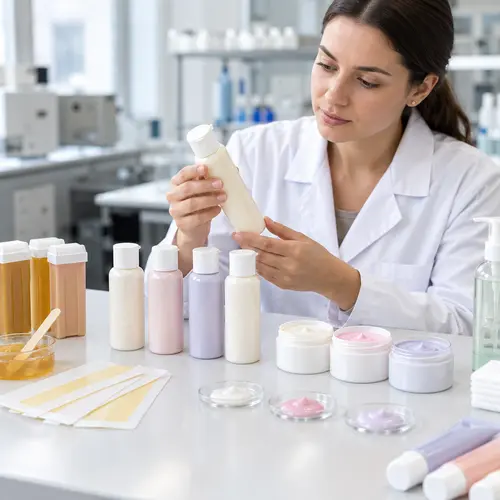
Wax becomes brittle. A hard wax may look acceptable when freshly made but crack into small pieces during application or removal. Common contributors include an unsuitable working-temperature window, excessive film thickness, or a formula that does not match the intended climate. Approval should include repeatable application conditions and an agreed flexibility criterion.
Wax strips lose adhesion. The wax layer can migrate, dry unevenly, or transfer poorly after extended warehouse exposure. Buyers should check removal performance on the intended hair type, strip separation force, residue, and whether the sachet remains properly closed.
Depilatory cream separates. Liquid release, graininess, or uneven color can indicate that the formula-package combination is not robust enough for distribution. Define an acceptable viscosity range, inspect samples from different positions in the batch, and verify that the dispensing opening suits the finished texture.
Cartridges leak. Leakage can originate at the roller, neck, cap, or seal and may appear only after cartons are held sideways or exposed to changing transport conditions. Check filled weight before and after evaluation, inspect neighboring labels for oil transfer, and agree on carton orientation.
Fragrance creates avoidable sensitivity concerns. A strong fragrance may support the brand concept but can increase consumer complaints, especially when directions are ignored. Compare fragrance-free and fragranced options, review declared allergens where required, and avoid using scent to mask an unstable base odor.
Packaging deforms. Jars, bottles, or cartridge bodies may dent, swell, soften, or lose closure fit. Decorative coatings and labels can also wrinkle or lift. A visually distinctive pack is not production-ready until the filled unit remains functional and presentable through expected storage and shipment conditions.
Supplier Checklist
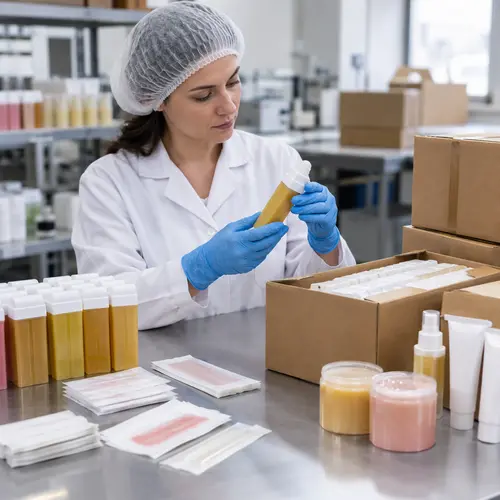
- Confirm experience with the exact format: depilatory wax, wax strips, cream, sugar wax, cartridges, or aftercare.
- Request coded samples, retained references, and written approval criteria for color, odor, viscosity, melting point, spread, residue, and removal performance where relevant.
- Ask which elements are custom, which are based on existing formulas, and what contractual limits prevent reuse of protected brand-specific work.
- Review ingredient restrictions, irritation-risk screening, directions, warnings, and destination-market label documents before artwork is locked.
- Match each formula with the actual decorated container, closure, liner, roller, sachet, or strip substrate intended for production.
- Obtain separate minimums for bulk production, filling, printed components, and finished units, plus expected overrun allowances.
- Request an itemized BOM, sample charges, test charges, tooling or decoration costs, and freight assumptions.
- Verify batch traceability, incoming-material checks, in-process controls, release criteria, complaint handling, and recall contacts.
- Ask for normal and surge-capacity scenarios, material reservation requirements, and the rules used to prioritize confirmed production slots.
- Document carton dimensions, case weight, storage guidance, transport orientation, loading method, and shipment-release inspection.
FAQ
How can I reduce the risk that a factory will reuse my idea?
Use a confidentiality agreement and a manufacturing contract that define protected files, custom work, exclusivity boundaries, permitted subcontractors, and remedies for unauthorized reuse. Limit access to final artwork and brand assets, keep dated sample records, and verify who controls molds, print files, and confidential specifications.
Can the sample texture and color be judged for social media videos?
Yes, but visual approval should use the intended package, application amount, background, and lighting setup. Record objective targets such as color reference, gloss, stringing, spread pattern, film thickness, and removal appearance. Camera impact should be approved separately from consumer usability.
Can quality controls guarantee that no consumer will react badly?
No supplier can promise zero reactions. Risk can be reduced through ingredient review, controlled production, appropriate warnings, clear directions, traceable batches, and finished-product evaluation. Brands should also maintain complaint escalation and adverse-event procedures for each sales market.
What if I do not understand technical ingredient language?
A capable account and development team should translate marketing goals into observable criteria. Ask them to restate requests such as dramatic texture, low residue, or easy cleanup as measurable sample checks, then confirm those checks in writing before revisions begin.
What happens if a video causes a sudden order spike?
Ask for weekly output by format, available filling lines, component lead times, raw-material reservation options, and the deposit point that secures a production slot. A realistic surge plan should distinguish finished inventory, undecorated components, and materials that still require ordering.
Which documents should be ready before label printing?
At minimum, review the ingredient list, net-content format, directions, warnings, responsible-party details, batch coding area, country-of-origin treatment, and any evidence supporting visible claims. Requirements vary by destination, so local review remains necessary.