Direct Answer
Effective cosmetic MOQ planning for hair-removal products starts with the assortment brief, not a factory quantity. Define the product format, target market, formula claims, pack size, launch channel, and first-test volume before asking for a production quote. A depilatory cream, wax strip, sugar wax, and roll-on cartridge each create different constraints for filling, sealing, storage, and transport. The right MOQ is the smallest batch that can support a meaningful market test while preserving formula stability, packaging performance, labeling compliance, and a realistic unit cost.
For an early DTC launch, a pilot run from about 1,000 units can be commercially useful when the formula and packaging are selected from a scalable platform. The quote should then separate one-time development costs, formula or component tooling, unit cost, testing, documentation, and freight. This makes the decision visible: you can compare a lower initial stock position against the cost of rework, leakage, failed stability, or a second sample cycle.
Key Takeaways for Private Label Buyers
- Build the brief around one clear use case, such as facial wax strips, body depilatory cream, salon sugar wax, or a post-depilation calming gel.
- Ask for the formula target and production tolerance, including cream viscosity, wax melting behavior, strip adhesion, fragrance level, and irritation-risk review.
- Evaluate the primary pack with the formula. Tubes, jars, sachets, roll-on cartridges, and wax strip pouches do not have interchangeable compatibility or leakage profiles.
- Require a written testing scope covering stability, heat and cold storage, seal integrity, transport simulation where relevant, and retained-sample review.
- Request a quote that distinguishes development, testing, packaging components, filling, documentation, and shipment conditions instead of hiding them in one unit price.
- Set the launch quantity from demand evidence and replenishment timing, not from an arbitrary MOQ headline.
hair removal product solutions can help organize the assortment by application, buyer profile, and development stage before a supplier receives the final brief.
Buyer Context
Hair removal buyers often approach MOQ as a purchasing question: how many units must be ordered, and what will each unit cost? In practice, it is a product-system question. A wax strip launch may need a strip substrate, resin or wax coating, protective liner, individual sachet, carton, and instructions. A depilatory cream may require a tube or airless format, a closure that resists formula migration, a tamper feature, and a label that accommodates required directions and warnings. Sugar wax and hot wax add thermal behavior, while roll-on wax introduces cartridge fit, roller movement, and leakage risks.
These differences matter for fast-moving DTC brands. A TikTok or Instagram test can produce demand quickly, but a fragile formula or under-tested component can turn that demand into complaints. A delayed stability document can also slow a retailer review or shipment release. That is why the assortment brief should record destination markets, intended claims, skin-contact area, pack size, expected stock duration, and launch date before sampling begins.
A practical sourcing route is to compare a focused range rather than commission too many unrelated SKUs. For example, a brand might test one sensitive-skin depilatory cream, one body wax strip format, and one aftercare product as a coherent routine. The hair removal OEM ODM services brief should state whether the brand needs an existing baseline formulation, controlled modifications, or a more distinctive texture and scent profile.
Compliance should be part of the same conversation. For United States sales, review ingredient declarations, product directions, warning language, responsible-person information, and applicable facility and product documentation with the appropriate regulatory advisor. The FDA Cosmetics Labeling Guide is a useful reference for label structure. For European distribution, confirm the responsible-person, product information file, safety assessment, and CPNP workflow before the final artwork is approved. A supplier should provide traceable documentation rather than treating compliance as a late-stage add-on.
Buyers considering Gulf distribution should also map local requirements against the Gulf Standardization Organization framework. The exact route depends on the destination country and product classification, so the quote should identify what is included and what remains with the brand or its regulatory representative.
hair removal manufacturing process documentation is valuable here because it shows how sampling, filling, packaging, quality control, and shipment are connected.
hair removal product guides can also support internal alignment between marketing, procurement, and regulatory teams.
Technical or Packaging Factors
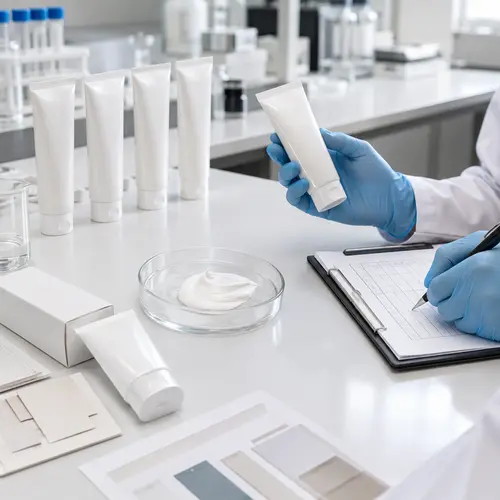
Formula behavior. Depilatory cream requires a controlled texture that spreads evenly without excessive dripping, while still rinsing cleanly within the intended use window. Request the target viscosity method, batch tolerance, odor profile, active-ingredient review, and irritation-risk assessment. Do not approve a sample only by appearance. Test application thickness, removal completeness, residue, post-use feel, and performance after storage.
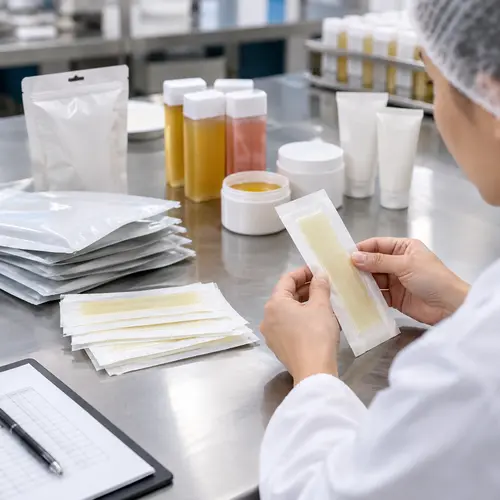
Wax products need a different review. For hot wax and sugar wax, check melting or softening behavior, pourability, stringing, set time, and surface finish. For cold wax strips, check coating uniformity, release from the liner, adhesion after aging, and residue on skin. For roll-on wax cartridges, test roller rotation, dosing consistency, cap fit, and leakage after upright and inverted storage. These results should be connected to the production batch record so the same performance can be reproduced at scale.
Packaging compatibility. Formula and pack must be evaluated together. A cream can soften a closure liner, migrate into a shoulder area, or distort printed information if the component is not suitable. Oils and waxes can affect adhesive labels, seals, and pouch laminates. Ask for compatibility samples filled with the intended formula, not only empty component photos. Review seal integrity, torque or closure fit, label adhesion, carton compression, and leakage after heat and cold exposure.
Storage and shipment. Define the expected warehouse and transit conditions before the quote is finalized. Request stability observations at relevant temperatures, appearance and odor checks, viscosity or texture tracking, packaging inspection, and a clear acceptance standard. Shipment planning should include carton dimensions, units per case, pallet or parcel configuration, orientation limits, and protection against heat exposure for wax formats. A lower unit cost is not useful if the first shipment arrives with separated cream, warped pouches, or softened seals.
Sampling and scale-up. The approved sample should be a production-relevant reference. Record the formula version, fragrance, color, component specification, fill weight, artwork revision, and test result. Ask whether the same raw-material sources and filling line will be used for the pilot and later batches. This reduces the risk of formulation re-engineering between sample approval and launch.
depilatory cream OEM planning is most useful when cream texture, packaging, samples, and regulatory documents are reviewed as one package. For waxing assortments, compare wax strips OEM capabilities against the exact strip, pouch, and wax format required.
Decision Framework Table
| Factor | What to Check | Why It Matters | ODM Buyer Note |
|---|---|---|---|
| Assortment scope | Format, use area, pack size, market, claims, and launch quantity | Prevents an unclear brief from producing an incomparable quote | Start with a focused test range and define the replenishment path |
| Formula performance | Texture, odor, removal result, residue, irritation-risk review, and batch tolerance | Consumer experience and complaint risk are tied to repeatable formula behavior | Approve against written criteria, not a single visual sample |
| Packaging compatibility | Seal, liner, closure, label adhesion, leakage, and formula interaction | Component failure can damage stock and delay launch | Test filled components under intended storage conditions |
| Stability and shipment | Heat and cold exposure, appearance, odor, texture, carton protection, and orientation | Transit conditions can change wax behavior or compromise cream packs | Match test conditions to the actual destination and route |
| MOQ and cost | Pilot units, component minimums, testing fees, tooling, documentation, and freight | A low unit price can conceal high first-launch cash exposure | Compare total landed cost and cash tied in stock |
| Documentation | Ingredient list, specifications, batch records, test reports, artwork data, and market requirements | Supports review, traceability, and release decisions | Make the documentation list part of the purchase brief |
From Brief to Production Quote
A useful RFQ should let a supplier answer without repeated clarification. Include the product format, target net content, first batch size, annual estimate, destination, target retail position, formula preference, fragrance or fragrance-free requirement, packaging concept, sustainability claims, required documents, and launch timing. Add photos or benchmark samples only as references; define measurable acceptance criteria separately.
Then ask for three quote layers: a pilot scenario, a planned replenishment scenario, and a scale scenario. Each should state units per batch, lead time, component minimums, sample scope, testing scope, and shipment assumptions. This structure exposes where cost changes actually occur. It also helps a founder decide whether to simplify a component, consolidate colors or fragrances, or delay a secondary SKU until the first launch has demand data.
For aftercare, review whether the product is intended as a soothing gel, lotion, or serum and whether the claim language is cosmetic and supportable in the target market. A post-depilation care OEM project should specify skin feel, absorption, pack compatibility, and the relationship to the hair-removal product. For sensitive-skin positioning, a sensitive skin hair removal products review should include mildness evidence, fragrance decisions, directions, and conservative claim wording.

Next-Step Checklist
- Choose the first one to three hair-removal formats and define the intended user and market.
- Write the formula, packaging, claims, testing, and documentation requirements into one brief.
- Request filled samples and record formula version, component specification, and fill weight.
- Review texture, removal performance, irritation risk, leakage, seal integrity, and storage response.
- Compare pilot and replenishment quotes using total landed cost, stock exposure, and compliance readiness.
- Approve the production reference only after the formula, pack, artwork, and test scope are aligned.
For the next commercial step, use the request a hair removal product quote pathway with the completed brief attached. A precise input produces a more useful production answer, especially when MOQ, launch speed, and documentation must be evaluated together.
ODM Manufacturing Considerations
A reliable ODM development process begins with a controlled sample confirmation, not a general product description. The buyer should approve the product type, target user, application method, fragrance direction, removal performance, residue level, and pack size in a written brief. For depilatory cream, record the intended texture, spreadability, dwell-time instructions, and acceptable odor range. For hot wax, sugar wax, or roll-on cartridges, confirm melting behavior, pourability, pickup, setting time, and application temperature. Each approved sample should carry a reference code, date, formula revision, and packaging configuration so later production units can be compared against the same standard.
Formula customization should be defined by the degree of change. A buyer may request a fragrance adjustment, a different wax blend, a lower-residue finish, a modified cream texture, or an aftercare formula with a specific skin-feel objective. These changes can affect viscosity, adhesion, heat response, preservation, and compatibility with the final container. Ask the supplier to identify which raw materials are fixed, which are replaceable, and which claims require additional substantiation. A turnkey base can shorten development, but a documented customization path is important when the brand needs a distinct sensory profile or performance target.
Packaging compatibility must be checked with the actual filled product and closure. Review tube or jar deformation, seal integrity, label adhesion, wax residue around the dispensing opening, and the ability of a roll-on cartridge to deliver a consistent layer. For strips, evaluate coating uniformity, release from the backing, pouch seal strength, and adhesive aging. The review should include samples from the intended production packaging rather than a temporary laboratory container. Buyers should also request a compatibility record covering storage orientation, filling temperature, and expected shipment exposure.
Stability review should reflect the product category and likely distribution route. Ask for heat and cold observations, appearance changes, odor drift, separation, brittleness, leakage, and application performance after storage. A cream may remain visually acceptable while losing spreadability; wax may look stable but become too brittle or too soft; a cartridge may pass an upright check and leak after vibration. The supplier should define sample quantities, observation points, acceptance criteria, and the handling of failures before the purchase order is approved.
MOQ planning should separate formula, component, and finished-unit quantities. A low finished-unit quantity may still require a larger component run if printed cartons, custom pouches, or specialized cartridge parts have higher minimums. Request a cost model that distinguishes development samples, packaging samples, components, filling, testing, and shipment preparation. This makes it easier to compare a staged launch with a broader assortment and to calculate unit cost against forecasted sell-through, returns, and customer acquisition cost.
Labeling documents should be prepared before artwork is finalized. Depending on the target market, the file may need the ingredient declaration, net contents, batch or lot identification method, responsible-party details, warnings, directions, shelf-life or period-after-opening information, and supporting claim records. The FDA Cosmetics Labeling Guide is a useful reference for US label structure. For products sold in the Gulf region, confirm whether the intended market follows the Gulf Standardization Organization framework. Shipment conditions should also be written down, including carton configuration, temperature sensitivity, pallet limits, orientation, protective inserts, and release inspection requirements.
Review the OEM and ODM development options alongside the manufacturing process overview so the brief matches the supplier’s actual documentation and production controls.

Common Problems or Failure Cases
Wax brittleness is often caused by an unsuitable wax ratio, excessive cooling, or a mismatch between the formula and application temperature. The finished unit may crack during removal from a pot or fail to spread into an even layer. The buyer should compare samples at the intended working temperature and after simulated storage, recording flexibility, pickup, spread, and removal behavior.
Strip adhesion loss can result from uneven coating, moisture exposure, weak pouch sealing, or aging during storage. A strip may look acceptable during filling but leave excessive residue or fail to remove short hair after shipment. Check coating weight across the strip, release consistency, pouch seal integrity, and performance after heat and cold exposure. Keep retain samples from each batch for comparison.
Depilatory cream separation may appear as oil release, watery leakage, graininess, or an altered odor. These changes can arise from formulation instability, incompatible packaging, or repeated temperature cycling. Review viscosity, color, odor, phase separation, and application feel at each observation point. If the product contains exfoliating or odor-control ingredients, confirm that the related claim and irritation-risk review are supported by the documentation. The CIR final report on salicylic acid in cosmetics can support ingredient due diligence when that ingredient is part of an aftercare or hair-removal formula.
Roll-on cartridge leakage commonly occurs at the valve, seam, cap, or neck interface. It may be invisible in an upright inspection and appear only after vibration or horizontal storage. Test filled cartridges in multiple orientations, inspect the dispensing ball after repeated use, and verify that the outer package prevents contamination and pressure damage.
Fragrance sensitivity is another preventable failure. A strong fragrance can increase complaints even when hair-removal performance is acceptable. Establish a fragrance intensity range, review the fragrance documentation, and test the final formula rather than judging the fragrance concentrate alone. Packaging deformation can also create avoidable claims: soft pouches, warped cartons, or distorted tubes may result from filling temperature, compression, or transit heat. Shipment trials should therefore use the final carton and pallet arrangement.
Supplier Checklist
- Can the supplier provide a coded sample history showing formula revisions, approval dates, and retained samples?
- Are texture, viscosity, melting behavior, adhesion, setting time, and residue acceptance criteria written for the relevant product type?
- Will compatibility testing use the final tube, pouch, jar, strip, cartridge, closure, label, and carton?
- Does the stability file cover appearance, odor, separation, brittleness, leakage, dispensing, and heat or cold storage?
- Are formula, component, and finished-unit MOQs listed separately with a clear cost breakdown?
- Can the supplier provide ingredient, batch, labeling, warning, claim, and regulatory documentation before artwork approval?
- Are shipment conditions defined for temperature, orientation, palletization, carton protection, and release inspection?
- Are quality certifications, audit records, cruelty-free controls, and raw-material traceability available for review rather than presented as unsupported claims?
- Will a signed NDA define confidential information, permitted access, formula ownership, and restrictions on reuse?
FAQ
Can an Asian supplier meet Clean Beauty and cruelty-free requirements?
Location alone does not establish compliance. Ask for the restricted-substance policy, ingredient review process, animal-testing statement, supplier declarations, and batch-level traceability. Define the exact Clean Beauty standard in the brief because retailer and market requirements differ. A written review and supporting records are more useful than a general promise.
Will a low MOQ make the unit cost too high to support customer acquisition cost?
It can, especially when custom printed components have their own minimums. Request separate costs for formula development, packaging, filling, testing, and shipment preparation. Compare a narrower launch assortment, stock components, and staged purchasing against the expected selling price, returns, and CAC. The decision should be based on total landed cost and forecasted sell-through, not unit price alone.
Will a turnkey base make my product look identical to other brands?
A standard base may create similarity if the formula, fragrance, texture, pack, and claims remain unchanged. Ask which variables can be customized and whether the supplier will document the revised formula. Distinctive performance criteria, packaging execution, fragrance direction, and aftercare pairing can create differentiation without requiring an entirely new formula.
Can we sign a strict NDA before sharing the assortment plan?
Yes, the NDA should be reviewed before disclosing sensitive formula targets, launch timing, packaging artwork, or channel strategy. It should define confidential information, access limits, permitted use, ownership of buyer-funded development, return or destruction of records, and the duration of confidentiality. The commercial agreement should also address formula and artwork rights.
How can I verify an environmental packaging claim?
Request the material specification, recycled or renewable content statement, chain-of-custody evidence where relevant, disposal instructions, and certification number if a certification is claimed. Confirm that the claim applies to the exact pouch, tube, carton, or cartridge being supplied. Avoid broad terms such as sustainable without a defined basis and evidence that can be retained in the compliance file.
What should be approved before shipment?
Approve the final formula code, filled packaging, artwork, batch identification, carton configuration, retain-sample plan, inspection standard, and shipment conditions. Confirm that any deviations require written approval. For heat-sensitive waxes and creams, include transit temperature expectations and a receiving inspection for leakage, deformation, separation, and application performance.
References
For US cosmetic label requirements, consult the FDA Cosmetics Labeling Guide. For ingredient due diligence involving salicylic acid, consult the CIR final report on salicylic acid in cosmetics. For products intended for Gulf markets, review the Gulf Standardization Organization framework.