Direct Answer
Effective hair removal product quality control requires buyers to verify five connected control layers: raw-material identity, formula specifications, packaging compatibility, finished-product performance, and batch-level traceability. A certificate alone is insufficient. Procurement teams should confirm that the approved laboratory sample, pilot run, and commercial batch use the same formula, ingredients, suppliers, equipment logic, and release criteria.
For depilatory cream, this means controlling pH, viscosity, thioglycolate content where applicable, odor, removal time, and irritation risk. For wax, sugar wax, strips, and roll-on cartridges, it means defining melting behavior, adhesion, residue, strip separation, cartridge flow, and leakage limits. Aftercare products require their own stability, microbiological, dispensing, and compatibility review.
The commercial decision should therefore be based on documented process capability and change control, not a showroom sample. Buyers evaluating a hair removal OEM manufacturer should treat quality evidence as a launch gate rather than a post-award administrative exercise.
Key Takeaways for Private Label Buyers
- Lock the product specification before approval: Define measurable ranges for appearance, odor, pH, viscosity, fill weight, melting behavior, application, removal performance, and residue.
- Audit formula continuity: Require confirmation that sampling, pilot production, and scale-up will not introduce unapproved ingredient substitutions or formulation re-engineering.
- Validate the complete pack: Test the formula in the final tube, jar, sachet, strip pouch, heater container, or roll-on cartridge rather than relying on bulk-product stability.
- Review foreseeable misuse: Irritation-risk analysis, directions, warnings, contact time, patch-test language, and claims must reflect the target market and product category.
- Link shipment release to evidence: Each lot should have traceable batch records, test results, retained samples, packaging inspection records, and an authorized release decision.
- Separate launch speed from skipped controls: A 1,000-unit pilot under ISO 22716 can accelerate learning, but it should not bypass stability, compatibility, safety, or labeling gates.

Buyer Context
Hair-removal products carry a concentrated risk profile because performance frequently depends on a narrow interaction among chemistry, application time, temperature, hair type, and packaging. A depilatory cream may remain visually acceptable while drifting outside its approved pH or viscosity specification. A wax strip can pass initial adhesion review but become difficult to separate after heat exposure. A roll-on cartridge may perform in the laboratory and leak during palletized transport.
These failures become materially more serious for international brands. A single batch deviation can affect multiple markets, channel inventories, and labeling regimes simultaneously. Supplier replacement is also slow when procurement, research and development, regulatory, quality assurance, legal, and ESG teams must conduct parallel reviews. Following a major complaint, factory interruption, or adverse third-party audit, the apparent speed of appointing an alternate source can be offset by months of qualification work.
The objective is not simply to inspect more units. It is to determine whether the ODM has a controlled and reproducible system. Buyers should map evidence across the documented hair removal manufacturing process, including material receipt, weighing, compounding, heating or cooling, filling, sealing, coding, quarantine, release, and shipment. The same review should cover the supplier’s hair removal OEM ODM services and its ability to control customization without weakening validated specifications.
Market classification must also be assessed claim by claim. The FDA explanation of its authority over cosmetics clarifies that cosmetics are regulated even though they are generally not approved before sale. Saudi-bound projects should confirm applicable product and shipment requirements through the SABER conformity certification platform. E-commerce programs should additionally reconcile leakage, preparation, labeling, and fulfillment requirements with the Amazon FBA fulfillment program guidelines.
Technical and Packaging Factors
Formula identity and performance specifications
Every approved formula should have a controlled master specification and bill of materials. Procurement teams should compare the ingredient list, internal material codes, supplier names, processing order, temperatures, mixing times, and in-process controls used for the sample and production batch. Any substitution should require documented technical assessment and buyer approval.
For a custom depilatory cream formulation, the specification should cover appearance, odor, pH, viscosity, active concentration where relevant, application spread, contact time, removal efficacy, rinse behavior, and skin-sensation observations. The review of sensitive skin hair removal products should not rely solely on fragrance reduction or marketing terminology. It should include ingredient-risk screening, exposure instructions, compatibility data, and substantiation appropriate to the intended claims.
Wax behavior and application conditions
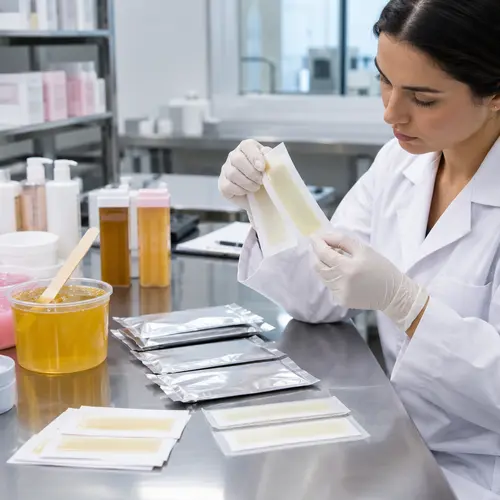
Hot wax, wax beads, sugar wax, and roll-on wax require specifications tied to actual use conditions. Buyers should establish an approved melting or softening range, working viscosity, pickup, spread, setting time, hair-removal efficiency, residue, and skin pull. For private label waxing products, strip dimensions, wax-coat weight, backing strength, pair separation, adhesion aging, and pouch-seal integrity should be verified after storage rather than only at packing.
Testing should use representative hair types, application areas, and ambient conditions defined in the protocol. A successful demonstration on one operator or substrate is not evidence of commercial consistency.
Packaging compatibility and distribution stress
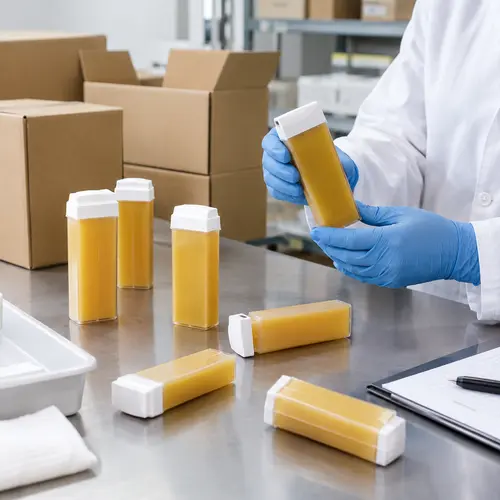
Packaging is part of the product system. Depilatory cream can interact with tube layers, seals, closures, decoration, or applicators. Wax can migrate, deform, or contaminate sealing surfaces under heat. Roll-on cartridges require checks for ball rotation, controlled flow, cap retention, neck cracking, and leakage in multiple orientations.
Compatibility protocols should examine room-temperature storage, elevated heat, low-temperature exposure, temperature cycling, vibration, seal integrity, decoration resistance, odor transfer, weight loss, and dispensing behavior. Acceptance criteria must be approved before testing begins. Shipment configuration should also be assessed at carton and pallet level, including dividers, orientation, compression risk, and lot-code readability.
Aftercare introduces a separate interface. A post-depilation care OEM program should validate the soothing gel or lotion in its final dispenser and confirm that combining it with wax or cream does not create labeling or kit-assembly errors. Where a kit contains an after hair removal serum, each component needs an independent specification, batch identity, and expiry rationale.
Safety, stability, and release governance
Stability protocols should be product-specific and risk-based. Buyers should request time-zero data, scheduled observations, test methods, acceptance limits, deviation records, and a conclusion signed by an authorized quality function. Microbiological controls must reflect the formula, water activity, packaging, manufacturing environment, and intended use.
Release documentation should include a certificate of analysis linked to the purchase specification, batch manufacturing and packaging records, reconciliation, line-clearance evidence, nonconformance status, and retained-sample location. Broader sourcing teams can use depilatory product development articles to align technical terminology before issuing an RFQ, then define the sample and document package through a formal hair removal product RFQ.
Decision Framework
| Factor | What to Check | Why It Matters | ODM Buyer Note |
|---|---|---|---|
| Formula control | Master formula, material codes, approved suppliers, process instructions, and change history | Prevents silent substitutions and sample-to-production drift | Make buyer approval mandatory for material or process changes |
| Depilatory performance | pH, viscosity, active assay where relevant, contact time, removal efficacy, odor, and rinse behavior | Connects laboratory specifications to consumer use and irritation risk | Approve test methods and limits before the pilot batch |
| Wax performance | Melting behavior, working texture, adhesion, residue, strip separation, and coat uniformity | Controls operator experience across storage and climate conditions | Test aged samples, not only freshly manufactured units |
| Pack compatibility | Leakage, seal integrity, dispensing, decoration, migration, deformation, and code legibility | Reduces transport loss, complaints, and channel rejection | Use the final commercial pack and shipper configuration |
| Stability and safety | Approved protocol, time points, microbial controls, irritation-risk review, deviations, and signed conclusion | Supports shelf-life rationale and market-specific compliance | Do not accept a generic report from an unrelated formula or pack |
| Batch release | Certificate of analysis, batch records, retained sample, reconciliation, and quality authorization | Creates traceability and defensible release governance | Include document delivery and review timing in the quality agreement |
| Supply continuity | Critical-material mapping, alternate-source qualification, capacity constraints, and incident escalation | Limits disruption after shortages, labor events, or factory downtime | Require evidence that alternates are qualified before an emergency |
ODM Manufacturing Considerations
ODM development should convert a product concept into measurable approval criteria before commercial manufacturing begins. The buyer and supplier should agree on what constitutes the confirmed sample, which specifications can change, who approves each step, and what evidence must accompany production release.
Sample confirmation and formula customization
Keep one signed or digitally controlled master sample for each approved formula, fragrance, color, fill weight, and package format. The confirmation record should include the product code, revision number, approval date, ingredients list, sensory profile, and measurable acceptance ranges. For wax or sugar wax, buyers should document texture at defined room conditions, application spread, residue, hair pickup, and removal behavior. For depilatory cream, confirmation should cover appearance, odor, spreadability, intended exposure instructions, and the method used to review irritation risk.
Customization requests should be separated into cosmetic changes and performance changes. Adjusting fragrance or color can still affect formula behavior, while changing wax resins, oils, active ingredients, or processing conditions may require a broader reassessment. Require written change control so an approved custom formula is not replaced with an alternate ingredient or manufacturing route without buyer authorization.
Packaging, stability, and shipment readiness
Packaging approval should use production-intent components rather than visually similar samples. Verify fill weight, closure fit, label adhesion, print resistance, cap retention, and carton dimensions. Review whether wax residue migrates around closures, whether cream causes container paneling or discoloration, and whether roll-on components continue dispensing consistently after storage. Stability review should compare appearance, odor, texture, application performance, and package condition at planned checkpoints under normal storage and justified excursion conditions.
Shipment specifications should define case count, product orientation, lot identification, storage limits, container-loading method, and acceptable arrival condition. If inventory will enter Amazon fulfillment, compare the final configuration with the Amazon FBA fulfillment program guidelines. For Middle East distribution, confirm product and shipment obligations through the SABER conformity certification platform rather than assuming that documentation accepted in another market will transfer automatically.
MOQ and labeling documents
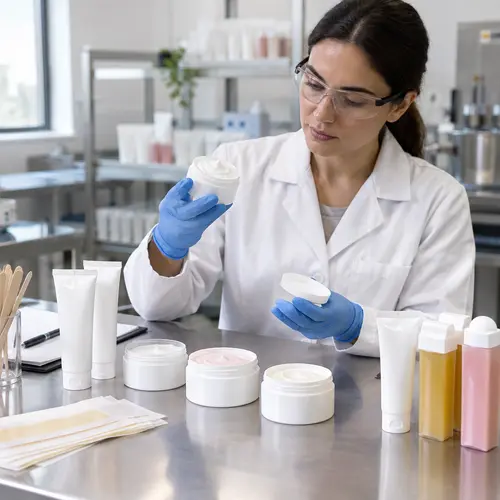
MOQ discussions should identify the constraint behind the number: formula batch size, printed-film quantity, cartridge production, fragrance procurement, or carton printing. Ask whether initial validation units can be made with stock components while preserving the approved bulk formula. Also document the quantity tolerance, component overrun policy, shelf-life expectations at dispatch, and ownership of unused custom packaging.
Labeling files should be reviewed separately from artwork aesthetics. The supplier should provide the ingredients declaration, batch-coding format, net-content data, directions, warnings, responsible-party details, country-of-origin information where applicable, and available safety or technical records. Market classification matters. FDA explains that cosmetics are regulated but are not generally approved before marketing on its page covering FDA authority over cosmetics. Buyers remain responsible for confirming the rules that apply to their claims and destination markets.
Common Problems or Failure Cases
Wax brittleness: Hard wax may crack instead of forming a flexible removal layer. Typical causes include an unsuitable resin-to-oil balance, excessive heating during use, raw-material variation, or storage outside the agreed range. Review retained batches, softening behavior, application thickness, and supplier records before changing instructions or formula.
Strip adhesion loss: Pre-coated strips can lose pickup performance because of adhesive migration, backing variation, contamination, or prolonged storage. Test aged stock against the approved reference using consistent hair length, pressure, dwell time, and removal technique.
Cream separation: Visible oiling, watery release, granulation, or uneven texture can indicate emulsion instability, processing inconsistency, or incompatibility with a fragrance or other ingredient. Quarantine affected lots and compare top, middle, and bottom samples rather than judging only the first unit opened.
Cartridge leakage: Leakage can result from dimensional variation, poor cap engagement, damaged rollers, overfilling, or shipment exposure. Inspect leakage location and fill-weight loss across multiple cases to distinguish an isolated component defect from a systematic manufacturing problem.
Fragrance sensitivity: A fragrance that passes an odor review may still increase consumer discomfort or alter formula stability. Buyers should obtain fragrance documentation, define the intended usage level, review complaint patterns by market, and maintain an unfragranced option when commercially appropriate.
Packaging deformation: Warped cartons, distorted containers, or loose closures can originate from storage conditions, stacking, component variability, or formula interaction. Arrival inspections should record case location, lot code, photographs, and defect frequency so responsibility can be investigated objectively.
Supplier Checklist
- Confirm that manufacturing capabilities match the specific hair-removal format, including wax, strips, cream, sugar wax, roll-on cartridges, or aftercare products.
- Request controlled specifications for formula identity, texture, fill weight, color, odor, and relevant melting or viscosity ranges.
- Review the sampling plan, master-sample control, revision history, and approval authority for custom formulation and logo artwork.
- Check raw-material qualification, incoming inspection, allergen or fragrance records, and written substitution controls.
- Verify production-line cleaning, in-process checks, nonconformance handling, retained samples, and batch-release responsibility.
- Request package-component specifications and evidence that the filled product remains functional through storage and distribution.
- Confirm stability checkpoints, shelf-life rationale, heat and cold excursion criteria, and procedures for investigating out-of-range results.
- Audit labeling documents for ingredients, directions, warnings, traceability codes, net contents, and destination-market requirements.
- Clarify MOQ drivers, production lead time, capacity reservation, safety-stock options, and continuity plans for a strike, major quality event, or sudden capacity interruption at an incumbent factory.
- Define shipment conditions, inspection level, defect categories, release records, and claim-handling timelines in the quality agreement.
- Assess information security, ethical labor controls, environmental records, insurance coverage, and corrective-action closure through independent evidence.

FAQ
Can a factory guarantee that our core formula will never be disclosed?
No supplier can credibly promise absolute protection. Buyers should verify role-based file access, segregated customer records, restricted laboratory and production access, confidentiality agreements, download logs, backup controls, and procedures for employee departure. Formula ownership and permitted use should also be explicit in the manufacturing contract.
How can a strategic buyer secure supply during a global raw-material shortage?
Use contractual allocation rules, rolling forecasts, approved secondary sources, defined safety stock, and visibility into constrained ingredients. Priority status should be supported by capacity or material reservations and escalation procedures, not a verbal assurance.
How should buyers investigate worker treatment?
Review payroll and time records, age-verification files, recruitment fees, grievance channels, working-hour data, and corrective actions. Independent interviews selected without management influence are important for identifying child labor, withheld wages, coercion, or excessive overtime.
What insurance evidence is relevant to a major quality complaint?
Request current certificates and policy details for product liability, recall where available, territorial coverage, exclusions, limits, deductibles, and named insured parties. Confirm that coverage applies to the destination markets and product types in the agreement.
When should a buyer reject an ODM sample?
Reject or revise it when measurable specifications, application performance, odor, package function, instructions, or irritation-risk expectations differ from the approved brief. Do not approve a sample solely because its appearance is acceptable.
Is a successful sample enough to authorize a sales launch?
No. A sample establishes a target, but launch authorization also requires production-representative evidence, compliant labeling, documented release criteria, stability support, shipment specifications, and agreement on complaint investigation.