Direct Answer
In the hard wax vs soft wax decision, neither format should carry an entire professional range. Hard wax is usually the better lead product for facial zones, underarms, bikini services, and creator-led demonstrations because it sets into a removable film without a strip. Soft wax is faster across legs, arms, backs, and other broad areas, but it requires strips and tighter control of application thickness.
For most private-label salon launches, the practical range is one signature hard wax, one efficient soft or roll-on wax, and one aftercare product. This gives professionals clear zone coverage without creating an oversized opening order. Approve each SKU by service performance, not color or fragrance alone: review working temperature, spread, setting time, hair pickup, residue, skin feel, packaging compatibility, and storage behavior. A seven-day sample target can support a content calendar, but final production should begin only after the approved sample, specifications, packaging, and label documents are locked together.
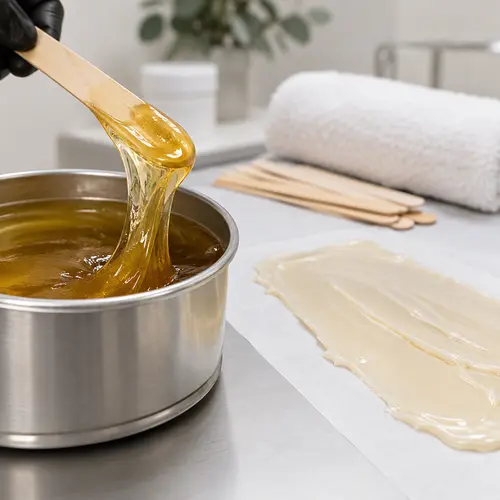
Key Takeaways for Private Label Buyers
- Build by treatment zone. Use hard wax for smaller or sensitive service areas and soft wax for rapid coverage of larger areas.
- Approve a measurable texture window. Record heating conditions, workable viscosity, spread thickness, set time, and removal behavior during sampling.
- Test the complete pack. Jars, lids, seals, roll-on cartridges, caps, strips, and outer containers must be reviewed with the actual formula.
- Stress the product before launch. Include heat and cold storage, transport simulation, leakage checks, wax-strip adhesion aging, and repeated salon heating where relevant.
- Keep the first range focused. A hero wax plus one complementary removal format and aftercare is easier to explain, film, stock, and replenish.
- Lock commercial details early. Ask for sample scope, pilot MOQ, itemized BOM, documentation responsibilities, shipment conditions, and scale-up timing in writing.
Buyer Context
Salon wax is both a formula and an operating tool. An attractive bag of wax beans may perform well on camera yet slow a technician if it strings, becomes brittle, or has a narrow working window. A glossy soft wax may spread beautifully but leave excess residue or overload a strip when applied too heavily. These differences affect treatment speed, consumable use, staff training, and repeat ordering.
The range also has to make sense to the audience. A creator brand may lead with a saturated-color hard wax because the melt, application, and peel create strong visual content. Professional buyers will still judge whether it maintains hold on short or coarse hair, releases cleanly, and behaves consistently through a working day. The prototype therefore needs two approvals: a camera review and a controlled service review.
Adjacent formats should have distinct jobs. Wax strips support portable touch-ups. Sugar wax can provide a separate technique-led offer. Roll-on wax cartridges improve dosing across larger zones but add roller flow and leakage variables. Depilatory cream is a different removal method and requires its own use directions, exposure controls, packaging review, and irritation-risk assessment. Aftercare can complete the service while providing a simple retail add-on. Buyers developing these formats can compare broader hair removal product solutions before setting the SKU plan.
Market requirements also affect the brief. Amazon sellers should screen products and shipment data against Amazon’s dangerous-goods classification rules for cosmetics. Brands entering the Gulf should confirm local filing needs through the Dubai Municipality Montaji registration system. For a consumer-oriented overview of format differences, Healthline’s comparison of soft and hard wax offers useful context, but the supplier specification must remain the operating source for a professional product.

Technical and Packaging Factors
Texture and Working Window
Hard wax should melt evenly, spread with controlled edges, grip hair, and set into a flexible film. If it sets too quickly, a technician may not finish the application. If it stays tacky too long, service time increases. Brittleness can cause fragments during removal; excessive elasticity can reduce pickup. Ask the ODM to define the recommended heating and application range for the specific formula rather than relying on a generic salon setting.
Soft wax should form a thin, continuous layer with predictable strip transfer. Evaluate styling-like hold only in the practical sense: enough adhesion to capture hair without creating unnecessary drag or residue. Test it with the proposed nonwoven or paper strips because backing weight, surface finish, and adhesive interaction can change removal performance. The private label waxing products scope should identify whether strips are matched during development or sourced separately.
Rosin, Fragrance, Color, and Skin Review
Rosin-based and synthetic-resin systems can differ in tack, flexibility, odor, and positioning. Do not treat terms such as hypoallergenic or sensitive as design language. Review the ingredient list, fragrance level, intended treatment zones, warnings, and patch-test directions with the supplier. Document observed redness, residue, breakage, and user comfort during controlled sample comparisons. A dedicated mild hair removal formula brief may be appropriate when gentleness is central to the brand claim.
Pack Compatibility and Storage
Hot-fill conditions, prolonged warmth, cold storage, and transport vibration can expose pack failures. For hard wax, review bag seals, puncture resistance, print rub, and moisture protection. For soft wax jars, inspect lid torque, liners, panel distortion, and seepage around the closure. Roll-on cartridges require upright and inverted leakage checks, cap retention, roller movement, and flow after repeated heating. Decorative matte finishes should also be checked after exposure to oily residue and routine handling.
Request side-by-side stability samples in the final container, not only bulk formula. Confirm the test schedule, acceptance criteria, and responsibility for packaging changes. The documented hair removal manufacturing process should connect the approved lab sample to filling, QC, packing, and release.
Decision Framework
| Factor | What to Check | Why It Matters | ODM Buyer Note |
|---|---|---|---|
| Service zone | Face, underarm, bikini, legs, arms, or back | Determines wax type, spread area, and removal method | Map every SKU to named treatment zones |
| Working texture | Melt uniformity, viscosity, set time, flexibility, and residue | Controls speed, pickup, and technician confidence | Approve under recorded salon conditions |
| Hair performance | Pickup on short, fine, and coarse hair | One result does not represent every client profile | Use a repeatable evaluation sheet |
| Packaging | Seal integrity, leakage, heat response, roller flow, and label adhesion | Pack failures can appear after filling or shipment | Test decorated production-intent components |
| Storage and transit | Heat, cold, vibration, inversion, and repeated warming | Reveals seepage, brittleness, separation, and deformation | Match checks to destination and shipping mode |
| Launch readiness | MOQ, BOM, sample approval, labels, batch documents, and lead time | Prevents visual approval from outrunning operational readiness | Use one signed specification for scale-up |

Before issuing a purchase order, align the product brief with the supplier’s hair removal OEM ODM services, including what can be completed within a seven-day sampling round and what requires longer compatibility work. Confirm whether a 1,000-unit pilot is available for each format, whether the same formula and line can support higher production, and whether BOM and freight assumptions are visible before artwork approval.
A coherent first launch could pair a visually distinctive hard wax with a roll-on soft wax and a calming gel from a post-depilation care OEM. Brands considering cream alongside waxing should run it as a separate development path with a qualified depilatory cream OEM. Once the samples, pack choices, target markets, and forecast are defined, submit a structured hair removal product RFQ covering pricing, MOQ, sample deliverables, documents, and shipment terms.
ODM Manufacturing Considerations
For Part 2, the hard wax vs soft wax decision becomes a production plan. A salon and spa range should not be approved only because one sample feels impressive. It should be approved because the chosen texture, pack, label, and shipment route can be repeated without changing the waxing service experience.
Sample confirmation should begin with a written benchmark sheet. Record the target hair type, service zone, melt behavior, pull hold, color intensity, fragrance level, matte or glossy finish, and residue expectation. For hard wax beans, confirm whether the buyer wants more stretch, lower residue, or stronger grip on coarse hair. For soft wax, document the intended strip pairing, thin application feel, and cleanup result. For sugar wax and depilatory cream, lock down viscosity, scent comfort, and dispensing behavior before bulk approval.
Formula customization should be treated as controlled choice, not endless revision. Buyers may adjust rosin-free positioning, rosin level where allowed, color system, fragrance style, bead shape, oil content, strip feel, and aftercare SKU alignment, but every change should support a clear salon or brand reason. A bold color may perform well on camera, for example, but it still has to remain consistent after normal use, avoid staining the container, and match the wider packaging design.
Packaging compatibility is especially important because hair removal products put stress on containers. Ask the OEM/ODM partner to confirm fill temperature, lid torque, liner choice, inner plug, carton strength, barcode area, and outer case pattern. Roll-on wax cartridges need tight dimensional control so the applicator head, collar, and cap stay aligned. Depilatory cream tubes or bottles need stable dispensing without panel collapse. Aftercare oils and gels need closures that do not swell, cloud, or loosen during storage.
A stability review should reflect real salon conditions: warm treatment rooms, cold delivery routes, repeated opening, residue around rims, and mixed storage with strips or accessories. Useful acceptance limits include no visible separation, no unusual odor shift, no unacceptable color drift, no container distortion, no weak strip grip after storage, and no messy seepage under reasonable handling.
MOQ should be discussed by component, not only by finished SKU. Wax beans, printed bags, custom containers, cartons, spatulas, strips, and aftercare bottles may each have different minimums. A transparent supplier should show which cost comes from raw material, filling labor, decoration, carton printing, inner packing, export case, freight estimate, and documents. This line-item BOM view helps private buyers see whether price pressure is coming from packaging design, specialty ingredients, low batch size, or logistics.
Labeling documents should be prepared in parallel with pack approval. For salon channels, request ingredient lists, net content, lot coding position, shelf-life basis, warning text, manufacturer or responsible-party details, barcode files, carton marks, and carrier paperwork when required. For brow-adjacent products, extra caution around eye-area warnings is appropriate. For Dubai or UAE entry, Montaji is a relevant product-information checkpoint. For Amazon or other marketplaces, some cosmetic and personal care goods may require dangerous-goods review based on flammability or handling data.
Buyers can organize SKU planning against related wxmo resources such as hair removal product categories, OEM/ODM services, manufacturing process, and a structured technical RFQ intake.

Common Problems or Failure Cases
Professional waxing failures usually come from a mismatch between formula behavior, service method, and pack execution. Brittle hard wax can crack during removal if the film sets too rigidly, bead size melts unevenly, or the salon overheats the pot. The buyer should compare a fresh sample with an aged sample and reject any version that snaps, dusts, or leaves sharp flakes on the skin.
Soft wax and strip systems fail differently. The wax may spread well at first but lose grip after strips sit in humid storage, or the strip may lift wax without removing enough hair. This creates extra passes, discomfort, and slower service timing. A capable supplier should define which strip weight, fabric feel, and pack format were used during evaluation instead of claiming that any strip will work.
Depilatory cream failure often appears as separation, graininess, odor imbalance, uneven dispensing, or harsh after-feel. Cream products also create high anxiety for creator-led brands because complaints can spread quickly. The practical control is a cautious brief, conservative fragrance level, clear patch-test instructions, retained batch samples, and release inspection records that connect each finished lot to its approved reference.
Roll-on cartridges can seep around the cap or collar if fill level, viscosity, roller fit, or carton orientation is wrong. Wax can also thicken until it drags rather than rolls. Fragrance sensitivity and visual drift are separate risks: a dramatic shade or sweet scent may help a social video stand out, but it can become a liability if the odor is too strong in a small treatment room or the color shifts under salon lighting.
Packaging deformation is the quiet failure that buyers often notice too late. Thin jars can warp, bags can crease around beans, labels can lift, and cartons can crush before they reach the salon. If the product is meant for a premium private label range, the container and shipper must protect both function and shelf appearance.

Supplier Checklist
- Require a written sample approval sheet covering texture, service zone, heating range, strip pairing where used, scent level, color standard, and residue expectation.
- Ask for retained reference samples from the approved batch and require future production to be compared against them.
- Review the supplier’s ability to customize hard wax beans, soft wax, roll-on wax, sugar wax, depilatory cream, wax strips, and aftercare within one coherent range.
- Request a component-level MOQ summary for wax, containers, cartons, applicators, labels, strips, and export cases.
- Check whether the supplier provides line-item BOM pricing, packaging cost, freight estimate, and document fees without hidden add-ons.
- Confirm lot coding, batch records, release inspections, retained samples, and complaint trace handling before placing a private label order.
- Ask how the account manager converts marketing needs, such as camera-visible texture or matte pack styling, into technical sample criteria.
- For viral-demand risk, ask about reserved capacity, raw material buffers, component lead times, and how production priority is allocated when schedules tighten.
- Protect IP with an NDA, clear ownership terms for custom design work, restricted recipe access, and written approval rules before sharing unique concepts.
FAQ
Will an OEM/ODM factory copy my idea or formula?
No supplier can remove all business risk, but a buyer can reduce it with written ownership terms, NDA coverage, restricted recipe access, tooling records, packaging artwork control, and clear rules on whether similar private label concepts may be shown to other customers. Avoid sending a full brand concept before commercial terms are documented.
Can the sample texture and color look dramatic enough on camera?
Yes, but define the visual target before sampling. Share lighting references, short application videos, desired stretch or pour behavior, color swatches, and pack finish preferences. Approve the product under realistic filming conditions, not only under factory bench lighting.
Can quality control prevent every bad user reaction?
No quality system can honestly promise zero reaction risk. A stronger approach is to control fragrance level, review ingredient suitability, use clear warnings, keep retained samples, inspect every release lot, and provide patch-test instructions. This is especially important for depilatory cream, facial waxing, and creator-led launches.
What if I do not understand ingredient details?
A good manufacturing partner should translate your marketing brief into measurable product targets: grip, residue, scent strength, color stability, container feel, and service timing. If the contact person only asks for a generic formula and cannot discuss salon use or social content goals, communication will likely be slow.
What happens if a video goes viral and demand spikes?
Ask about capacity before launch, not after. Buyers should agree on reorder lead time, component buffers, batch-size options, and priority rules. For influencer or DTC launches, it is also useful to approve secondary packaging components in advance so production is not blocked by one custom item.
Do salon and spa channels need different documentation than online channels?
Often, yes. Salons usually care about lot traceability, net content, use instructions, and stable professional performance. Marketplaces may request additional shipping or product-classification information. Export markets may require product listing data, label review, and importer details before shipment.