Direct Answer
For brands sourcing bikini hair removal products private label, the central risk is not simply whether the formula removes hair. The claim, formula, application area, directions, warnings, and package must tell one consistent and supportable story. A cream positioned for the bikini line, for example, needs evidence appropriate to that specific use area; a general body-hair test does not automatically support intimate-area language. Packaging must also protect the formula through storage and shipment without leakage, corrosion, paneling, label lift, or dosing errors.
Before approving artwork, ask the ODM to map every front-panel and digital claim to available substantiation, confirm the precise intended-use boundary, and document formula-package compatibility. Review this evidence against the FTC’s advertising substantiation guidelines, FDA cosmetics labeling requirements, and the target-market rules under the EU Cosmetics Regulation framework. This review should happen before packaging purchase commitments, not after finished inventory arrives.
Key Takeaways for Private Label Buyers
- Define the treatment zone precisely. Bikini line, external intimate area, and full body are not interchangeable directions or testing scopes.
- Separate sensory language from measurable claims. Terms such as smooth-feeling or easy-rinse may require different support from five-minute removal, long-lasting results, or reduced regrowth.
- Approve formula and package together. Depilatory ingredients, wax heat, oils, and aftercare solvents can affect seals, labels, closures, and printed decoration.
- Test foreseeable misuse. Review over-application, extended contact, repeated application, damaged skin, and use beyond the stated bikini boundary.
- Lock evidence before launch content. Product pages, creator scripts, marketplace bullets, and package claims should use the same approved claim matrix.
- Keep pilot scope commercially useful. Sampling should include filled production-intent packs, stability observations, artwork review, and shipment-condition checks rather than formula texture alone.

Buyer Context
Bikini hair removal occupies a sensitive space between high consumer demand and low tolerance for ambiguity. Social content rewards fast, dramatic removal views, but a short video rarely shows patch testing, contact time, residue removal, or delayed irritation. When a creator compresses the demonstration, the brand still owns the risk created by captions, reposted claims, and directions that appear to endorse the technique.
The exposure changes by format. A custom depilatory cream formulation depends on controlled application thickness, contact time, effective hair breakdown, and complete rinsing. Wax strips depend on backing, adhesive transfer, peel behavior, and adhesion after aging. Sugar wax and hot wax require a workable temperature window and repeatable texture. Roll-on cartridges add cap fit, roller movement, heat resistance, and leakage risk. An aftercare gel may feel secondary, but its soothing, fragrance-free, or redness-related language still needs disciplined review. Brands planning paired SKUs can assess options through post-depilation care OEM development.
This is especially important for founders replacing an unreliable supplier or trying to catch a short social trend. Fast sampling only helps if the sample represents the commercial formula, intended fill, closure, applicator, and label materials. A visually polished mockup filled with a substitute base cannot establish package compatibility. Buyers should therefore define the sample deliverables within the development brief and compare them with the documented hair removal manufacturing process.
Positioning also affects formulation choices. Vegan, cruelty-free, sensitive-skin, clean, fragrance-free, and halal-oriented claims each create separate evidence questions. They should not be bundled into a general supplier assurance. Ingredient origin statements, animal-testing policies, fragrance declarations, and relevant certifications need their own records. For mild positioning, begin with an irritation-risk review through a mild hair removal formula pathway rather than relying on softer package colors or botanical background language.
Technical and Packaging Factors
Claim Architecture and Intended Use
Start with a claim matrix containing the exact wording, market, channel, evidence source, limitations, and artwork location. Ask whether bikini use was included in the safety assessment and consumer-use protocol. Confirm whether the directions permit only the outer bikini line and whether exclusions are prominent enough to prevent predictable misunderstanding. Claims such as painless, no irritation, suitable for all skin, clinically proven, dermatologist tested, or slows regrowth deserve particular scrutiny because consumers may read them as absolute or medically reassuring.
Do not let a hair inhibitor story drift into the depilatory product unless the finished formula and use regimen support it. If regrowth positioning belongs in a companion SKU, document it separately through an after hair removal serum brief. The contract manufacturer should also identify which claims are formula-dependent and which require finished-product testing in the final package.
Formula Performance and Safety Review
For depilatory cream, record appearance, odor, pH specification, viscosity range, spread, rinse behavior, and removal performance at the beginning and end of the allowed contact period. The acceptance range should come from the validated formula and test method rather than a generic internet target. Review whether viscosity changes cause consumers to apply too thinly, drip into excluded areas, or struggle to rinse the product away.
For wax formats, define melting or working range where relevant, pickup, stringing, brittleness, residue, strip release, and performance on coarse hair. With pre-coated strips, inspect adhesive migration into the sachet, backing curl, uneven coating, and loss of grip after heat exposure. Buyers comparing private label waxing products should request aged samples, not only freshly coated strips.
Package Compatibility and Distribution
The package review should use the production-intent formula, fill weight, headspace, closure, liner, applicator, decoration, and secondary carton. Depilatory systems may challenge metal components or unsuitable barrier structures. Wax oils can soften adhesives and stain cartons. Roll-on wax may creep through the roller or cap during warm storage and orientation changes. Sugar wax can shift in viscosity with temperature, affecting both dispensing and consumer control.
Evaluate upright, inverted, and side storage where the pack may experience those positions in fulfillment. Include heat and cold exposure, recovery to room conditions, closure torque or seal integrity, leakage, odor transfer, label lift, print rub, carton staining, and dispensing consistency. Shipment testing should reflect parcel handling and the actual ecommerce configuration, including whether a pouch, insert, or tamper feature is needed. These controls should be visible in the custom hair removal product development scope before component ordering.

Decision Framework
| Factor | What to Check | Why It Matters | ODM Buyer Note |
|---|---|---|---|
| Use-area definition | Exact bikini boundary, exclusions, directions, warnings, and patch-test language | Vague intimate-area wording can encourage unintended application | Approve the intended-use statement before formula and artwork sign-off |
| Claim support | Finished-product evidence for speed, comfort, sensitive-skin, and duration claims | Ingredient literature alone may not support the marketed product | Request a claim-to-evidence matrix with market limitations |
| Formula control | Texture, pH or working range, odor, removal, rinse, residue, and aged performance | Drift can change efficacy, exposure, and consumer handling | Put test methods and acceptance ranges in the quality agreement |
| Primary package | Material compatibility, closure, seal, applicator, leakage, and dispensing | A stable formula can still fail inside an unsuitable pack | Test the exact production-intent component set |
| Distribution | Heat, cold, orientation, vibration, parcel configuration, and recovery | DTC shipment conditions may exceed shelf-display conditions | Define shipment routes and pack-out before validation |
| Launch readiness | Label documents, ingredient list, batch coding, artwork, sample scope, and change control | Late revisions create relabeling cost and launch delays | Use a gated approval process tied to depilatory product development solutions |
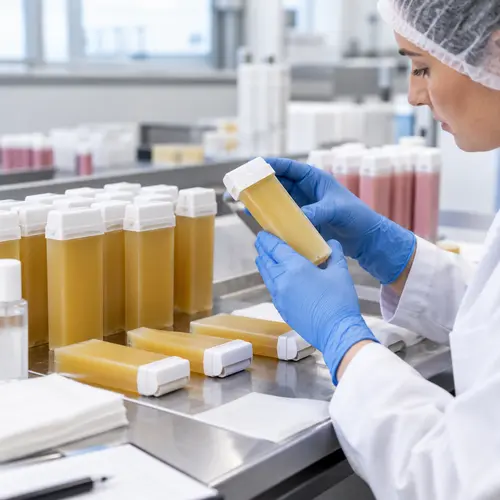
A practical RFQ should attach the target claim matrix, reference texture, intended markets, package concept, expected channels, and test expectations. Ask which parts can be evaluated during sampling and which require longer observation. For a structured start, buyers can review private label hair removal products capabilities and use the hair removal product RFQ to align formula, packaging, documentation, MOQ, and sample scope.
ODM Manufacturing Considerations
For buyers sourcing bikini hair removal products private label, sample approval should cover more than fragrance, color, and first-use performance. The confirmed sample should become a controlled reference with a formula code, batch number, preparation method, packaging specification, and dated approval record. For wax strips, confirmation should include strip dimensions, wax loading tolerance, liner release, and performance on the intended hair type. For depilatory cream, buyers should record appearance, odor, application behavior, pH specification, and the acceptable viscosity range.
Formula customization should begin with the intended claim and market rather than a long ingredient wish list. Changing fragrance, botanical ingredients, wax blend, or soothing components can affect odor, texture, removal performance, and irritation risk. A supplier should explain which changes are mainly sensory and which require additional safety or stability work. When a distinctive imported oil or plant-derived ingredient supports the brand story, request the trade name, supplier documentation, country of origin, lot traceability, and any restrictions on marketing language.
Packaging selection must be evaluated with the actual formula and closure system. Confirm material specifications, fill volume, headspace, closure torque, liner or seal configuration, print method, and batch-coding location. A depilatory formula may interact with a tube, cap, seal, or printed decoration even when the empty package looks acceptable. Roll-on cartridges require particular attention to fit, roller movement, closure security, and formula flow after storage and transport.
The stability plan should identify test conditions, checkpoints, acceptance criteria, and who approves deviations. Useful observations include color and odor change, viscosity drift, phase separation, wax cracking, liner release, label lifting, seal condition, and package distortion. Accelerated observations can identify risk, but they do not guarantee the full commercial shelf life. The supplier should define what real-time work continues after launch and how out-of-specification findings are communicated.
MOQ discussions should separate formula batch minimums from packaging decoration minimums, component purchase quantities, and finished-unit assembly minimums. A low finished-unit quantity can still require excess printed tubes, cartons, cartridges, or strip sachets. Ask for a cost model showing setup charges, testing, samples, unused component exposure, and reorder assumptions. This gives procurement teams a more realistic view of margin and customer acquisition cost.
Before artwork approval, obtain the ingredient declaration, net-content format, warnings, directions, responsible-party details, batch-code convention, country-of-origin position, and available safety support. Requirements vary by destination. The supplier can prepare technical files, but the brand remains responsible for confirming market-specific claims and labeling. Shipment specifications should also define carton strength, inner protection, pallet pattern where applicable, temperature concerns, maximum transit time assumptions, and acceptance procedures for damaged deliveries.

Common Problems or Failure Cases
Wax becomes brittle: A wax strip or sugar wax sample may perform well initially but crack, crumble, or lose flexibility after storage. Potential causes include an unsuitable wax balance, volatile loss, excessive coating variation, or exposure outside the expected distribution range. Compare retained samples by batch and document the storage history before changing the formula.
Strip adhesion declines: Poor removal can result from wax migration, liner interaction, uneven coating weight, or carton and sachet barrier limitations. Buyers should distinguish adhesion to hair from unwanted residue on skin. Both should be included in sample scoring because improving one measure can worsen the other.
Depilatory cream separates: Oiling-off, watery discharge, graininess, or a large viscosity shift can make dosing inconsistent and undermine consumer confidence. Review batch records, raw-material lots, mixing parameters, fill temperature, and package interaction. Rehomogenizing a failed sample does not establish commercial suitability.
Cartridges leak or stop rolling: Leakage may originate at the roller, neck, cap, or assembly interface. A roller can also seize when cooled formula thickens or dried residue accumulates. Evaluation should use filled components from the proposed component source and include realistic handling and transit exposure.
Fragrance increases sensitivity concerns: Bikini-area positioning requires conservative fragrance decisions. A pleasant scent does not demonstrate suitability for sensitive users. Review fragrance allergens, usage level, supplier certificates, warning language, and the intended application area. Claims such as ‘gentle’ or ‘for sensitive skin’ need evidence appropriate to the finished formula.
Packaging deforms: Tubes, caps, sachets, or cartridge parts can warp, swell, soften, or lose print quality. Component substitution is a frequent source of late-stage failure, especially when the replacement appears visually identical. Require documented change control and assess any new resin, supplier, decoration, or closure as a material change.
Supplier Checklist
- Confirm the legal entity, manufacturing site, relevant cosmetic quality certifications, audit scope, and certificate validity directly with the issuing or auditing body.
- Request a written sample brief covering product format, target market, claims, application area, texture, fragrance limits, package, test scope, and approval criteria.
- Compare the approved sample with the first commercial batch using agreed specifications for appearance, odor, pH where relevant, viscosity or wax behavior, fill weight, and removal performance.
- Review ingredient documentation, fragrance and allergen records, raw-material traceability, finished-product safety support, and irritation-risk assessment.
- Verify component drawings or specifications, closure and seal requirements, decoration method, coding area, and controls for package changes.
- Ask for stability protocols, checkpoint results, deviation handling, retained-sample policy, and a plan for ongoing real-time observations.
- Separate finished-product MOQ from formula, component, printing, and carton minimums; identify ownership and storage terms for unused materials.
- Confirm available labeling documents for each destination, including ingredient nomenclature, warnings, directions, responsible-party information, and substantiation files.
- Review manufacturing capacity, lead-time assumptions, contingency planning, and realistic sample timing. Claims of complete planning within 24 hours or samples in several days should be supported by a defined scope.
- Set shipment specifications, inspection method, release documents, damage reporting window, and responsibility for freight-related temperature or handling excursions.
Related capabilities can also be checked through the supplier’s OEM/ODM development process, hair-removal product categories, and manufacturing and quality process.
FAQ
Can an Asian manufacturing site meet Western clean beauty and cruelty-free expectations?
Location alone does not establish compliance. Define the brand’s clean standard in writing, since there is no single universal clean beauty definition. Audit restricted ingredients, supplier declarations, animal-testing policies, market-specific obligations, and change control. Verify ISO 22716 or other claimed certifications with their issuing bodies and require evidence that applies to the named site and product scope.
Will a low MOQ make customer acquisition economics unworkable?
It can if setup, testing, decorated packaging, and unused components are hidden inside the unit price. Model landed cost at the initial run and at two reorder volumes, then include fulfillment, returns, promotion, and CAC. A slightly higher first-run unit cost may still be rational when it reduces obsolete inventory, but the assumptions should be visible.
Will a turnkey base formula make the product indistinguishable from competing brands?
Not necessarily. Differentiation can come from wax behavior, fragrance strategy, application format, strip size, aftercare pairing, package usability, documented ingredient sourcing, and evidence-backed claims. Ask which formula elements are fixed, which can be changed, and whether customized versions receive unique formula codes and controlled specifications.
What should be approved before printed packaging is ordered?
Approve the formula, component set, fill quantity, artwork dieline, ingredient list, directions, warnings, claims, coding area, and destination-market language. Confirm that safety and performance evidence supports the final wording before committing to decorated components.
Can accelerated stability results establish the full shelf life?
They can support a preliminary assessment and reveal likely failure modes, but they are not a universal substitute for real-time data. Ask the responsible safety and regulatory reviewers to justify the proposed shelf life using formula knowledge, package results, accelerated observations, and ongoing real-time evidence.
Which compliance documents should a supplier provide for the United States and European Union?
The exact file depends on product and market, but buyers commonly need formula and ingredient information, safety support, manufacturing records, claim evidence, packaging specifications, and label content. The brand should align these materials with FDA cosmetic labeling requirements and the EU cosmetics framework, including the responsible-party process applicable to each market.